


 Francais
 Deutsch
 Italiano

Refine Your Search
Puerto Princesa Island Philippines 1945 stock footage and images
- Showing 3343 to 3348 of 9932 results more
 Hide
Color Sound
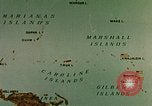
U.S. Naval Task Force 58, including USS Yorktown attacked by a Japanese Kawanishi H8K flying boat in the Pacific.
USS Yorktown CV-10 in the Pacific Theater during World War II. Early 1944: Animated map shows the Caroline Islands, Mariana Islands, Gilbert Islands and the Marshall Islands in the Pacific. The U.S. Naval fleet advances from Truk Islands towards an advanced naval base in the Marshall Islands, taken from the Japanese. U.S. ships underway around the fleet anchorage. U.S. Navy Aircraft Carriers, battleships, cruisers, fleet auxiliaries and support ships. Crew and aircraft on the flight deck of the 'Fighting Lady' CV-10. The crew members relax and enjoy themselves in the water. They dive and jump off a makeshift platforms and diving boards into the ocean, and then swim and play around large floating rafts. Sailors sort letters in the ship's post office. Some write letters back home. The crew assembled on the ship deck. Commander of the ship Rear Admiral Joseph James 'Jacko' Clark briefs the crew about their mission, designation to Task Force 58, and advance towards Tokyo. The USS Yorktown and other carriers of the Task Force underway. Sign boards for various Ready Rooms on the ship. Air Group Commanders and pilots ready on call. Rear seat gunners and radio men on call in another Ready Room nearby. They talk, relax, drink Coca-Cola and have ice cream. Flags on board. Commander of the TF 58 Admiral Marc Andrew 'Pete' Mitscher and Skipper Clark on the flight deck. A poster for the ship board movie 'Home in Indiana'. Sailors watch the movie. Planes in flight through clouds, the Task Force underway seeking the Imperial Japanese Naval fleet. New cruisers, Coast Guard cutters and Navy Transports in the Task Force. The patrol spots a Imperial Japanese Navy search plane, a Kawanishi H8K flying boat called 'Emily' by the Allies. The plane fires at the Task Force ships before being hit and sinking in the water. U.S. officers and sailors in a discussion. An animated map depicts the objective to move towards and free the Mariana Islands.
Documentary titled 'To the Shores of Iwo Jima' about the American attack on Iwo Jima in the Pacific campaigns of World War
Documentary titled 'To the Shores of Iwo Jima' about the American attack on Iwo Jima. Map shows location of Iwo Jima Island near Japan, Japanese defense lines and the American front lines. U.S. Navy forces attack on the island. Planes from carriers take off to drop bombs at Japanese targets on the island. Scenes of heavy shelling on enemy's beach installations. U.S. Navy forces head towards the beach in the initial assault. Troops debark from landing craft onto the beach. Soldiers pinned down due to heavy enemy fire. Navy corpsmen carry wounded soldiers on litters.
U.S. Navy warships of Task force 51 bombarding Japanese positions on Iwo Jima prior to invasion during World War II
U.S. Navy warships of Task Force 51, Joint Expeditionary Force, commanded by Vice Admiral Richmond Kelly Turner, bombard Japanese positions at the start of the campaign against Japanese-held Iwo Jima, during World War 2. Mount Suribachi visible at end of the island. The Eldorado (AGC-11), Vice Admiral Turner's flagship is seen. At time 00:20 to 1:04, the heavy cruiser USS Chester ( CA-27 ) is seen in camouflage Measure 32, design 9d, following another unidentified heavy cruiser, shelling the island of Iwo Jima. Time codes 1:05 to 1:12 show the battleship USS Tennessee (BB-43). In time codes 1:14 through 1:31 the heavy cruiser USS Salt Lake City ( CA-25) and the USS Vicksburg, CL-86, a Cleveland Class light cruiser, in camouflage (measure 33, design 6D), are seen shelling Japanese anti-aircraft gun emplacements around the east side of Motoyama airfield. The battleship, USS Idaho (BB-42) is seen in time codes 1:32 to 1:53. Other, unidentified U.S. warships are also seen bombarding the Island.

U.S. Marines land and advance near Mount Suribachi amidst enemy fire during the Battle of Iwo Jima in World War II.
'Action on Iwo Jima' depicts the Battle of Iwo Jima or Operation Detachment during World War II. United States Marines Divisions eliminate positions on Mount Suribachi. Mount Siribachi on the island coast. Additional waves of Marines arrive at the island. 3rd Marine Division arrives to enforce the 4th and 5th Divisions. Landing crafts and ships approach the shore amidst enemy fire and explosions. Crouched Marines in a Landing Craft Vehicle Personnel (LCVP). Marines advance inland amidst mortar fire and machine gun fire by the Japanese. They advance across mine fields on the beach. Soldiers unload supplies from landing crafts and ships. They pull a tank across the beach. A view of the battle from inside a tank. Marines battle around Mount Suribachi. Advanced units scale cliffs and take cover against grenades and demolition charges from the Japanese in caves and pill boxes. The Marines use flames to flush Japanese soldiers out of dug in positions. A Japanese soldier takes cover from machine gun fire. Guns fired and explosions on the island.
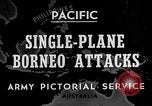
U.S. 13th Air Force B-24 bombers attack Shell oil refineries and storage facilities at Lutong,Miri, Borneo, in Wor
Map shows location of Labuan Island , Borneo. Views from a U.S. 13th Air Force B-24 Liberator bomber as it conducts a low-level bombing and strafing attack against oil refinery and storage tanks at Labuan Island, on December 8, 1944. View from the B-24 as it flies low over the target, and its waist gunners fire 50 caliber machine guns, using indendiary rounds, at storage tank farm. Scenes from a second B-24 in a similar raid on December 10, 1944. Views of the storage tanks ablaze and billowing smoke. (World War II period).
The story of U.S. Navy Seabees on Guadalcanal during World War II.
Activities of the Seabees on Guadalcanal, Solomon Islands, during World War II. Seabees seen salvaging ships damaged and sunk during the Japanese December 7, 1941 attack on Pearl Harbor.Seabees seen on the deck of the USS California (BB-44). U.S. warship fires guns at Guadalcanal. U.S. Marines land on Guadalcanal and advance in long line across the island. Marines firing heavy field artillery. Seabees begin rebuilding Henderson Field, surrounded by fire and smoke of battle. Ground and aerial views of Henderson field, with destroyed U.S. fighter bombers seen. From the air, many small airplanes and several B-17s can be seen. Seabees filling shell and bomb craters on the field. U.S. Marines firing firing antiaircraft weapons against attacking Japanese airplanes. Two Japanese airplanes plunging in flames. An empty life vest floating in the water. The Seabees continue rebuilding and expanding Henderson Field using Marston matting (pierced steel planking). A Navy Douglas SBD Dauntless dive bomber lands at the newly repaired field. U.S. Air Force B-17s take off from Henderson Field. and
CRITICALPAST.COM: About Us | Contact Us | FAQs - How to Order | License Agreement | My Account | My Lightboxes | Shopping Cart | Advanced Search | Featured Collections | Website Terms & Conditions | Privacy Policy ©2026 CriticalPast LLC.
License Agreement |
Terms & Conditions |
Privacy Policy
©2026 CriticalPast LLC.