


 Francais
 Deutsch
 Italiano
Refine Your Search
Rio de Janeiro Brazil 1946 stock footage and images
- Showing 133 to 138 of 2632 results more
more Hide
Hide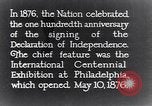
Dramatization: Dom Pedro and Alexander Graham Bell at International Centennial of 1876 in Philadelphia.
Pages of a book showing pictures of telephone Transmitter and Receiver exhibited in Centennial Exposition at Philadelphia in 1876. Picture of Dom Pedro, Emperor of Brazil. Dramatization: Alexander Graham Bell greeting Dom Pedro at International Centennial of 1876 in Philadelphia. Actors playing Bell, Pedro and other people walk to see the demonstration. Bell speaks on mouthpiece and Pedro trying to hear Bell's word on receiver. Pedro is surprised and makes other hear the words on receiver. People congratulate Bell.

Neil Fraser and Maria Bueno win Wimbledon Men's and women's titles in London, England.
Wimbledon Championship in London, England. At the Women's final Maria Bueno from Brazil defeats a South African to win the women's singles title. Maria being presented a trophy. Neil Fraser wins the Men's singles after defeating Rod Laver, a fellow Australian. Fraser being presented the Wimbledon Cup.
CAP cadets visit the National Gallery of Art in Washington D.C., United States.
International exchange of CAP (Civil Air Patrol) cadets in Washington D.C., United States. A cornerstone with a sign that reads 'National Gallery of Art'. Several foreign and United States cadets get off a bus and enter the National Gallery of Art building (Constitution Ave. NW, Washington, DC 20565). Cadets pick up pamphlets. They look at a fountain and a cadet dip his hands in the water. The cadets look at paintings and statues. An arm insignia on a cadet's uniform reads 'Brazil'. Foreign CAP officers talk outside the gallery. The cadets look at the paintings and other works of art. They move out of the art gallery and move towards the buses.
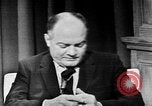
Robert Sargent Shriver interviewed about the Peace Corps activities in Washington DC, United States.
Reporters Len 0' Connor and Art Barriault interview the First Director of Peace Corps, Robert Sargent Shriver. On being asked whether the Peace Corps run into opposition with the government he clarifies that Peace Corps go to countries where the government invites them. Shriver reveals that the demand for Peace Corp volunteers has been on an increase. He also talks about the Peace Corps in Brazil, Dominican Republic, Chile, Venezuela and other American Republics. He states how the Peace Corps volunteers in Columbia lived in a simple manner but they still managed to keep their morale high.
Protective measures taken by Americans in Hawaii, after the Japanese attack on Pearl Harbor.
Aftermath of Pearl Harbor attack. People in Oahu, Hawaii, prepare to deal with more air attacks by Japanese. Armed U.S. soldier in sandbagged position, in Hawaii. The territorial governor of Hawaii, Joseph Poindexter, signing a declaration of Martial Law. Four thousand members of Oahu's Civil Defense Committee, dressed in dark bottoms and white tops, wearing steel helmets with "W" on them, standing at attention in formation on grounds of a stadium. Windows in all downtown shops taped to prevent flying glass. Sand bags surrounding a power substation. Huge quantities of barbed wire in a storage yard and strung along the beaches, along highways, around schools, and public buildings of Oahu. A man pushing a lawn mower between sandbagged defense positions in a residential neighborhood. Construction machinery digging defensive trenches. Bomb shelters being constructed of precast concrete. Air raid sirens installed and school children leaving their building and sheltering in deep trenches during a test. Very small children taking shelter in zig-zag trenches and donning gas masks. Huge assemblies of children, and of grownups, all donning gas masks. Little children being dressed in capsule-like "bunny mask" protective gear.One of them crying inside the covering. Crowds of women and children lined up on a veranda waiting to receive these "bunny masks." Military personnel, civilians, and school children, all carrying personal gas masks with them at all times. Innumerable old rubber tires saved in an open yard. Japanese-Americans donating blood to the American Red Cross and lined up to buy war bonds. Soldiers arresting a Japanese resident known to be an enemy agent. Boarded up shops of Japanese-Americans, who had been interned. Japanese-Americans removing all Japanese language signs from their areas. Language school buildings with closed signs. An empty and boarded-up Shinto temple. One Japanese-American replacing his cafe sign with one reading: "Keep 'Em Flying Cafe." U.S. Army troops posted on roadways. The Aloha Tower in camouflage paint. A Lurline steamship leaving port, and being replaced by warships. Prewar view of people enjoying Waikakee beach, and current view of two boys playing in sand near barbed wire barriers. City streets deserted at twilight, as blackout procedures take effect at dusk. Views of darkened homes and palm trees silhouetted against sky at dusk. The "ghost" of a sailor killed in World War II, stands in front of Arlington cemetery, Washington, DC, and converses with the ghost of a soldier killed in World War I. They discuss idealistic notions about ending wars for good. Displays of flags is seen, including: Australia; Belgium; Brazil; Canada; China; Costa Rica; Cuba; Czechoslovakia; Dominican Republic; England; Ethopia; Greece; Guatemala; Haiti; Honduras; India; Yugoslavia; Luxembourg; Mexico; The Netherlands; New Zealand; Nicaragua; Norway; Panama; The Philippines; Poland; Russia; El Salvador; South Africa; and the U.S.A. "V" created in the sky by a skywriting airplane.

Lend Lease materials transported across the world by convoys of American and British ships in World War II
Opening scene shows Lend Lease military equipment covered with canvas, at a port in the United States, during World War 2. A B-26 bomber with wings removed outboard of its engines, is being maneuvered for shipment at a port in the United States. A Lockheed P-38 airplane is moved on a crane and then rolled along a pier toward the stern of the U.S. Light Cruiser, USS Phoenix (CL-46) which is docked there. Wings of a Curtiss SOC-1 Seagull scout plane can be seen on the Phoenix. Two more P-38 aircraft are rolled along the pier, past another Brooklyn class Light Cruiser at the end of the pier. (Her triple 6-inch gun turrets are noticeable.) Crated supplies are seen being lowered into ship cargo holds. An American M2 light tank being lowered from a crane. An American M3 Lee tank being secured in a ship. Numerous tanks in a ship’s cargo hold. Next, a convoy of ships carrying war materiel overseas is seen at sea. A U.S. Cruiser plunging through heavy seas. View from her bridge overlooking her triple gun turrets, as her bow is awash in waves. A formation of U.S. battleships, led by a Nevada class Battle Ship armed with twin over triple forward gun turrets. She is followed by what appears to be a modernized Pennsylvania class Battleship and other battleships. A British Battle Cruiser followed by another British warship. Various Allied battleships firing their heavy guns. Animated map tracing the “Lend-Lease” routes across the North Atlantic to Iceland, the British Isles, and Murmansk. Map also shows routes by sea and air to the West Indies, Brazil, and South Africa and West Africa, and then by air across Africa, to egypt and the Middle East. Other routes are shown to Suez, Iran, India, and China, as well as trans-Pacific routes to various places. American soldiers crowd the upper deck of a troop transport ship. A military chaplain conducts religious services aboard ship at sea. More views of ships in convoys. A U.S. Navy Kingfisher float plane in flight over the water. A barrage balloon aloft. A U.S. Navy Catalina PBY flying boat in the air above a fleet of supply ships in a vast convoy.