


 Francais
 Deutsch
 Italiano
Refine Your Search
Rio de Janeiro Brazil 1946 stock footage and images
- Showing 217 to 222 of 2632 results more
more Hide
Hide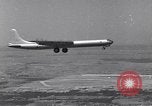
A U.S. Air Force B-36 Peacemaker bomber aircraft lands at Carswell Air Force Base in Texas, United States.
XB-36 first flight on August 8, 1946, at Fort Worth, Texas, with Convair Chief test pilot Beryl Erickson and copilot Gus Green, at the controls. The XB-36 flying over airfield, with landing gear extended. Views from side and below. Views from above, from the side, from below and from the rear, as it flies some distance from the field, with gear still extended. XB-36 on final approach crossing a river, and touching down on first part of runway as it lands.
United States Secretary of State James Francis Byrnes speaks during the Four-Power Paris Conference after WW2
United States Secretary of State James Francis Byrnes speaks during the 1946 Four-Power Paris Conference after World War 2. Secretary of State James Francis Byrnes reports on America’s commitment to secure peace through cooperation, saying “But we must not forget that if we fail to cooperate in a peace which is indivisible, we may again find that we will have to cooperate in a war which is worldwide. Whether we like it or not, we live in one world”
United States turnover of decommissioned warship to the Republic of China (ROC) in San Diego, California after WW2
United States turnover of former US destroyer-escort warship to the Republic of China (ROC) under a lend-lease arrangement after World War II in 1946. Sailor hoists the Republic of China flag onboard ship. Decommissioned United States Navy destroyer-escort with Republic of China flag docked in San Diego, California. Republic of China Navy Commander Lin and United States Navy Commander Herbrandt salute to sailors. Commander Lin and Commander Herbrandt shakes hands onboard. Republic of China Navy seamen stand in formation, wearing the standard navy uniform. ROC seaman training to aim using artillery. An ROC sailor demonstrates rope knotting. Republic of China and United States sailors play Chinese Checkers and dice onboard as destroyer sails to Republic of China. The decommissioned USS Magnet (AM-260), acquired by the Republic of China as ROCS Yung Ning, sailing the Pacific Ocean.
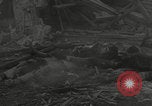
The Philippines under Japanese occupation, liberation by allied forces, Philippine Independence ceremony.
The Philippines under Japanese occupation, liberation, and subsequent granting of independence by the United States in World War 2. Bodies of Filipino and United States soldiers killed during the Japanese invasion of the Philippines. Captured American, Filipino, and Australian soldiers raise their hands after the Fall of Corregidor. United States General Jonathan M. Wainwright negotiating the surrender of The Phillipines with Japanese General Masaharu Homma in 1942. Brigadier General Lewis C. Beebe and Major Thomas Dooley are seen to Wainwright's left. An American warship firing during the United States Pacific campaign to defeat Japanese occupying forces in the Pacific. United States soldiers get off an amphibious landing craft during the U.S. retaking of the Philippines. United States General Douglas MacArthur arrival in Leyte Gulf with a retinue consisting of Philippine President-in-exile Sergio Osmeña, Lieutenant General Richard Sutherland, Philippine Brigadier General Carlos P. Romulo, Major General Courtney Whitney, Philippine Sergeant Francisco Salveron and CBS Radio correspondent William J. Dunn in Palo, Leyte, the Philippines- a fulfillment of his promise to return to the Philippines. General Douglas MacArthur speaking at the Independence Day ceremony in Manila on July 4, 1946. “America never wavered in that purpose. America today redeems that pledge.” Says General MacArthur. United States Senator Millard Tydings, the co-sponsor of the Tydings–McDuffie Act (a law that provides independence to the Philippines after a 10-year transition as a Commonwealth) attends the ceremony. Paul V. McNutt, the United States High Commissioner of the Philippine Commonwealth (later the first United States Ambassador to the Philippines), reads the United States President Harry Truman's official proclamation of Philippine Independence. Filipino elites and United States dignitaries watch the ceremony in the Independence Grandstand (a temporary structure built in front of the Rizal Monument). Manuel Roxas being sworn in as the first President of the Philippines after gaining independence from the United States. The Philippine national anthem, Lupang Hinirang, plays in the background. High Commissioner McNutt lowers the United States flag from the flagpole as President Manuel Roxas raises the flag of the new Republic of the Philippines. A celebratory parade following the Independence ceremony takes place, which includes floats from various provinces in the country. A float with signs reading: "Let's Produce and Rebuild,". "Mountain Province" float with women wearing formal Filipino Baro’t Saya gowns. "The City of Manila" float with soldiers. "The University of the Philippines" (UP) float featuring two women dressed as allegorical figures and sign saying, “The University of the Philippines At the Service of the State”. "The Division of City Schools" float features two Filipinos in traditional attire in front of a Statue of Liberty model. A float, likely belonging to the National Library of the Philippines, with children and a huge book model. The Chamber of Commerce Philippines float contains a machine gear model and small models of an aircraft and a ship. American soldiers marching, carrying the United States flag. A military marching band play. Filipino soldiers marching with the Philippine flag. Military aircraft in flight above the Independence Grandstand in Manila.
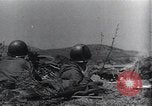
United States Army 187th Airborne Regimental Combat Team returns to Japan from Korea and is welcomed by City of Beppu, Oita
Clip opens with rapid changing scenes: American troops in trench in Korea during the Korean War. American tank on street in Germany. American Ski troops in Alaska. Amphibian assault training in Puerto Rico. Rotating Globe shows: U.S. Army on alert to defend against aggression. Sergeant Stuart introduces episdoe and states that U.S. Army has come to Japan to know their culture and make friends after war and occupation. U.S. Army troops of the 187th Airborne Regimental Combat Team, are seen arriving by railroad train at a train stateion near their base near Beppu,Oita on the island of Kyushu, Japan. U.S. Army soldiers, including white and African American soldiers, exit train cars. They receive a warm welcome from Japanese population. Banner reads:" Welcome Pala Troop comin back from Korea, City of Beppu."[sic] Women holding flowers and families with small children waving American and Japanese flags, welcome them on the train station. A sign over the train station platform reads: "Welcome 187 Para Troop Coming Back From Korea, City of Beppu." The troops stand in formation on the platform while the unit's officers receive the flowers from the women. Japanese men in fraternal uniforms and the general population all join in the welcoming ceremonies. The troops march off the train station under another sign reading: Welcome Home 187 RCT." and march down the main street of Beppu under a swirl of paper confetti. Next scenes are from autumn of 1945, as U.S. soldiers march through streets of Japan during occupation following the end of World War 2. U.S. troops seen marching behind Japanese police to occupy Japan, in 1945, amidst the aftermath of suffering and destruction of the war. The local population standing at road sides and watching with worry and concern. Scenes of postwar destruction in Japan. Rubble of bombed buildings. Scene of simple wooden dwelling shacks and wreckage nearby. A Japanese boy with his baby brother on his back. The baby is crying. Next scene moves again to circa 1950 in streets of a Japanese city, possibly Tokyo, rebuilt and with busy scenes of traffic on streets and commerce. Large outdoor rally with a Communist speaker addressing large crowd of Japanese people who sit and listen. Scenes from a what the narrator describes as a Communist rally in Japan, against America, which turns violent. Protestors running in streets during demonstration, with signboards and police and fire fighters extinguish flames at scene of an overturned, burning car. Flashback again to 1945 or 1946 as U.S. Army soldiers use tractors and heavy equipment to clear and level an area of war rubble and debris during rebuilding efforts after World War 2. Japanese citizens look on, watching the machines at work.
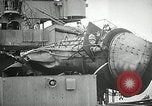
Damaged USS Louisville and men overhaul it in Okinawa, Japan.
Damaged USS Louisville (CA-28) hit by Japanese Kamikase in World War 2. Damaged forward stack of the ship. Float of its scout plane left on catapult, is jettisoned. Large stack of the USS Louisville knocked down. Engine of seaplane blown up by explosion on the signal bridge. Man welds in superstructure. View of other men working to repair damage to the Cruiser.. [Note: The following eyewitness account of the kamikaze attack was recorded by Seamen 1st Class, Enrico Trotta, who was a crew member on the USS Louisville (CA-28) from 1943 to 1946, "At 1923 (hours) two planes which were identified as friendly flew around and one kamikaze dove onto the battleship USS Mississippi BB 41. The other kamikaze plane turned to the Louisville and started to make a run on us. I was on No. #4 - 20 mm AA gun mount on the port side below #2 main battery and I fired 58 rounds to set the kamikaze plane on fire prior to hitting the Louisville’s front smoke stack bending and twisting it and killing 9 men on the 40 mm gun mount mounting on the forward superstructure tripod about 140 feet from our gun mount. The kamikaze also cut our sea plane off and left only the pontoon on the catapult. Three other 20 AA mm gun crews opened up firing 4, 11, and 20 rounds as well. We were not told to fire for we did it on our own. We were only manning the guns at the time and were not on general quarters. Later, the officers came by and said good job."]