


 Francais
 Deutsch
 Italiano
Refine Your Search
Rio de Janeiro Brazil 1946 stock footage and images
- Showing 2287 to 2292 of 2632 results more
more Hide
Hide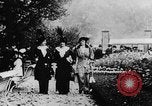
Women walk through a park and a crowd runs to watch some event, in Paris France
People strolling through a park. Some sit on benches. Three women walk along a path in a park. They are fashionably attired in Edwardian style. A girl seated on a park bench looks at them as they walk past. A structure extends above the path, in the background. It contains two uprights and a straight roof. One upright is topped by a fleur de lis. A large bed of flowers lines the path. In another event, a large crowd runs across an open field to watch something or someone, coming along a road at the left of the scene.
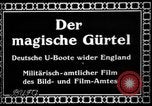
German submarine UB-35 leaves port on mission during World War I
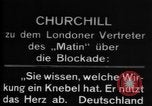
Early slates allude to failed attempts at peaceful resolution of issues between Germany and England, in World War 1, and the Kaiser's consequent decision on February 1, 1917, to intensify German submarine warfare against Britain. Slate refers to Churchill's admitted concerns expressed in the "Sunday Pictorial," about the resulting constraint on England's control of the seas around the British Isles, referring to the U-boats creating a magic girdle (Magischen Gurtel) around England, which becomes the title for the film. In the first part, Captain, Lothar von Arnauld de la Periere of the German U-boat UB-35, stands in a skiff as he is rowed out to his submarine. He exchanges salutes with his officers, as he boards the U-35, nestled against a German ship. He gives the order to cast off the lines and proceed half power in reverse. The crew scrambles to get underway. German sailors on the nearby ship watch from her railings. Sailors use a long pole to help move the submarine away from the ship. Officers and men on the ship wave as the U-boat pulls away. Views from the submarine deck as it moves on the surface of the water heading toward the Mediterranean Sea. (World War i; World War 1; WWI; WW1)
German submarine, U-35, stops and sinks the British ship, "Parkgate, "during World War I
The British armed steamer "Parkgate" is seen from the deck of the German U-35, U-Boat, under command of Captain Lothar von Arnauld de la Periereon, on April 4, 1917, during World War 1. The Parkgate has been forced to heave to in the Mediterranean Sea, between Malta and Gibraltar, following a gun battle with the U-boat. Members of the Parkgate crew come alongside the U-boat in lifeboats. An officer of the Parkgate presents the ship's papers to the U-35 Captain, on the conning tower of the U-boat. Next, the Captain of the Parkgate is seen being taken captive, and an explosives team from the U-boat rows to the Parkgate to set demolition charges that will help sink her. the U-boat crew fires their deck gun to strike the Parkgate low at the waterline. She begins to take on water and list. Her 7.6 cm gun can be seen on the stern of the Parkgate. In final stages, the Parkgate's bow tilts upwards and she sinks, with a large detonation as her boilers explode. (World War i; World War 1; WWI; WW1)
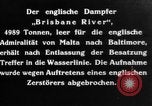
The British Ship "Brisbane River," stopped (and sunk) by German U-Boat, UB-35, in World War I
View from the German U-Boat, UB-35, of the British ship, "Brisbane River," stopped in the Atlantic off the coast of North Africa, in World War 1. U-35 Captain, Lothar von Arnauld de la Periere, with the British ship's officers, aboard the submarine, examines their papers and Registry of Ships. Closeup of a Ship Registry showing the Brisbane River, listed as number 1219. The Captain crosses it off the Registry and pencils in the date: April 17, 1917. (As noted in opening slate, the actual sinking of the Brisbane River was not caught on camera, as filming was suspended due to the approach of British destroyers.) Later, the crew is seen on deck, taking showers, and enjoying themselves, swimming in the ocean.

Activities of U-Boat, U-35, on return voyage during World War I
View from the surfaced German U-Boat, UB-35, on a scenic cruise along the British coast in World War 1. The U-Boat crew uses explosives to sink a ship, close to shore (after releasing the ship's crew). The ship was loaded with salt herring for transport to Genoa, Italy. Repeated explosions are seen. In change of scene, five prisoners of war (British ship captains) take a morning walk on the deck of the UB-35 behind a screen of tarpaulin stretched across the deck. A slate referring to the difficulties experienced by Britain from German U-Boats. The U-35 Captain, Lothar von Arnauld de la Periere, is seen sitting in his conning tower. Other officers are keeping watch. He receives a message from a sailor below. He writes a note to Headquarters reporting on ships and tonnage sunk by the U-35, and mentioning 5 English ship's captains taken prisoner, in the month of May, 1917. He signs it: "U-35, Arnauld." Closeup of the note. The U-35 proceeds to rendezvous with the Austro-Hungarian Novara-class scout cruiser, "Helgoland." View of the 4-stacker Helgoland with black smoke issuing from her stacks. View from the U-35 as it passes to port of the Helgoland. Captain von Arnauld and another officer, greet an Austro-Hungarian navy officer who comes aboard bringing greetings and wishes for good luck from his Admiral, to the U-35. View of the Admiral's flagship,the Austro-Hungarian Armored Cruiser, S.M.S. Sankt Georg. (Slate reads three cheers for the returning U-Boat, so presumably the Sankt Georg crew gives cheers.) Camera pans across the cruiser to deck of the U-35, where officers and men of the U-35 salute and raise their hats in three cheers for their Austrian-Hungarian comrades. Flags fly from the U-35, one for each Allied ship sunk. The U-35 with crew on deck moves slowly into port next to another submarine and large ship. U-Boat Captain von Arnauld walks to a fleet message center. The U-35 crew happily receive and read letters from home. The next scene shows the U-35 heading out to sea again,
French troops march at a victory parade in Paris, France after armistice ends World War I.
World War 1 victory parade in Paris, France after signing of Armistice and end of World War I. Allied cavalry units, infantry units and band march down the Champ Elysees with Arc de Triomphe in the background. French soldiers carry American flags at the victory celebration and parade.
CRITICALPAST.COM: About Us | Contact Us | FAQs - How to Order | License Agreement | My Account | My Lightboxes | Shopping Cart | Advanced Search | Featured Collections | Website Terms & Conditions | Privacy Policy ©2026 CriticalPast LLC.
License Agreement |
Terms & Conditions |
Privacy Policy
©2026 CriticalPast LLC.