


 Francais
 Deutsch
 Italiano
Refine Your Search
Rouen Normandy France 1944 stock footage and images
- Showing 13 to 18 of 9958 results more
more Hide
Hide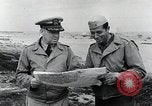
An artificial harbor at Arromanches in Normandy, France during the Allied invasion of Normandy in World War II.
A film about the role of U.S. Navy Seabees in construction of artificial harbors during the Allied invasion of Normandy, France in World War II. Commander Jorden of 111th Battalion in Normandy. U.S. Navy camp area as sailors come out of tents. Wrecked crafts at the shore after a storm hit the area on June 18, 1944. Seabees work on repair barges. Another artificial harbor at Arromanches in Normandy.

Infantry, artillery, and warplanes during the D-Day invasion by Allies in Normandy, France during World War 2.
The D-Day assault on Normandy by the Allies, against Germany's conquest in World War 2. Troops of infantry, artillery and tanks, warplanes ready assembled in south of England for attack at Normandy in France on June 06, 1944. Supreme Commander General Dwight D. Eisenhower and British General Montgomery in discussion with each other. B-17 bombers on mission to Nazi bases. Soldiers move from warships to landing crafts, and land on the coast of Normandy under enemy fire. Parachute troops jump from aircraft landing behind enemy lines. Surrendered German soldiers march, guarded by Allied soldiers. From a June 13, 1963 newsreel recounting events years earlier.
Allied troops aboard ships and gliders head for Normandy, France for the D-day invasion during World War II.
Allied invasion of Normandy, France during World War II. U.S. General Joseph McNarney, Deputy Chief of Staff at a desk as he outlines the importance of June 6, 1944 the day Allied forces attacked the Germans in Normandy. He speaks about the decision to knock down the Nazis first and then the Japanese during the World War. He says that the invasion of Normandy was planned in November 1943. He also states how General Dwight D. Eisenhower, Supreme Commander of the Allied forces in Europe, planned and executed the invasion. He also speaks about how the U.S. Army Air Forces and the Royal Air Forces aircraft bombarded the coasts of Normandy prior to the D Day invasion. Past events show American soldiers getting onto landing crafts in England as they leave for the invasion. The soldiers aboard the ships in the English Channel. The soldiers read the Bible and comics, sleep and cook aboard the ships. On June 5th , 1944 the ships head towards Normandy for the invasion. In England gliders carrying paratroopers take off from an airfield to bombard the German positions in Normandy. British soldiers receive ration and work on motorbikes. TNT (trinitrotoluene) charges being prepared by soldiers tasked with demolition duties. British soldiers check their guns and other weapons prior to the invasion. Jeep and artillery being loaded onto aircraft.
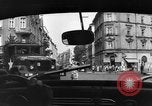
U.S. Military police (MP) direct trucks, tanks, amphibious vehicles at beachhead in Normandy, France, in World War II.
Activities of the U.S. Army Military Police. (Introductory scenes, from 1950 : A U.S. Army truck collides with a VW Beetle automobile in Europe. Local onlookers speak with the man and woman from the car. Local police arrive on scene. U.S. Army Military Police arrive and help resolve the matter with local police. ) U.S. Army Military Police insignia of two crossed flintlock pistols. A Military Policeman at attention. Military Police (MP) directing trucks and amphibious vehicles at a beachhead in Normandy, France, in 1944. U.S. Landing Craft at the beachhead. MPs directing military traffic in Town of Canisy, France.
United States Coast Guard preparing for the Allied invasion of Normandy (WW2)
June 9, 1944. Sand flats seen at low tide in Normandy, France. Allied forces fighting their way inland during the Normandy invasion (Three days after D-Day) in World War II. Landing craft and destroyed buildings on the beaches of Normandy. German steel beach obstacles have been stacked out of the way. A United States Sherman DD tank sunk in sand. Badly damaged LCT-25 on the beach at Normandy, with her cargo of half-tracks still aboard and remains of the first one off, sitting at her ramp where it was hit by a German shell. Higgins Boat riddled with bullet holes. Scene shifts to January 1944 when United States Army troops descend from a troop transport ship into LCT-504 for practice maneuvers in the Chesapeake Bay. A soldier operates a Higgins Boat. Another soldier directs a Higgins Boat to the shore. Troops hit the beach in Higgins Boats driven by U.S. Coast Guardsmen from the Attack Transport ship, USS Samuel Chase (APA-26). United States troops carry equipment or belongings as they board ships to England in February 1944. Views of live aboard transport ships in convoys crossing the Atlantic Ocean. Coast Guardsmen near weapons at duty stations. Some troops are seen wearing life vests on board. Troops sleep or lie in hammocks in their quarters. Soldiers pass the time by playing cards, sleeping, reading and writing letters, and mending clothes on deck. Troops line the deck of the transport ship, USS Bayfield (APA-33), as the ship approaches port in England. Landing craft from the Bayfield, carrying troops, are seen in assault training exercises in England. Troops wading ashore during training. Coast Guard officers and sailors are seen aboard larger landing ships in exercises. Coast Guard officer smoking a cigar, as landing craft from the USS Samuel Chase speeds away after landing troops ashore. Trucks drive ashore from landing craft. Scene shifts to May 1944 and a formation of Consolidated B-24 Liberator bomber aircraft dropping bombs on enemy targets in Normandy. Aerial view shows bombs falling.

The first American military cemetery at Colleville-sur-Mer, France, established on June 8, 1944, in World War II
View from a 4-engine airplane in flight over altocumulus clouds. Setting sun creates pink colors. Scene changes abruptly to views, inland from Omaha Beach, at Colleville-sur-Mer, France, of the temporary military battlefield cemetery established by the U.S. First Army, on June 8, 1944, right after the Allied invasion of Normandy, in World War 2. Simple wooden crosses mark the graves of the fallen Americans, each identified by one of their dog tags fastened to the marker.
CRITICALPAST.COM: About Us | Contact Us | FAQs - How to Order | License Agreement | My Account | My Lightboxes | Shopping Cart | Advanced Search | Featured Collections | Website Terms & Conditions | Privacy Policy ©2026 CriticalPast LLC.
License Agreement |
Terms & Conditions |
Privacy Policy
©2026 CriticalPast LLC.