


 Francais
 Deutsch
 Italiano
Refine Your Search
Seoul Korea 1960 stock footage and images
- Showing 1297 to 1302 of 2020 results more
more Hide
Hide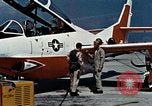
Cockpit check during pre-flight inspection of a U.S. Navy T2J-1 Buckeye trainer aircraft.
Ground Procedures during pre-flight inspection of a U.S. Navy T2J-1 Buckeye trainer aircraft. A pre-start cockpit check before a solo flight. Two airmen and the pilot near the aircraft. The pilot makes the cockpit check. Rear cockpit: Inspection of the red seat cover, 3 safety pins, canopy release pin, emergency disconnect switch and oxygen valve. The pilot climbs aboard into the cockpit front seat. He is strapped in by an airman. Puts on his helmet and oxygen mask. Turns on oxygen mask valve and checks aneroid gauge. The plane captain removes the 3 safety pins and the canopy release handle. The pilot inspects and adjusts the following on the left console: fuel shut off valve, oxygen shut off valve, radio equipment, tip tank fuel dump handle, tip tank fuel transfer switch, speed brake dump handle, air start ignition switch, power control friction lever, power control lever, speed break switch, engine master switch, hydraulic boost switch, circuit breakers and landing gear handle. Right console: arresting hook control handle, DC power control switch and the instrument AC power switch. The pilot then adjusts the electrical control transfer light, rudder peddle and seat. He inspects the voltmeter, fuel quantity indicator and liquid oxygen quantity indicator.
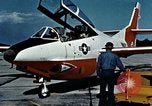
Air impingement and pre taxi check of a U.S. Navy T2J-1 Buckeye trainer aircraft.
Pre-flight inspection and pre taxi check of a U.S. Navy T2J-1 Buckeye trainer aircraft. The plane captain near the plane. Pilot in cockpit. The pilot gives the thumbs up plug in signal for air impingement. The captain takes the hose and attaches it to the plane. He checks the starting unit and returns the thumbs up signal when ready. The pilot checks and adjusts the fuel shut off valve, engine master switch, engine start switch, tachometers, advance power control lever, and the oil pressure gauge. He gives the captain the unplug signal. The captain removes the hose. The pilot now performs the pre-taxi check: radio equipment, captain removes the 3 landing gear safety pins, flaps extended, speed brakes opened, take off trim, circuit breakers and the altometer. He then conducts the inverter check, operates controls to check freedom of movement, retracts flaps and speed brakes, and closes the canopy. He calls for taxi clearance, gives the captain the signal, adjusts friction on power and control lever. The captain gives clearance, the pilot releases brakes and taxis maintaining steady speed. He completes the take off checklist before getting onto the duty runway. Receives clearance, aligns the plane and taxis. He checks the exhaust gas temperature, rpm, fuel flow and oil pressure. Raises nose of the plane off ground, raises landing gear when airborne, raises flaps, levels off and accelerates.
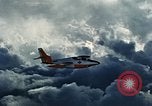
A U.S. Navy T2J-1 Buckeye trainer aircraft recovers from stall and roll.
A U.S. Navy T2J-1 Buckeye trainer aircraft recovers from a stall and roll. The aircraft flying over clouds. The pilot gets indications of an approaching stall: actuation of the rudder shaker, moderate airframe buffeting; and the stall occurs. The pilot recovers from the stall by decreasing the angle of attack, adding power, reducing drag, and leveling off at a comfortable flying speed. The recovery is delayed and spin occurs. The pilot reduces power to ideal rpm and applies full opposite rudder. The rate of spin increases. The pilot continues to hold the controls in recovery position. The rotation stops and the plane recovers in nose down attitude. The pilot neutralizes the rudder, eases the stick back in a smooth pull out to a level attitude. The aircraft rolls over the clouds.
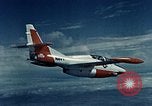
Approach and landing of a U.S. Navy T2J-1 Buckeye trainer aircraft.
Approach and landing of a U.S. Navy T2J-1 Buckeye trainer aircraft. The plane flying over clouds. Let down: The pilot extends the speed brakes, experiences nose up pitch, changes longitudinal trim, and dumps excess fuel. Diagrammatic representation of approach procedure including speed, angle, power and descend of aircraft. The pilot extends speed brakes, reduces power, slows down, extends gear and flaps, slows down on the downwind leg, adjusts power and goes over the landing check off list. He commences turn off, establishes angle and approaches the runway. He then takes a wave off: smoothly applies full power, retracts speed brakes, rolls into wing level attitude, accelerates to safe flying speed and flies parallel to the duty runway. Landing: The pilot holds aircraft speed and attitude, descends to deck, touches down and reduces power to idle. He applies aerodynamic braking by holding the nose wheel off runway. Touches the nose wheel down, uses rudder to maintain directional control, applies brakes, slows to normal taxi, retracts speed brakes, opens canopy and returns to the line. The pilot raises the canopy after a complete standstill. The plane captain at the wheels, removes the 3 landing gear safety pins. Once he gives the signal, the pilot turns off the power control, engine master, and DC power control switches. He then turns off all electrical equipment, removes oxygen mask, shuts off oxygen shut off and fuel shut off valves. The pilot and co-pilot descend from the aircraft and walk away.
Pre-flight landing gear and cockpit inspection of the U.S. Air Force F-102A Delta Dagger interceptor aircraft.
Pre-flight inspection of the U.S. Air Force F-102A Delta Dagger interceptor aircraft. The plane on the runway. Crewmen nearby. The crew chief inspects the landing gear including ground safety pins, tires, landing light and high pressure air gauge. He checks for hydraulic and fuel leaks. Inspection of the armament door. The pilot climbs up to the cockpit, raises the canopy and inspects the seat belts and shoulder harness. He gets into the seat and inspects the switches and oxygen pressure. On the outside, he examines the flexi glass and wind shield. He climbs down.
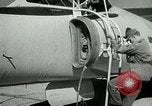
Pre-flight inspection of the U.S. Air Force F-102A Delta Dagger interceptor aircraft.
Pre-flight inspection of the U.S. Air Force F-102A Delta Dagger interceptor aircraft. The crew chief checks the air intake surfaces, nose boom, dome and holes in the tip. He inspects the forward electronic compartment, fluid tank, filler cap and access door. He checks the landing gear including tires, nose steering unit, taxi light and nose gear door. Inspection of the battery, ground safety pins, circuit breaker panel, armament door, turbine blades, hydraulic reservoirs and gauges. Inspection of the wing surfaces, wing tips and position light. The tail inspection includes the skin, navigation light, vertical stabilizer and rudder, speed brake area, tail pipe nozzle and drag chute area. The crew chief climbs onto the plane and inspects the upper surface, dorsal fin, fuselage panels, fuel intake covers and the fuse. He then climbs back down.