


 Francais
 Deutsch
 Italiano
Refine Your Search
Soc Trang Vietnam 1963 stock footage and images
- Showing 109 to 114 of 4649 results more
more Hide
Hide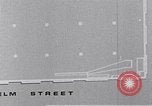
U.S. Department of Treasury, Secret Service, films a reenactment of President Kennedy's motorcade route when he was assassinated in 1963
On a sketch of the Texas School Book Depository Building 6th floor, a narrator points out locations pertinent to the assassination of U.S. President John F. Kennedy, in Dallas, Texas, in 1963. Camera shows stacks of boxes near windows on the 6th floor of the Building, as it pans across the scene. It focuses on a reconstructed scene of boxes near the window with Elm Street below to the right. A Secret Service agent is shown sitting in a position believed the same as the assassin and pointing in the direction that his rifle would have been.Views out the window of traffic moving on streets below. Next, an open convertible car is seen accompanied by two motorcycle police, simulating the movement of the President's motorcade as it turned from Main onto Houston Street. Narrator notes that next turn, from Houston onto Elm Street is quite sharp and driven very slowly. Narrator describes the shots fired as the car retraces specific locations on the route. Photograph of reenactment made for the President's Commission, using the Secret Service followup car. It shows telescopic sight cross hairs as the assassin would see them. Next the car being driven in the current reenactment is viewed through a four power, 18mm Ordnance Optical Incorporated rifle scope, like the one used by the assassin.That last part of the film is shown again in slow motion.
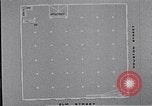
The U.S. Secret Service, films likely exit route used by Lee Harvey Oswald, after assassinating President Kennedy in 1963
On a sketch of the Texas School Book Depository Building 6th floor, a narrator points out likely exit route used by President Kennedy's assassin in Dallas, Texas, in 1963. A Secret Service Agent is filmed holding a simulated rifle as he moves from the window from which shots were fired. View from the back of the agent walking across the 9th floor, past many boxes, towards the stairway. He hides the simulated gun and exits the down stairway. Next he is seen entering the second floor from the stairway and walking through office corrridors, arriving at the employees lunchroom.
SOC Seagull observation biplane retrieved by USS Salt Lake City in Doolittle Task Force during World War II.
U.S. Task Force 16 underway in the Pacific to launch the famous Doolittle raid bombing Tokyo, Japan during World War 2. U.S. Destroyers and Cruisers on horizon as planes circle and land aboard USS Enterprise (CV-6). Bow of Heavy Cruiser USS Salt Lake City, CA-25 underway in heavy seas, and another one ahead of it. SOC Seagull observation biplane circles USS Salt Lake City. USS Hornet (CV-8) and USS Enterprise (CV-6) in the background. SOC comes alongside USS Salt Lake City. Pilot is seen affirming security of hoist cable on his top wing, after which, the plane begins rising as the hoist winds it in. SOC flies past USS Salt Lake City. SOCs land in slick of USS Salt Lake City and hook on sled.
United States Ship Augusta catapults SOC observations seaplanes from its decks, on its way to Berlin after World War II.
USS Augusta during visit of President Harry S. Truman of United States, to Berlin, after World War II. Two SOC Seagull observation planes catapulted from Augusta. Planes take off from ship and glide over sea. Seaplanes make landing in sea waters, man from one SOC holds hoist strings suspended from ship Augusta. SOC seaplane surfing on sea water, and then raised by hoist cranes on ship. Sailors fix plane to its mount on the deck. Other ships leading Augusta on its way.
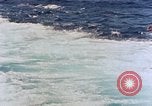
Curtiss SOC Seagull aircraft lands on surface of water in the South West Pacific Theater of World War II.
U.S. ships underway at a sea in the South West Pacific Theater of World War II. Curtiss SOC Seagull aircraft lands on the surface of water. SOC hoisted alongside. Men steady it on hook. The pilot talks with sailors on the deck. The SOC taxis near the stern of the USS Honolulu. Sailors on deck of the USS Honolulu (CL-48). Two Light Cruisers underway in background.
Comparison of Japanese Scout 95 seaplane and United States Curtis SOC in Japan (WW2)
A World War II U.S. army war training film on Identification of a Japanese Scout 95 seaplane and United States Curtis SOC seaplane in Japan. Japanese Navy scouting 95 seaplanes in flight. Other planes flew nearby. High altitude view of the city. Animation shows the structure and the working of the plane. The prominent features of the plane are shown. Silhouette of plane from all angles. The wings and tail of the plane are described through the animation. Information about the pontoon of the plane. The plane consists of two cockpits. The comparison between United States Curtis SOC and the Japanese Navy Scout 95 is made. The wings compared which are almost the same. The difference lies in the open cockpit of the Japanese plane and the covered cockpit of the United States plane. The difference in the tail pattern is shown. The Japanese plane consists of a smaller tail.