


 Francais
 Deutsch
 Italiano
Refine Your Search
Souilly France 1916 stock footage and images
- Showing 3805 to 3810 of 5649 results more
more Hide
Hide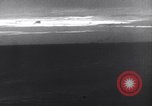
Barrage from allied warships at shores of Normandy and allied aircraft take off for D-Day invasion of France, World War II.
Allied ships in the English Channel fire at German fortifications on French coast to soften up defenses at start of D-Day Invasion. Views of large guns on many ships firing toward shore. Discarded shells are seen on board the deck of the ship. United States gliders and C-47 aircrafts on field in Britain. Gliders being towed along the field for take off. View of U.S. Army soldiers leaving troop carriers and boarding landing crafts (LST) for Invasion of Normandy beaches. G.I.s climb down landing nets and board a landing craft. Allied bombers overhead flying toward Normandy targets. Smoke emerges from the sinking United States destroyer USS Corry (DD-463) off the shore of Utah Beach near Iles Saint-Marcouf.
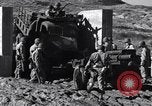
American troops practice loading and handling of vehicles aboard concrete landing craft in France during World War II.
American troops practice in the military training area at Braunton Burrows North Devon, England, in preparation for the D-Day landings in Normandy, during World War 2. They practice handling and loading of 105mm Howitzers, trucks and vehicles aboard concrete landing craft mock ups Vehicles being unloaded from one of the mock ups.
American troops embark on Navy transports at Hoboken New Jersey, bound for France in World War I.
American troops aboard Navy transport at pier. Troops embark on Navy transports at Hoboken.

United States Secretary of State, Dean Acheson at talks in London with UK, France, USA to discuss Germany
United States Secretary of State, Dean Acheson, British Prime Minister Anthony Eden, and French Foreign Minister, Robert Schuman, meet in the British Foreign Office, in London. The three powers meet to discuss the future of Germany and also the Far East situation.
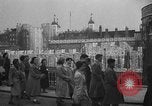
Students visit England and France, under auspices of Council for Education in World Citizenship
Twenty-six students from thirteen countries have come to visit England under auspices of Council for Education in World Citizenship, organized by the United Nations Association. Scenes show the group visiting notable landmarks including: Tower of London, Houses of Parliament, and other sites. Pedestrians,,cars, and double-decker buses seen on streets of London, England. The students also go Paris, where they see the Arc de Triomphe and the Eiffel Tower.

Ben Bella returns from France after seven years of imprisonment to take over the reigns of Algeria.
Algeria attains independence and Ben Bella becomes the President. Head of the provisional government Benyoucef Ben Khedda addresses the press as he informs them about the end of provisional rule and attainment of independence. Ben Bella the new President of free Algeria arrives after seven years of confinement. He gets off the plane and is given a warm welcome. People celebrate their independence. People loaded in trucks. Ben Bella with important statesmen.
CRITICALPAST.COM: About Us | Contact Us | FAQs - How to Order | License Agreement | My Account | My Lightboxes | Shopping Cart | Advanced Search | Featured Collections | Website Terms & Conditions | Privacy Policy ©2026 CriticalPast LLC.
License Agreement |
Terms & Conditions |
Privacy Policy
©2026 CriticalPast LLC.