


 Francais
 Deutsch
 Italiano
Refine Your Search
Souilly France 1916 stock footage and images
- Showing 3865 to 3870 of 5649 results more
more Hide
Hide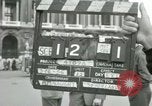
Civilians board a Bautex-Mouches and visit the Notre Dame Cathedral in Paris.
People on a sightseeing tour of Paris. Civilians board a Bautex-Mouches in front of the Opera House. Tourists visit the Norte Dame Cathedral (6 Parvis Notre-Dame - Pl. Jean-Paul II, 75004 Paris, France). People enter the Notre Dame cathedral. French soldiers stand guard at the entrance. People come out after looking at the famous Gothic architectural building. Rear view of the Cathedral.
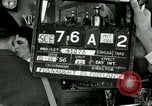
French civilians at inexpensive and antique shops, a flea market, a bar and a cafe in Paris.
Socializing and shopping in Paris, France. People sit in a bar. French barmaid smiles as she serves bar regulars their drinks and chats with them. Men and women walking near inexpensive shops along the Avenue Champs-Élysées. Woman enters a shop with sign reading 'Soldes' (‘Sales’ in English). French civilians walk in a flea market on the outskirts of Paris. Shops on either side of the market. Men buy goods from the shops. Customer purchases antique items from an antique shop. Two women browsing for chinaware. Antique items displayed on tables. A man looks at the antique items. The Café de Flore on the left bank of Seine. Men seated at tables drink at the Café de Flore (172, BOULEVARD SAINT-GERMAIN 75006 PARIS).
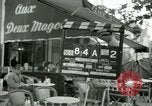
French men seated at cafe Aux Deux Magots and some French men play a boules game in a park, Paris.
Leisure activities in Paris, France in the mid 1950s. Men sit at cafe Aux Deux Magots on left bank of Seine. Men drink and eat at tables in the cafe. People walk near the cafe. Frenchmen stand in a group and play Pétanque or Bocce Ball in a park. Other men watch a French boules player take his turn. Three balls on the ground. Man throws ball and hits one of the balls.
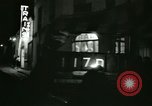
Frenchmen and women at a bar and Hotel Cité du Midi Pigalle in Paris
View from street of a bar and the Hotel Cité du Midi Pigalle in the Montmartre, Paris, France. Men and woman stand at the doorway of bar. Man and woman come and enter the hotel next door. A woman approaches a man and talks to him as he walks down the street. The man shakes his head and continues to walk. Man and woman enter the Hotel. Neon signage “PIGALLE”.
Frenchmen and women near the Narcisse restaurant in a sector of Pigalle, Paris.
Parisian nightlife in Rue Pigalle. A sector in Pigalle, Paris. A sign highlights the name 'Pigalle'. Traffic on the street. People cross the street. A restaurant named 'Narcisse'. A neon sign reads 'Sphinx'. Le Sphinx nightclub across Pigall’s. Pigall’s on the right side of Rue Pigalle (77 Rue Jean-Baptiste Pigalle, 75009 Paris, France).
Allied man and women soldiers, French girls and civilians arrive for the opening of a Stage Door Canteen in Paris.
The opening of a Stage Door Canteen in Paris, France. Allied soldiers, sailors, women soldiers, French girls, and civilians arrive for the opening of the Canteen in Paris. A guard directs the people. Army band plays on stage. People clap after the first performance. People watch them and talk. Allied flags displayed on the wall. People stand as the band plays the French, British and United States National Anthems. (World War II period).
CRITICALPAST.COM: About Us | Contact Us | FAQs - How to Order | License Agreement | My Account | My Lightboxes | Shopping Cart | Advanced Search | Featured Collections | Website Terms & Conditions | Privacy Policy ©2026 CriticalPast LLC.
License Agreement |
Terms & Conditions |
Privacy Policy
©2026 CriticalPast LLC.