


 Francais
 Deutsch
 Italiano
Refine Your Search
Souilly France 1916 stock footage and images
- Showing 4609 to 4614 of 5648 results more
more Hide
Hide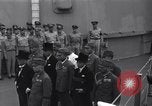
Representatives of nations sign Japanese surrender and peace treaty ending World War II, on the deck of USS Missouri, Tokyo Bay
Officials of various countries arrive. Sailors standing at attention. General Douglas MacArthur arrives on deck and stands in front of a microphone. Japanese officials, military and civilians standing in groups. Japanese General signing the surrender document then the Russian General Derevyanko, General Sir Thomas Blamey from Australia, Colonel Moore Cosgrave General Jacques P. Leclerc of France and Admiral Cel Helfrich from Netherlands signs the peace treaty.

Allied warheads at a session of the Joint Allied War Council in Washington DC to discuss war strategy during the World War II.
The Allied Forces fight the Axis troops during World War II. Joint Allied War Council in session in Washington DC. U.S. Army Chief of Staff, General Marshall; U.S. Chief of Air Forces, General Arnold; U.S. Admiral Leahy and U.S. Admiral King and other British and United Nations warheads at the meeting. A map of Europe and North Africa. In North Africa British and American bombers drop bombs on the German supply lines. The allied soldiers advance in pursuit of the retreating enemy. German and Italian prisoners are taken. U.S. General Eisenhower points at a map. General Doolittle shown. From the White House U.S. President Franklin D. Roosevelt addresses the people of France in French over the radio. An American ship at a French port. French children welcome the ship. A man distributes free milk and food to the French children.
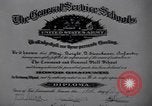
The military career of General Dwight D Eisenhower from 1926 to World War II
Film starts showing Dwight D. Eisenhower's diploma as honor graduate of the Army Command and Staff School, in 1926. Image of Major Eisenhower (in civilian clothes) Narrator says he was assigned to France, to prepare a guide book on American battlefields in Europe. Image of Eisenhower as a member of General Douglas MacArthur's staff in the Philippines, where MacArthur was Commander-in-Chief of the Philippine army. Glimpse of headquarters building there. MacArthur in his office helping the Commonwealth of Philippines work out a plan for its military defense. Image of Lieutenant Colonel Eisenhower in 1939, serving as Executive Officer of the 15th Regiment, at Fort Lewis, Washington, View of the Regiment's Headquarters building. Scene shifts to 1940, showing German forces invading Holland and Belgium. German tanks are seen in action. German Junkers 87 Stuka dive bombers and Heinkel 111 bombers drop bombs. After passing of the Selective Service draft act, President Franklin D. Roosevelt is seen at a public ceremony on October 29, 1940, where Secretary of War Henry L. Stimson drew from a bowl the capsule containing the first draft number of World War 2. Views of Lt. Col. Eisenhower as Chief of Staff of the Army 3rd Division and later as Chief of Staff of the Ninth Corps. Next, he is seen as Chief of Staff to General Walter Kreuger, who in 1941 led the Third Army in the most realistic maneuvers held by American troops (The Louisiana maneuvers). Views of American troops engaged in those maneuvers. Image of Eisenhower as a Brigadier General. Views of the Pearl Harbor bombing during Japanese attack on December 7, 1941.
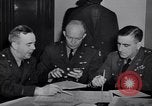
General Dwight D Eisenhower and Allied forces capture North Africa and Sicily, receives the French Legion of Honour medal (WWII)
General Dwight D Eisenhower from the North Africa campaign to the D-Day Normandy landings during World War II. Eisenhower with other military officers in the War Plan Office discusses strategy. A mural covering the west wall of the Eisenhower Museum in Abilene, Kansas. An animated map shows plan to seize key positions in North Africa. Fight in Algiers and Casablanca. Allied troops fire artillery, bombarding a North African coastal town. Troops advancing from beachhead, engage in street fighting with Vichy French troops in Casablanca, Morocco. A flare gun is fired. Unfavorable weather conditions delay the troops advancing towards Tunis and Bizerte. Allied troops fighting at nighttime. Allied soldiers walk through mud, allied military vehicles pass through water on the roads. Troops fire artillery under a canopy, hitting the side of a hill. Thick clouds of smoke cover a hill. U.S. General Omar Bradley and his troops capture Bizerte, Tunisia and the British 1st Army captures Tunis. German and Italian prisoners raise their hands up upon surrender. Animated map shows the surrender of the Axis troops. A ceremony commemorates the victory. North African cavalrymen join the parade. General Eisenhower and Free French Forces General Henri Giraud review a military parade. Henri Giraud bestows to General Eisenhower the French Grand Cross of the Legion of Honor. A mural on a wall of the Eisenhower Museum depicts the Allied invasion of Sicily. Allied troops march into Sicily in 1943.Civilians in the streets to celebrate. A mural on the wall of Eisenhower Museum depicts invasion of Italy. Allied troops land ashore and march into Italy. U.S. General Mark Clark 5th Army at Salerno. A sign reads Napoli. Eisenhower comes out of a tent. U.S. President Roosevelt visits the troops in the combat area with Eisenhower. United States President Roosevelt, British Prime Minister Winston Churchill, and Joseph Stalin in Cairo, Egypt. Another mural on the wall of the Eisenhower Museum. Eisenhower with other officers. Dramatization of German troops guarding and preparing the defenses of Normandy before the Allied landings. Eisenhower reviews training of the troops as they prepare for the invasion of France. Allied troops undergo physical training though obstacle courses. Churchill inspects the troops. Eisenhower reviews the troops on the eve of invasion. Eisenhower speaks to airborne troops wearing blackened camouflage face paint.
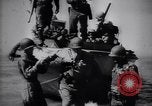
Early life of General George S Patton, and Patton in Africa during World War II.
'The Big Picture' episode narrated by Ronald Reagan depicts the life of U.S. General George S Patton, Jr. Opening scene shows General George S. Patton, Jr. stepping from a landing craft in France, during World War 2. He stands by the side of a road and waves, as elements of his 3rd Army pass in tanks. Patton in a jeep moving with his troops. General Patton pointing with a baton, in North Africa. View of a world globe being circled by a satellite. A baby picture of Patton (called "Georgie"). Patton seen as a boy, fencing, as a cadet at the Virginia Military Institute, and as a cadet at the U.S. Military Academy, West Point. A smiling Patton at West Point. Members of the first football team for soldiers established by Patton. Renault tanks of the 1st Tank Battalion moving with AEF soldiers in World War I. Tank commander George Patton standing in front of a Renault tank. Group picture of American soldiers and tanks, at the Tank School, in Fort Meade, Maryland, after World War I. Closeup of Dwight D. Eisenhower and George S. Patton, in the group. Patton and his wife, Beatrice Banning Ayer, in Old West costumes, for a party, where he displays a pistol in his belt, and in costumes for another party, where they dress as a knight and his lady on horseback. American recruits and draftees being issued uniforms in World War 2. Lieutenant General George S. Patton, Jr. commanding forces for the invasion of North Africa, in November, 1942. U.S. Navy warships fire their guns in advance of an amphibious landing. Landing craft heading toward shore. U.S. troops coming ashore at Casablanca, French Morocco. General Patton accompanied by French officers. Glimpse of U.S. President Franklin D. Roosevelt and British Prime Minister Winston Churchill at their conference in Casablanca in 1943. Patton riding in an armored car with three-star flag displayed. Artillery firing in battle of Tunisia. Lt. Gen. Patton and others observing operations. British General, Sir Harold Alexander, steps from a light airplane to meet with General Patton in North Africa. They converse. General Patton in March 1943 with binoculars observing battle, with Major General Terry Allen on his right, and Brigadier General Theodore Roosevelt Jr. to the right of Allen. They are viewing from a ridge by the village of El Guettar, as allies engage German troops and armor from the 10th Panzer Division. M3 Lee tanks moving in the desert. Knocked out tanks of the German 10th Panzer Division, including German Panzer IV tanks, in the aftermath of the Battle of El Guettar. General Patton coming aboard an American warship, and then standing with an Italian officer and a U.S. Major General. Allied naval bombardment at night. Patton observing though binoculars. Allied warships bombarding Sicily. Allied amphibious forces heading ashore in landing craft. Troops moving ashore. Closeup of troops in a landing craft. Glimpse of Patton in a landing craft. Troops walking across floating dock from a landing ship. U.S. flag flying in sand at beachhead. Landing ships in background. General Patton stepping ashore from small boat, and conversing onshore with a Brigadier General and some troops.

People in scenes of anger and tension; gathering of the Association for Mental Health, Anxiety and Tension
View of spinning world globe. Faces of serious and brooding people in various parts of the world. Close-up views of faces of serious looking men. View of a crowd of people in France listening to a speaker on the street. The faces of people listening to the speaker. Next view shows what appears to be French police in the streets chasing a protest crowd and making it disperse. Next brief scene shows a crowd of people and police in China surrounding what appears to be a European man and pushing him along through a curtain-flanked doorway. A person holding a motion picture camera is among the jostling crowd. Insignia of the United Nations and flags of the member nations around the insignia. View of the UN headquarters (405 E 45th St, New York, NY 10017, United States) in New York City. Traffic on the road. A flag of the United States on a building. A banner reads "Association for Mental Health, First Annual Forum on Anxiety and Tension." A man speaks into a microphone. Mrs. Eleanor Roosevelt, widow of United States President Franklin D. Roosevelt, is seen at the podium addressing the association. Members of the association sit on chairs. The scene changes to a quiet, tree-lined street in a town or suburb. A car parked on the road. A man rests in a backyard garden on a hammock. Contrasting scene shows a man come rushing and running out of his house, hastily putting on his suit jacket. He stops, remembers something and goes back in again, then comes out before getting in his 1950s sedan car and rushing away. In next scene the man in shirt and tie is seen rushing through his lunch at a restaurant, conducting business while eating and smoking a cigarette. View of a angry taxicab driver as he looks out his car window and shouts at stopped traffic. He steps from the car and shouts about traffic delays. Another man works with a pneumatic jack hammer. A man seated on a chair in his living room holds his head as his wife yells at him and berates her husband. She is seen shaking a finger at him and scolding him. View of his fingers tapping anxiously on the arm of the chair and finally make a fist. More scenes of the angry woman wagging her finger at the man in anger. A pair of white swans in mirror-like water. A white Polar bear in a hot cage at a zoo. A man looks at the tired bear and the man also rubs his own face, looking tired. A young boy pulls at the trousers of the man who is looking at the bear, to get his attention.