


 Francais
 Deutsch
 Italiano

Refine Your Search
South Vietnam 1969 stock footage and images
- Showing 781 to 786 of 6015 results more
 Hide
Color Sound
United States interests in South America and Latin America just before World War 2, and German presence in the Americas
Opening scene shows U.S. State Department officials of the Division of the American Republics in a meeting. They examine a map titled "Inter-American Highway" showing a proposed highway running from the border of the U.S. and Mexico at Laredo Texas, all the way through Mexico, Latin America, and into South America. View of South American farmers loading hay into a horse cart, then of cattle in a stockyard being herded by a cowboy on a horse. Aerial view of city of Rio de Janeiro Brazil circa 1938. Narrator discusses threat of dictatorships in countries of South America. Views of German ships and German contracted ships loading and unloading at Buenos Aires harbor. Narrator describes system of barter where Argentina sends goods to Germany in exchange for German-made goods. Swastika flag on one of the cargo ships. Dock crane with German sign "Deutsche Maschinenfabrik A.G. Duisburg". Letters on side of a ship reads 'Buenos Aires Maru'. Supplies unloaded from ship. Cargo stacked including wooden boxes with German writing labeled "Vorsicht - San Paulo Brasilien". In a Latin American or South American city, view of the storefront for luxury goods by Herm Stoltz & Co. A Nazi German flag hangs above the store entrance. Fine leather goods, cameras, figurines, steins, etc from Germany are shown in store window displays. View of Nazi German books on display in storefronts, including closeup of translated book "Mein Kampf" ("Mi Lucha") by Adolf Hitler, bearing an image of Hitler on front cover. A German passenger aircraft parked at an airfield, which narrator describes as being part of a German airline offering service to South America within two days of Berlin, Germany. More German airplanes are shown at an airport in South America. View of government offices in Rio de Janeiro Brazil. Large crest with a bird atop an entrance. Interior office view of President Getúlio Vargas of Brazil seated in discussion with American diplomats. Narrator indicates that Vargas learned of German colonists in Brazil planning his overthrow by assassination, and therefore outlawed all Nazi activity. Poster of Vargas communicating his policies. Scene switches to exterior view of the State, War, and Navy Building (later the Executive Office Building) in Washington DC, with the First Division Monument in the foreground. Interior view of office door bearing sign for Under Secretary of State. Inside, Sumner Welles is seen in discussion with officials. He is asked about the American attitude toward Latin America. Welles describes the importance of strengthening ties between the countries of the Americas. Under Secretary Welles states that the welfare of all of the countries in the region may depend on their continued solidarity.
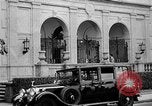
Creation of Good Neighbor Fleet of ships operated by Moore-McCormack Line with service from the U.s. to South America and Latin America
Exterior view of Pan American Union Building in Washington DC, with a 1930s Packard four door sedan-limousine parked in front. A man entering the building. Jefferson Caffery, U.S. Ambassador to Brazil, seated in an office and reviewing paperwork. Narrator describes the creation of the Good Neighbor Fleet (where Moore-McCormack Lines, also called Mooremack, was contracted to run three ocean liners of the U.S. Maritime Commission between the USA and South America, called the Good Neighbor Fleet.) Close up picture of brochure advertising the new fleet, and picturing the three ships (The California, Virginia and Pennsylvania from the former Panama Pacific Line, with new names Uruguay, Brazil and Argentina.) Next scene shows 3 men meeting (this is possibly Moore-McCormack Lines founder Albert V. Moore, on right, seated at a table and in discussion, possibly with U.S. Maritime officials. Man on left is possibly Emmet McCormack.) Passengers aboard liner SS Brazil as it departs port. Crowd on docks wave at the ship leaving New York harbor. View from on board SS Brazil in New York Harbor as a nearby tug boat sprays water. Skyline and skyscrapers of New York City's Manhattan Island seen in background. Map of South America showing route of a Good Neighbor ship. Good Neighbor Fleet ships at a harbor in South America. U.S. State Department diplomats in South America beside one of the ships as fleet service is inaugurated. Exterior view of Pan American Union building and its sign in Washington DC (later called the building of the Organization of American States). President Ortiz of Argentina, President Alfredo Baldomir of Uruguay, and President Getulio Vargas of Brazil are shown in discussion with various officials.

Division of Korea at 38th Parallel and elections to establish democracy in South Korea.
Map shows division of Korea at 38th Parallel. Pyongyang in North and Seoul in South Korea. Line and board reads 38 parallel on road and bridge. Elevated, wide view of city of Seoul, the Capital of South Korea. The UN Commission at Korean assembly examines process of establishing democracy. Officials and President Syngman Rhee in 1948. The flag of South Korea. Civilians line up for voting in May 1950, just before outbreak of Korean War. Women stand in line. A child on back of woman. Men go in and come out of polling booth. Aerial views of Korean peninsula.
Sergeant Taniguchi interrogates a North Korean prisoner of war in South Korea
A North Korean prisoner of war points out enemy positions on a map and South Korean officer takes down notes. Sergeant George Taniguchi along with another South Korean officer continues to interrogate the prisoner as they sit around a table near a river in South Korea. (Korean War)
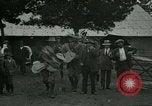
South African Cavalry assemble saddle and hay.
Activities of Cavalry soldiers in South Africa. South African cavalry with saddle and horses. Cavalry soldiers assemble saddles. Horses stand in the background. Cavalry soldiers pick hay bundles. (World War I; World War 1; WWI; WW1)
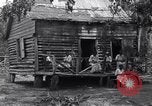
"Congo Baskets" being woven by African Americans in the Sea Islands of South Carolina
Film opens showing members of an African American family seated on the porch of their house in the Cooper River District of South Carolina. They are all engaged, including the father, in weaving, what in those days were called, "Congo Baskets." (The grass used by these basket makers is indigenous to the Cooper River District, and not found elsewhere. But the same type of baskets are made in various parts of Lowcountry Africana, associated with the Geechee-Gullah culture in the Sea Islands of South Carolina and Georgia.) As the basket makers work, a man, with a pig on a leash, walks slowly past the busy family. In the next scene, while others continue working on their baskets, the man deftly cuts Palmetto leaves into strips that are used to sew the baskets. Next, the camera focuses on individual workers showing their dexterity and skill as they work. In the final scene, the man examines and displays finished baskets of several different designs.
CRITICALPAST.COM: About Us | Contact Us | FAQs - How to Order | License Agreement | My Account | My Lightboxes | Shopping Cart | Advanced Search | Featured Collections | Website Terms & Conditions | Privacy Policy ©2026 CriticalPast LLC.
License Agreement |
Terms & Conditions |
Privacy Policy
©2026 CriticalPast LLC.