


 Francais
 Deutsch
 Italiano
Refine Your Search
South Vietnam 1969 stock footage and images
- Showing 1549 to 1554 of 6014 results more
more Hide
Hide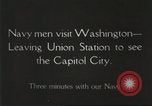
Sightseeing United States sailors visit landmarks in Washington DC, United States and Annapolis, Maryland.
United States sailors visit Washington DC area. View of the U.S. Naval Academy Chapel in Annapolis, Maryland (Slate the precedes this shot incorrectly states that it is the U.S. Capitol). View of Pennsylvania Avenue in Washington, DC, as seen from the U.S. Treasury Building. Traffic along Pennsylvania Avenue. View of exterior of U.S. Treasury Buildings, with sailors descending steps. View of the South entrance of the White House. A sailor standing next to Tidal Basin views the Washington Monument in the distance. Exterior of the side of the Lincoln Memorial, with two U.S. Navy sailors walking toward the building. Sailors descend the steps of building. The south entrance of the White House. A sailor looks at the Washington Monument from Tidal Basin. The sailors in front of the Lincoln Memorial.
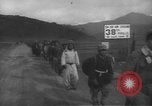
Lieutenant General James Van Fleet, assumes command of the Eighth Army in Korea, after General Douglas MacArthur is relieved of command by President Harry Truman
Opening scene shows a sign identifying the 38th Parallel separating North from South Korea. Refugees with their few belongings walk from North Korea to South Korea. A U.S. Patton tank is seen next, followed by another. Closeup of treads on a Patton tank, raising dust as it passes. Another Patton heading toward the camera, with a crewman waving. A Cessna L-19 Bird Dog, aircraft, marked with three stars, arrives, carrying the new Commander of the Eight Army, Lieutenant General James Van Fleet. He climbs out of the airplane and shakes hands with a Brigadier General. Standing behind him is Air Force Lieutenant General Earle E. Partridge, commander of the 5th Air Force. A jeep carrying General Van Fleet turns in from a dirt road. A sign reads "56th Regiment, Message Center." Lieutenant General Van Fleet, climbs out of the front right seat of the jeep. He is wearing a pair of pearl handled side arms. U.S. Air Force Lieutenant General Partridge is seated in the back seat of the jeep and jumps out behind Van Fleet. View of explosion in distant hills, part of the initial barrage in advance of the next United Nations offensive. Sounds of aircraft and artillery are heard. American infantry are seen moving forward. Narrator notes that numerous Chinese troops were in the hills around the Chosin reservoir and they were committed in vast numbers against the UN forces. UN infantry in Korean War moving through forests and mist. Large numbers of Chinese prisoners of war are seen walking along a dirt road.
German forces advance towards the battlefront in Greece during World War II.
German ground offensive in Greece and Southern Yugoslavia during World War II. Soldiers stand near artillery. Artillery lined up on a field. A column of German soldiers moves through Southern Yugoslavia en route to Greece. Soldiers aboard tanks passing through the streets. A bridge is set on fire by them. Serbian prisoners of war are taken.

People gather to watch a college football game played between USC and the U.S. Navy in Los Angeles, California.
A college football game played between the University of Southern California (USC) and the U.S. Naval Academy from Annapolis, in Los Angeles, California. Large crowd of people gathered to watch the game. The game in progress. The University of Southern California wins the game over Navy 42-20.
Adolf Hitler, Hermann Goring and other officers tour occupied France in Hitler's private railroad car and meet with Francisco Franco.
German officers tour France during World War II. Officers including German Chancellor Adolf Hitler, German Air Force Minister Hermann Göring and others seated at a desk in the train car. They discuss a map. Soldiers at a railroad station. The soldiers entrain. They meet their loved ones. They wave towards them as the train leaves the station. Houses and buildings in the background. The train on a railway track. Adolf Hitler, Hermann Goering and other officers seated in Hitler's private railroad car touring occupied southern France. The soldiers wave at a station. A board reads: Hendaye (on the southern border of France near Spain. Hitler and officers at railroad station in Hendaye as train arrives with Spanish leader Francisco Franco on board. Franco exits the train and greets Hitler. They walk past German soldiers at attention, as Franco offers a Nazi salute. Franco and Hitler board another waiting train.
2nd Sino-Japanese war, precursor to World War II in the Pacific. Pearl Harbor attack. Early phase of Pacific conflict between Japan and the U.S.
The film 'Sea power in the Pacific' showing Japanese dominance in China and at start of World War 2. Then it chronicles U.S. efforts to build Navy and fight back on sea and in the air. Opening scene shows Japanese Mitsubishi G3M (Type 96) bombers high overhead, and then closeup in formation. View from bomber of bomb bays open with bombs falling and view from ground of explosions and destruction. Overlay on film says: "China---1931." (This is not correct. The G3M bomber was not yet in service.) This film depicts Japanese attacks during second Sino-Japanese War, commencing 1937, Chinese civilians running to escape Japanese bombing of Singapore. Buildings destroyed and on fire. Next, Japanese troops, carrying the Rising Sun flag, are seen establishing a beachhead in an Amphibious assault. More scenes of Japanese infantry advancing through Singapore, ad it is being destroyed and burned. Soldiers charging along an alleyway, with pagoda in background. Next, Japanese soldiers are seen attacking Nanking, and committing atrocities and killing Chinese during the so-called "Rape of Nanking," in December, 1937. Chinese civilians being summarily shot and dumped into a large open grave after execution. Two Chinese prisoners with hands bound, being executed by rifle fire. Jubilant Japanese troops celebrating their victory. Map shows areas of China occupied during second Sino-Japanese war and the East Indies to the South. View of oil tanks; an open pit tin mine; a native cutting rubber tree bark to collect latex. Flags on map show regions of English, French, and Dutch colonial interest. It also shows Islands to the East, fortified by the Japanese. Cartoon shows Japanese soldier opposed by and American sailor (representing U.S. Sea Power). Next, famous images of the Japanese attack on Pearl Harbor, Hawaii, December 7, 1941, are shown, including the USS Arizona burning and sinking. Hawaii, Midway, Wake, and the Philippines Islands, are highlighted on a map and Japanese control of the Pacific is illustrated. Japanese soldiers are seen displaying a captured American flag. U.S. Lieutenant General Jonathan M. Wainwright is seen surrendering the garrison at Corregidor, on May 6, 1942. View of Japanese General Masahara Homma discussing surrender terms with Wainright. Map shows interlocking web of Japanese fortified bases in Pacific and need for seapower to oppose it. View of American shipyard with hundreds of workers, employed to build ships for the war effort, in World War 2. Views welding, metal fabrication, and other shipbuilding activity. A new ship going down the ways and a woman christening a new ship with splash from bottle of champagne. A new "Liberty Ship," the Richard Bassett, going down the ways at Bethlehem-Fairfield Shipyard Inc. Baltimore, Maryland. Closeup view as the stern of another ship enters the water upon launching. View of it from a distance. Shipyard workers knock supports from under what may be a landing craft, as it is launched. Japanese warships underway in the Pacific and firing their naval guns. Explosions on a shoreline from naval bombardment. Japanese infantry wading ashore during an amphibious assault. Map shows where Japanese forces attempt an amphibious assault on Southern New Guinea, thwarted by the U.S. Navy in the battle of the Coral Sea of May, 1942. In June, 1942, a Japanese attempt against Midway Island, was again checked by the U.S. Navy in the Battle of Midway. View of USS Wasp (CV-7) carrier deck filled with airplanes, including Grumman F4F Wildcats. A Douglas SBD Dauntless dive bomber being cleared for takeoff from the Wasp. Gun camera film showing Japanese airplanes being shot down by pursuing U.S. aircraft.
CRITICALPAST.COM: About Us | Contact Us | FAQs - How to Order | License Agreement | My Account | My Lightboxes | Shopping Cart | Advanced Search | Featured Collections | Website Terms & Conditions | Privacy Policy ©2026 CriticalPast LLC.
License Agreement |
Terms & Conditions |
Privacy Policy
©2026 CriticalPast LLC.