


 Francais
 Deutsch
 Italiano
Refine Your Search
Spittal Austria 1945 stock footage and images
- Showing 439 to 444 of 6933 results more
more Hide
Hide
Operation of United States Coast Guard in Okinawa and Iwo Jima, Pacific Theater during World War II
Overseas activities of United States Coast Guard in World War 2. February 19, 1945, U.S. Marines invade Iwo Jima in Pacific Theater. Naval guns and aircraft bombard Iwo Jima. Mountain in the background. Aircraft in flight. Marines and Coast Guardsmen aboard landing craft. Marines landing on Iwo Jima under heavy Japanese fire. Destroyed landing ships litter water's edge. Marines hunkered down and treating wounded, under fire. LSTs and other ships at established beachhead. Vehicles drive onto beach. April 1, 1945, Marines attack Okinawa. Navy warships bombard Okinawa with heavy guns and continuous rocket fire. Beachhead is established against light resistance. Japanese kamikaze aircraft attack American invasion ships. Several ships are hit and sunk. Surviving sailors are helped aboard rescue boats. Antiaircraft fire from American ships fills sky with smoke and flak. A kamikaze aircraft crashes in the sea. Sky filled with American bombers. Aerial view of Atomic bomb explosion over Nagasaki Japan on August 9, 1945. Raising American Flag on Japan homeland.
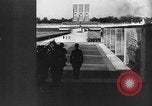
Nazi Party ceremonial grandeur is contrasted to the horrors perpetrated under the 3rd Reich
6th Nazi Party Congress at Nuremberg, in 1934, featuring a "Totenehrung" ceremony, honouring dead. Nazi SA ( Sturmabteilung) and SS (Schutzstaffel) troops in precise formations fill the Zeppelin Field Luitpold Arena, leaving only a wide pathway to the Ehrenhalle war memorial. View from behind honor guard standing at the Ahrenhalle, as Adolf Hitler, flanked by SS leader, Heinrich Himmler (in Black) and Viktor Lutze, head of the Sturmabteilung (SA), approach. Three huge banners with swastikas are seen in the far background. Scene shifts to 1945. American troops are now assembled at the main grandstand (Ehrentribüne) of Zeppelin Field. The American flag covers the wreathed swastika sculpture at the top of the Grandstand. View of German soldiers, who have been mustered out, mingling with civilians in a town. Some speak with an American soldier, who is part of the U.S. occupying force. Scene shifts to the Yalta conference in February, 1945. Winston Churchill, Franklin D. Roosevelt, and Joseph Stalin are seen seated while their most senior military staff members stand in the background. Allied leaders sit around a large conference table. U.S. Secretary of State James F. Byrnes, sits near Prime Minister Winston Churchill. Scene shifts back to Nazi era. Joseph Goebbels, Reichminister of Propaganda is speaking and haranguing a crowd. In contrast, German soldiers are seen conversing with occupying American soldiers. This is contrasted with more scenes of Nazi leaders giving impassioned speeches to a hall filled with Nazi faithful. German soldiers, prisoners of war are seen directed by U.S. military police, behind a barbed wire enclosure. Large numbers of German prisoners of war in an open holding area. Closeups of some. Bucolic scenes of farmers working in fields and herds of sheep and cattle. Hitler speaking in a forceful, animated way and haranguing an audience of rapt listeners. German civilians standing quietly in a group. (Narrator refers them being the people of Beethoven, Goethe, and Martin Luther, as statues of those iconic Germans are shown.) In dramatic contrast, numerous dead bodies of victims are being shown to German citizens by American troops, at Nordhausen, Buchenwald, and Bergen-Belsen concentration camps. This is contrasted against views of German people folk dancing in traditional costumes, German contributions to science (view of Albert Einstein speaking) and industry (view of professional glass blowers at work). Glaring contrast shows German civilians moving the body of a concentration camp victim; several civilians being shot dead by a firing squad (unseen); Rudolf Himmler; and an image Germany being destroyed, as result of the Nazis. American soldiers are loosely assembled in an open field. by the Elbe River at Torgau, Germany on 26 April 1945. American and Russian officers greet each other at the site, where their armies have met in World War 2. American and Russian soldiers mingle and greet one another. Views of Allied forces entering Germany. Another scene of victims' bodies stacked at a concentration camp. French soldiers examine stake where prisoners were tied and executed in the Gestapo headquarters on Paris France. Other views of the Gestapo prison, where victims were buried. Examples of torture devices used to coerce information from prisoners. More views of stacked bodies of victims. Germans carrying bodies from a concentration camp. General Dwight Eisenhower and General George Patton visiting the Ohrdruf Concentration Camp. Burned remains of victims. Closeup of General Patton. German officials and citizens confronting horror as they are compelled to walk through the camp. A huge wagon loaded with bodies of the dead. German women appalled and repelled by the sights. Countless numbers of dead victims covering a large courtyard. German citizens compelled to carry body of a victim from the yard. Others carrying bodies of victims. Large numbers of German citizens, seemingly shamed and remorseful at the revelations. A group of German men carrying shovels and others carrying crosses to commence burying the victims appropriately. Men carrying victims bodies in open wooden caskets along a road lined with spectators. Coffins of victims laid out in a cemetery. (Narrator alludes to them never forgetting.) German men gently place covered coffins in a long mass grave.
Events of World War 2, and creation of United Nations Organization following the surrender of Germany and Japan
Summary of World War II events and formation of the United Nations Organization. Soviet troops on Eastern Front of Europe fire artillery on German positions in 1944. Russian troops advance. German soldiers come out of buildings and surrender. Allied Forces land in France on D-Day. Allied troops and tanks fight Germans on streets in towns and villages of France. U.S. Army tanks fire at German positions. Various groups of German prisoners of war march along roads and are herded into prison camps operated by American and British forces. In 1945, the Allied leaders meet at Yalta on the Crimean Peninsula to discuss Allied military strategy in the final months of WWII. Leaders included British PM Winston Churchill, U.S. President Franklin D Roosevelt and Soviet Premier Joseph Stalin. The meeting of U.S. and Soviet Russian troops at the Elbe River. German Nazi Swastika symbol blown up in explosion atop Zeppelinfeld Nazi party rally grounds in Nuremberg. Aerial view of Berlin in ruins, as seen from low-flying aircraft flying directly over the Unter den Linden boulevard and the Brandenburg Gate. Wrecked and bombed German buildings seen everywhere. German officials signing surrender instrument at Rheims. U.S. President Harry S Truman, Winston Churchill and Joseph Stalin at Potsdam Conference. U.S. Marines battling on beaches of Pacific Islands. Iconic shot of U.S. Marines raising the American flag on Mount Suribachi at Iwo Jima. Aerial view of bombed and ruined city of Tokyo, Japan. The Japanese surrender to MacArthur aboard the battleship USS Missouri. General MacArthur speaks aboard Missouri. Victory celebrations all across the world, with some scenes from earlier V-E Day (Victory in Europe) day in May 1945, including crowds celebrating in Paris, France, and some scenes on V-J Day (Victory over Japan day) in August 1945. Crowds on streets celebrate. Happy crowds jam streets. Delegates of Nations, among them Andrei Gromyko and Vyascheslav Molotov meet in San Francisco and create a United Nations organization. Truman arrives at signing of UN charter. Various delegates sign charter. U.S. troops disembark troop carrier ships at U.S. ports and are discharged after completing military service in World War 2. Group of U.S. Army soldiers exits a church (the Chapel at Fort Dix, New Jersey), waving their discharge papers in hand.
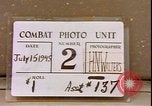
Remains of the USS Gamble (DM-15) being towed out to sea for scuttling, near end of World War II
The USS Gamble, destroyer/mine layer, DD-123, DM-15 being prepared for scuttling off of Guam, in final days of World War 2. Her severely damaged hulk is seen tied up to a pier. An inspection party examines her. View from camera on the Gamble as she is towed out of Apra Harbor, Guam. View of tugboat ahead, pulling her. View from another boat, of the Gamble with a tug at her port side. Six men are seen riding on her superstructure. Camouflage paint and numerals "15" are still visible on her hull. The tug at her side pulls away. Continued views from nearby boat as the Gamble is towed seaward for scuttling. (Note:The USS Gamble was struck by two Japanese bombs off Iwo Jima on 18 February, 1945. After finally being assessed as damaged beyond repair, she was decommissioned, on June 1, 1945, and scuttled on July 16, 1945.)
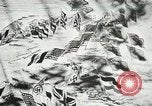
Allies defeat Nazi Germany in World War II
Invasion of Germany by Allied forces during World War and unconditional surrender by Germany during World War 2. At TC: 00:19 thru 00: 21, Generalfeldmarschall Albert Kesselring, Commander of Axis forces in Italy, is seen outside a building in the mountains. Rear view of the war-damaged Reichtag building and View of the Brandenburg Gate as Soviet troops occupy during Battle of Berlin. General Dwight D. Eisenhower conferring with an unidentified General. Lieutenant Generals George S. Patton and Omar Bradley are with him. Soviet soldiers waving to Americans on opposite sides of the Elbe River. American soldiers paddling an inflated boat across the river. U.S. 69th Infantry division and Russian 58th Guard Division troops under Major General Rusakov embracing meet at the Elbe River in Torgau Germany on April 26, 1945. Several succeeding views of American and Soviet soldiers celebrating together, shaking hands, hugging, and offering toasts and drinking together to celebrate their alliance in defeating the Germans. A group of American and Soviet soldiers posing for pictures atop a concrete foundation with a banner across it reading: "Our Greeting to the Heroes Army of United States of America." A battery of tanks firing their guns. Two British soldiers confer in a town during battle; one has a cigarette in his mouth and the other is pointing in a direction. A Soviet IS-2 tank moving past a burning building. Destroyed street sign pointing at Hamburg. Local citizens waving white flags. Allied armor crossing a bridge over the Rhine River. British Marshal Bernard Montgomery and German General Eberhard Kinzel sign a document of surrender at Lüneburg Heath on 4 May 1945. Civilians moving about on streets of Berlin after Germany surrenders in World War 2. A British soldier posts an announcement from Allied occupying forces declaring the dissolution of the Nazi Party. Closeup of German citizens looking at the announcement. Local people standing amidst rubble near damaged buildings. A British Cromwell tank moving past the camera. Glimpse of a German family. Sherman tanks moving along a roadway. American Lieutenant Generals Leonard T. Gerow and William Simpson in Berlin. Trucks and tanks driving past fires. A long line of German prisoners of war marching beside a field under guard. German General Alfred Jodl and others leaving a car and entering General Eisenhower's Headquarters in Reims, France, May 7, 1945, where General Alfred Jodl, Chief of the Operations Staff in the German High Command, signs a document of unconditional surrender. Admiral Von Friedeburg of the German Navy, and Major Wilhelm Oxenius of the German General Staff sit beside him.
Civilians place burned bodies of Gardelegen massacre victims on stretchers and carry them to burial grounds in Gardelegen, Germany.
Mass burial at the site of the Gardelegen massacre, in Gardelegen, Germany, late in World War II. View of the barn on the Isenschnibbe estate in Gardelegen where 1016 prisoners had been barricaded by Nazi forces and civilian accomplices on April 13, 1945, and then died after the barn was set on fire. German civilians walking among dead bodies outside the barn. Germany civilians walk carrying stretchers. They place burned bodies of Nazi atrocity victims on the stretchers. They carry the bodies to burial grounds. (Many of the dead were concentration camp prisoners and slave laborers in transit from the Mittelbau-Dora Concentration Camp and the Hannover-Stöcken Concentration Camp. The massacre was discovered by the U.S. Army 102nd Infantry Division when they entered the area on April 14, 1945, finding corpses in the barn and in nearby hastily dug mass graves. The U.S. Army ordered German civilians in the area to transport the bodies and dig graves for proper burial, from April 21-25, 1945.)