


 Francais
 Deutsch
 Italiano
Refine Your Search
Spittal Austria 1945 stock footage and images
- Showing 445 to 450 of 6933 results more
more Hide
Hide
German civilians dig graves and bury Nazi atrocity victims in Gardelegen, Germany.
German civilians forced by U.S. Army soldiers in World War 2 to dig mass graves for Nazi atrocity victims of the Gardelegen Massacre, in Gardelegen, Germany. Bodies of slave laborer political prisoners on the ground, including Russians, Poles, and French, many of whom had come from the Mittelbau-Dora Concentration Camp and the Hannover-Stöcken Concentration Camp . A large barn in the background on the Isenschnibbe estate, showing evidence of fire damage, where many victims were found by the U.S. Army 102nd Infantry Division on April 14, 1945, after having been locked in the barn which was then set on fire on April 13, 1945. German civilians uncover nearby existing hastily dug mass graves containing piled victims. Dead bodies placed in new graves and covered with dirt. Civilians under U.S. Army direction dig long, mass grave trenches to bury the dead.
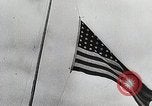
United States and Soviet soldiers meet at the Elbe River during World War II.
U.S. flag being lowered as bugler sounds and narrator alludes to the death of U.S. President Franklin D. Roosevelt, near the end of World War II. American troops and tanks rolling through German cities identified by narrator as Madeburg, Nuremberg and Leipzig, at end of World War 2 in Europe. U.S. troops cleaning out last vestiges of resistance in street fighting. Numerous German citizens lining sidewalks in city and waving white flags. On April 25, 1945, U.S. Army Second Lieutenant William Robertson with soldiers Frank Huff, James McDonnell and Paul Staub, meet Soviet Lieutenant Alexander Silvashko and several Soviet soldiers on the remnants of the Elbe bridge of Torgau. A U.S. Army Brigadier General mingling with Soviet officers. On April 26,1945, Major General Emil F. Reinhardt Commander of the U.S. 69th Infantry Division, walks with Soviet Major General Ruskovof the Soviet 58th Guards Rifle Division near Torgau. They are accompanied by other U.S. and Soviet officers. U.S. and Soviet officers exchange mutual salutes. U.S. and Soviet soldiers mingle, as a Soviet soldier plays accordian and some drink toasts, smoke cigarettes, and pose together. View of the Nazi party rally grounds in Nuremberg where a U.S. soldier is seen near the huge Swastika atop the Zeppelin Grandstand. Flashback views of Nazi rally there. Heinrich Himmler, Adolf Hitler and Viktor Lutze at the rally. Three American soldiers walking along the same walkway in the rally grounds. Explosion seen as the Nazi swastika symbol atop the Zeppelinfeld grandstand in Nuremberg is blown up by American troops.

Late wave of German men recruited for Volkssturm and receiving uniforms and weapons in Germany, late in World War 2.
German Army units in action in Germany in January 1945. German troops on tanks fire artillery mounted on the tanks. Smoke due to explosions. Front of a gun barrel. A German flag. Youths and old men enlist in Volkssturm, a German military group under the Nazi party, comprised largely of youth and older men. New German soldiers assembled in outdoor square salute and taking an oath. A poster depicts national sacrifices through the Volksopfer program running from 7 - 28 January, 1945. Civilians donate clothing and equipment to the Reich to aid the German war effort and to supply the Volkssturm soldiers with material. A man pulls a trolley filled with donations. German citizens form a long queue to donate surplus clothing and equipment for the war effort. Newly minted Volkssturm soldiers receive uniforms, armbands with slogan "Deutscher Volkssturm Wehrmacht", and weapons. Men take out the uniforms from a stack. They wear their uniforms. Close ups of faces of new soldiers holding rifles. Newly drafted German soldiers receive Panzerfaust anti-tank weapons and are seen marching with rifles.
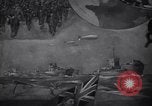
Eisenhower as the Supreme Commander of the North Atlantic Treaty Organization (NATO) and as the President of the Columbia University
Highlights the military career of U.S. General Dwight D Eisenhower from 1945 to 1952. Depicts notable World War II scenes and events starting on D-Day as Allied Forces invade France. Allied planes drop bombs on the enemy positions. Allied troops in Higgins boats land on the beaches of Normandy France. U.S. tanks move forward. Allied soldiers advance towards Saint Lo. Battle in St Lo area. General Patton Forces move forward. French troops and the soldiers of the U.S. 5th Corps march through Paris. The civilians cheer. Allied soldiers move towards the German border fighting on their way. Battle of the Bulge - when the Germans turned counter offensive. The bridge at Remagen on the river Rhine. Allied troops cross the bridge. Allied troops on the offensive, west of the Rhine. The enemy surrenders. Rubble on the streets. General Eisenhower with the troops. Military officers sign documents of German surrender on May 7 1945 in Reims at SHAEF headquarters. Eisenhower makes a speech at the end of the war. Eisenhower, in Paris, waves at the people from an open carriage. People welcome him in his homeland with a ticker tape parade in New York City. Eisenhower waves at the people gathered at the side of the streets from an open car of a motorcade. Eisenhower swears in as the 1st post war Chief of Staff of the U.S. Army. He visited troops in various parts of the world. He salutes and moves towards a car with his wife as he leaves active military life. Pictures of Eisenhower as he becomes the president of the Columbia University. He reviews the troops as he becomes the Supreme Commander of the North Atlantic Treaty Organization (NATO). Eisenhower on European soil. He enters a car. He assumes supreme command of the land, the sea and the air force. Against the threat from the USSR he prepares the European Armies. Soldiers enter into a train. He reviews troops. General Eisenhower and General Matthew Ridgway salute. He enters into a plane with his wife. Painting of Eisenhower being sworn in as President of the United States. Eisenhower Library in Abilene, Kansas, two boys leaving the Library.
Allied American, British and Soviet leaders during the Malta and Yalta Conference.
The Malta Conference in Malta, January - February 1945. The Malta fortification, building and towers. A plane taxis on the Luqa Airport on the island. General Woods, Smith, Marshall and Brehon B. Somervell deplane in Malta. Major General C.P. Woods shakes hands. Lt. General Walter B. Smith met by British Air Commander Whitney Strait. Ambassador W. Abel Hellemen with Major General F. M. Andersen. Arrival of Admiral Ernest J.King at the airport. Field Marshall Sir Harold Alexander, Supreme Allied Commander in the Mediterranean Theater. Admiral Andrew and B. Cunningham greet each other. General George C. Marshall steps off a plane. General Brehon B. Somervell greets England's Foreign Secretary Anthony Eden. On February 2, 1945 an American warship arrives with U.S. President Franklin D. Roosevelt. He is saluted by the British Prime Minister Churchill. Sailors on deck. View of the Montgomery House. Combined meeting of U.S. and British Chiefs of Staff at the Montgomery House. The chiefs are seated around a table, military plans agreed upon. A wall map in the background. Delegates leave for another conference. Policemen control the crowds on either sides of a street. A Russian airport near Yalta in the Crimea. A transport plane lands at the airport. Soviet Foreign Minister Vyacheslav Molotov greets Allied leaders outside a tent. Edward Stettinius U.S. Secretary of State gets off the plane. UK Foreign Secretary Anthony Eden. The flags of three countries fly over the field: US, UK and Soviet Union. Secretary of State outside the tent. Harry Hopkins arrives. Prime Minister Churchill gets off a UK plane. Kremlin Guards form the guard of honor. Franklin D Roosevelt greeted by Russian reception committee. Daughters of Roosevelt and Churchill talk All the delegates around the transport plane. Delegates salute during the national anthem. British Prime Minister and U.S. President inspect the guard of honor after the national anthem. Kremlin Guards march past in review. (World War II period).
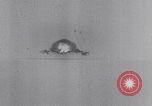
Surrender of Japan, ending World War II; imprisoned Japanese officials; German concentration camp scenes
View of first atomic explosion (Trinity) on July 16, 1945, at New Mexico, United States. View of the battleship, USS Missouri, in Tokyo Bay, Japan, with entire ship's company on deck in dress whites, Japanese military high command and several formally dressed Japanese diplomats standing on the ship's deck. Brief closeup of General Douglas MacArthur. Japanese foreign minister, Mamoru Shigemitsu, bending to sign the instrument of surrender ending World War 2, on September 2, 1945. Supreme Commander, General Douglas MacArthur, seated, signing the document. Lieutenant General Jonathan M. Wainwright and British Lieutenant-General Arthur Ernest Percival stand behind MacArthur. General Hsu Yung-chang signs for China. View of sailors observing the historic moment from every possible place aboard the ship. Large numbers of aircraft flying over the ship. Scene shifts in flashback to Manila, Philippines, where dead bodies of civilians litter the streets in silent witness of Japanese wartime atrocities. Some have hands tied behind their backs. Views of destitute Filipino mothers and children wandering through the rubble. A sign identifies the 98th Evacuation Hospital. Inside, a doctor and a nurse stand over the bed of Japanese Prime Minister, Hideki Tōjō, who attempted suicide by pistol, when apprehended, but was taken for treatment and is seen resting in his bed. View of Japanese Adrmiral Shigetarō Shimada, Minister of the Navy, behind bars in prison. Also seen in prison are Japanese general of the Japanese Imperial Army and Governor-General of the Philippines, Shigenori Kuroda;. General Masaharu Homma; and militarist Colonel Kingoro Hashimoto. Scene shifts to bodies of numerous victims of German death camps. American Army medics attend to some survivors rescued from the camps.
CRITICALPAST.COM: About Us | Contact Us | FAQs - How to Order | License Agreement | My Account | My Lightboxes | Shopping Cart | Advanced Search | Featured Collections | Website Terms & Conditions | Privacy Policy ©2026 CriticalPast LLC.
License Agreement |
Terms & Conditions |
Privacy Policy
©2026 CriticalPast LLC.