


 Francais
 Deutsch
 Italiano
Refine Your Search
Stalingrad Russia Soviet Union 1943 stock footage and images
- Showing 1867 to 1872 of 5654 results more
more Hide
Hide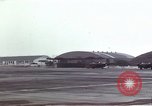
The Memphis Belle, B-17F, buzzes an airfield on War Bond Drive Tour during World War II
The famed B-17F, "Memphis Belle," seen during its June 1943 tour of the U.S. to promote War Bond sales, during World War 2. A group of onlookers watch as the Memphis Belle, piloted by Major Robert Morgan, flies only a few feet above the runway at an Air Base in the United States. (Several A-26 aircraft are seen parked on the field.) A civilian announcer stands on a bunting covered platform on the tarmac beside the runway.
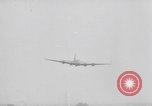
Crew of U.S. AA Force bomber B-17F Memphis Belle greeted and welcomed by Secretary of War and General Arnold in Washington DC
United States Army Air Force bomber B-17F Memphis Belle lands at Washington National Airport, Washington DC, during a War Bonds tour in the summer of 1943, in World War 2. Washington Monument and Jefferson Memorial seen in the background. B-17F No. 24485 lands at the airport and taxis to a parking position. People approach the Memphis Belle as it is parked. The pilot looks out from the window of cockpit. The Secretary of War Robert P. Patterson and General Henry H. Arnold and Barney Mc Giles greet the crew and pose in front of the aircraft.
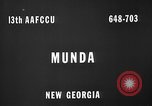
U.S. reconstructs captured Japanese airfield at Munda Point, New Georgia Island, in World War II.
Wreckage and debris on Munda Point airfield, New Georgia Island, after its capture by U.S. forces during World War 2. Dead Japanese soldiers. Destroyed aircraft on island as result of U.S. bombing. Reconstruction workers clear and enlarge runway and operations tower as Americans improve and expand the airbase for their own operations. U.S. flag raised on pole. Seen are the first aircraft to land at Munda Point (on August 14, 1943). The first is a Royal New Zealand Air Force P-40 with letter K and white stripe on fuselage and a white tail. It is followed by a J2F Duck carrying U.S.Marine Brigadier General Francis P. Mulcahy to set up his new headquarters at Munda Point.
Joachim Von Ribbentrop signs the German-Japanese Economic Pact in Germany during World War II.
Signing of German-Japanese Economic Pact on 20 January 1943. Foreign Minister of Germany Joachim Von Ribbentrop arrives and shakes hand with Japanese General Hiroshi Oshima. Signatories signing the agreement. They shake hands.

Unescorted B-17 Flying Fortress planes under heavy attack by German FW-190s during Schweinfurt raid in World War II.
Scenes of the first daylight strategic bombing by the United States Air Forces against targets in German-controlled Europe. A dozen B-17s execute the first mission against railroad marshaling yards in German-held Rouen, France, on August 17, 1942. A year later, large numbers of U.S. bombers attack Schweinfurt, Germany during World War II. U.S. B-17 Flying Fortress planes take off from U.S. Air Base in England. A formation of B-17s in flight. They head towards Germany. U.S. General Dwight D. Eisenhower and his aides confer. Unescorted B-17s over Schweinfurt under heavy attack by German FW-190 fighter planes. The B-17s drop bombs over the target area. Ruins of Schweinfurt after bombings. A FW-190 goes down after facing attack. Dead and wounded men unloaded from B-17s which return from the Schweinfurt raid. Panoramic views of ruined Schweinfurt on August 20, 1943.
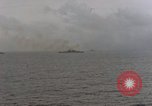
United States destroyers, heavy cruiser, and light cruiser bombard Tarawa Island in Pacific Theater
U.S. Navy World War II battleship, destroyers, heavy cruiser and light cruiser bombard the Island of Tarawa in Pacific Theater, in November 1943. Smoke rises from the beach. A 16" gun on board USS Maryland (BB-46) bombards Tarawa. Shells burst in air and island obscured by smoke. Depth charges explode in water as light cruiser continues to bombard the island. Ship at timecode 2:34 and 3:10 is a heavy cruiser of the Portland or Northhampton class, based on catapults with sea planes located at mid ship. Based on ship assignments and locations at that time, this would make it either the USS Chester (CA-27), the USS Portland (CA-33), or the USS Indianapolis (CA-35).
CRITICALPAST.COM: About Us | Contact Us | FAQs - How to Order | License Agreement | My Account | My Lightboxes | Shopping Cart | Advanced Search | Featured Collections | Website Terms & Conditions | Privacy Policy ©2026 CriticalPast LLC.
License Agreement |
Terms & Conditions |
Privacy Policy
©2026 CriticalPast LLC.