


 Francais
 Deutsch
 Italiano
Refine Your Search
Stalingrad Russia Soviet Union 1943 stock footage and images
- Showing 1873 to 1878 of 5654 results more
more Hide
Hide
Japanese troops advance inside China during World War II.
Italian film depicting Japanese forces advancing through jungles and mountains in China, during World War II (1943) in the Second Sino-Japanese war. Japanese troops march along the sides of a dirt road. They pass a large group of indigenous Chinese, who wave their arms in Obeisance. As they enter mountainous territory, the Japanese troops employ pack animals to assist them. Views of Japanese soldiers scrambling cautiously up a hillside and then of firing machine guns, mortars, and small artillery field pieces against Chinese positions (unseen). Japanese troops moving single file in rugged mountain terrain. Japanese soldiers cautiously moving against Chinese positions in a mountain. Exploding shells raise smoke on the mountainside.
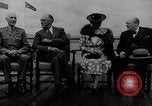
President Franklin D Roosevelt, Miss Churchill and Prime Minister Winston Churchill in Quebec.
Scenes at the Quebec Conference in 1943. President Franklin D Roosevelt, Mrs Churchill, British Prime Minister Winston Churchill seated. Allied military generals stand behind the leaders, and Prime Minister Mackenzie King is seated also. Chateau Frontenac in background. President Roosevelt and General Omar N Bradley watch plane land on water. Boat brings party from plane. Anthony Eden and President Franklin Roosevelt shaking hands and talking. (World War II period).
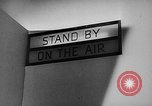
Winston Churchill waves his hat as his car passes by the crowd in Quebec, Canada.
Prime Minister of UK, Winston Churchill in Quebec, Canada for Quebec Conference of 1943. Sign reads: 'Stand By On The Air.' Winston Churchill and Canadian Prime Minister Mackenzie King in an open top car (a Canadian McLaughlin-Buick convertible, specifically a Buick Series 90 Limited Convertible Phaeton). Churchill in white coat, waves his hat as the car passes by the crowd assembled.
British Prime Minister Winston Churchill in many meetings before and after America's entry into World War II
Opening slate reads: "Quebec Conference August 1943." The English battleship, Prince of Wales, is seen in fog off the Coast of Newfoundland, in August 1941. View of sailor on fore-deck of the British ship. View inside engine room of the ship where sailor manipulates her power. Closeup of engine crankshaft stopping as she drops anchor in Placentia Bay. View of Prime Minister Winston Churchill, greeting U.S. President Franklin D. Roosevelt aboard the Prince of Wales. He proffers a letter to the President, from the King of England. View of Roosevelt and Churchill seated on deck with their respective military leaders standing behind them. Admiral Ernest King, U.S. Chief of Naval Operations converses with U.S. Army Chief of Staff, George Marshall, as they stand behind Churchill and Roosevelt. Wider camera view shows the larger military entourage accompanying the Prime Minister and the President. Glimpse of prisoners and enslaved workers taken by Nazi Germans in Europe. Glimpse of bombs falling from an airplane. Classic film views of the Japanese attack on Pearl Harbor in December 7, 1941. Bombs exploding along "Battleship Row." Heavy smoke rising from the bombed ships. The USS Arizona tilted heavily and burning. Camera pans along the path of destruction, as the voice of President Roosevelt is heard in the background, asking the Congress to declare that the Japanese attack created a state of War between the United States and the Japanese Empire. View of President Roosevelt speaking to the U.S. Congress. Seated behind him are Vice-President Henry Wallace and Speaker of the House, Sam Rayburn. Glimpse of Congress members applauding. Change of scene shows President Roosevelt and Winston Churchill meeting in Washington, DC, in December of 1941, during World War 2. Views of war preparations in the United States, including the building of new war production plants and facilities. A large steel ingot being forged into an artillery gun barrel. Machinist at work turning a gun barrel on a lathe in a munitions factory. Views of manufacturing plants in operation and steel being made. A railroad train carrying new Army trucks. Another meeting of Churchill and Roosevelt in Washington, D.C. June, 1942. Standing behind them is President Roosevelt's special assistant, Harry Hopkins, a British naval officer, and an American navy Captain. American soldiers boarding a troop ship, and closeups of them as they enter the ship, looking out of portholes, and waving from the ship's deck. Glimpse of Washington Monument and its image in the reflecting pool in Washington DC. Closeup of a book entitled, "Time Table for Invasion." General George Marshall with several of his generals doing preliminary planning. Series of scenes involving senior military officers engaged in war planning. A convoy of warships is seen at sea during the Operation Torch Allied invasion of French North Africa during 8–16 November, 1942. Views of Allied Navy ship guns firing. Allied troops riding in landing craft, and advancing from beached craft on shore of Algiers. Aerial view of a flight of Douglas Dauntless bombers in formation. "Bombs away" view from Allied airplane dropping bombs. Allied troops firing camouflaged antiaircraft guns from sandy positions near shore. Enemy shells or bombs exploding nearby. Two U.S. Army soldiers holding a document in French entitled, "Message from the President of the United States.
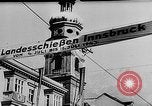
Austrians carry banners in a parade during Innsbruck Shooting Festival, Austria (WW2)
Innsbruck Shooting Festival in Innsbruck during July, 1943, announced by banner stretched across a road. Buildings and Nazi banners in view. Closeups of Austrian men and women in colorful costumes. Closeup glimpse of the flag of a World War II Austrian State. A parade of Austrians carrying various Austrian State flags and others carrying unidentified flags. The parade viewed from above, and then from within the ranks of marching participants in traditional uniforms and carrying rifles. A huge crowd of spectators gathered on the sidewalks. A brass band playing for the marchers, from the sidelines. Shots of marcher's feet and then of them from waist up. German soldiers in uniform, recovering from war wounds, have front row seats. An antique cannon is fired. Then the street becomes completely filled with participants and spectators.
Colonel Oveta Culp Hobby is the first commanding officer of Women's Army Corps in the United States.
Women's Army Corps in the United States. Women's Army Auxiliary Corps, created in 1942 is converted to WAC (Women's Army Corps) in 1943. A WAC carries a cake. 'WAAC' written on the cake. A WAC walks outside a building. Several men stand and talk. The WACs parade on a field. A United States flag. Duties performed by WACs. Women work as mechanics and handle complicated equipment. They take photographs through cameras. The U.S. Capitol building in view. U.S. Army General George Marshall and U.S. Secretary of State Henry Stimson. Colonel Oveta Culp Hobby is the first commanding officer of WAC. A dramatization depicts recruitment and induction of WAACs. A sign reads 'WAAC, information and recruiting'. A woman appears in an interview. The women undergo physical examination and are then recruited. WAACs undergo a training. They perform physical exercises and swim. Several WACs go to specialization classes. WACs cook food. A woman receives an award for her husband's bravery during World War II.
CRITICALPAST.COM: About Us | Contact Us | FAQs - How to Order | License Agreement | My Account | My Lightboxes | Shopping Cart | Advanced Search | Featured Collections | Website Terms & Conditions | Privacy Policy ©2026 CriticalPast LLC.
License Agreement |
Terms & Conditions |
Privacy Policy
©2026 CriticalPast LLC.