


 Francais
 Deutsch
 Italiano
Refine Your Search
Stalingrad Russia Soviet Union 1943 stock footage and images
- Showing 2359 to 2364 of 5654 results more
more Hide
Hide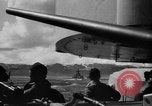
German Kriegsmarine warships operating from Norway during World War II
Several German warships, from Norway, moving through protected waters near shoreline, en route to interdict Allied shipping destined for Murmansk, Russia, during World War 2. A destroyer in camouflage paint passes by the camera ship. Flight crew in Arado 196 float plane and view of it airborne after catapulting from warship. Bow wave view of destroyers at high speed. Port silhouette view of the Bismarck-class battleship, Tirpitz, in camouflage paint. A German Cruiser in camouflage. A land-based Junkers Ju-88 bomber flying low over the water.
Roman Rudenko presents counts against convicted Nazi criminals during Nuremberg Trials; flashback scenes during war.
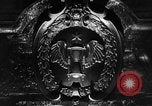
Portion of the Nuremberg Trials held at the Palace of Justice in Nuremberg, Germany. Flashback scenes to a variety of Nazi crimes against humanity during World War II. Chief prosecutor from Russia, Roman A Rudenko, presents Counts 3 and 4 against the convicted Nazi criminals; charging commitment of war crimes in Germany and countries which Germany occupied; including abuse, starvation, and execution of prisoners of war. Faces of convicts in the courtroom are shown, including Hermann Goering, Rudolf Hess (or Heß), Joachim von Ribbentrop, Wilhelm Keitel, Karl Donitz, Erich Raeder, Baldur von Schirach and Fritz Sauckel. Flashback scenes shows German soldiers serving on screening teams, searching and separating eastern front prisoners of war. Group of Russian soldier prisoners being force run marched, following behind a German tank beside a prison camp. Aerial view through German bomber window of large numbers of Russian soldier prisoners assembled. Ground level views of overcrowded prison grounds filled with prisoners. German General Erwin von Lahousen on the witness stand during Nuremberg trials giving testimony about his attendance at conferences where crimes against populations were plotted. View of Wilhelm Canaris, Goering and Hitler in meeting room in discussion with German officers. Next scene shows a farmhouse and farm buildings. A car is parked beside a farm building with metal pipes extending from the automobile exhaust system, through the exterior wall of the farm building (to gas occupants with carbon monoxide). Starved, emaciated Polish prisoners from Nazi concentration camps arrive riding on the back of a horse cart. German staff in white coats made to look like medical staff assist naked and emaciated men and child prisoners climbing down from the horse cart. They put robes over some holocaust victims. They lead them to the door of the farm building. Next scene shows atrocity evidence as the car is seen running poison gas into the building. Scene of homes in a village burning in flames as German soldiers watch.
Oil production in the United States is compared with that in the other countries.
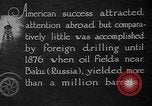
The world struggle for oil is depicted. Relative production in 1876 by different countries is shown. A political map of the United States. A map shows Russia, Germany, Italy and other countries. A + sign in Italy shows the oil production being less than 1 % of the world's production. A dot in Galicia and Roumania depicts oil production being 1 % of the world's production. A box on the map shows Japan with a + sign.
Oil production of the U.S. and other countries is compared and evolution of internal combustion engine is depicted.
The world struggle for oil is depicted. Oil production of the United States is compared with that of other countries. Relative production in 1900 is shown. A political map of the United States. A dot in some states represents 1 % of the world's production whereas a cross in other states represents less than 1 % of the world production. A map shows Russia, Germany, Italy, Galicia, Roumania and other neighboring countries. A box on the map shows Japan with a cross. Another map shows India, Tibet, Afghanistan and their neighboring countries. Still another map shows countries of South America. Evolution of internal combustion engines, whereby gasoline is used, is shown using diagrams.
Maps of different countries show their relative oil production as compared to that of the United States.
Relative oil production of the United States and other countries for the year 1914 is depicted. A political map of the United States shows some states with dots and some with crosses and some states with dots and crosses both. A box on the top left corner of the map shows the state of Alaska. A map of the continent of South America with oil production of some of its countries. A box on the top right side of the map shows oil production in Trinidad. A map of Russia shows its neighboring countries such as Germany, Galicia, Roumania and others. Relative oil production in these countries is depicted using crosses and dots. Boxes on the top right corner of the map show relative oil production in Japan and Formosa. Another map shows India, Tibet and neighboring countries. Relative oil production in these countries is depicted. A box in the lower middle of the map shows relative oil production in Dutch East Indies.
As the United States enters World War II, U.S. military forces are seen, deployed in various places throughout the world.
American troops are seen in arctic gear moving on skis through blustery snowy weather in Iceland, during World War 2. They were sent in 1941 to relieve British troops occupying Iceland since 1940, during World War II. A guard post at the American camp, with Quonset Hut in background. Closeup of U.S. sentry in arctic gear holding rifle with bayonet affixed. View from above, of numerous tents partially covered with snow in the American camp. Change of scene shows U.S. troops disembarking from transport ships at the British Isles. They march with their combat gear onto a square where Army trucks wait to transport them inland. Another scene shows the American troops, viewed from behind, parading in London. Other scenes show them marching in various areas of London. Saint Paul’s cathedral is seen in the background of one scene. A large number of American M3 Stuart Light tanks move on a railroad train in Britain. Scene shifts to the Middle East, where railroad cars and various military supplies for Russia are be offloaded from American ships. A Russian officer is seen signing receipts for war materiel, from a U.S. Army Technical Sergeant. A row of American Army trucks are lined up behind them. The Russian and American exchange salutes, and shake hands. Next, a troop ship carrying American troops is seen arriving at a port in India, where they disembark with their gear. An American Army Sergeant in a pith helmet pays attention to a little Indian girl. Scene shifts to China, in 1942, where Brigadier General Claire Lee Chennault, Commander of the China Air Task Force, of the Tenth Air Force, that replaced the American Volunteer Group (Flying Tigers), is seen with Brigadier General Caleb V. Haynes, Commander of the India Air Task Force. A colonel joins their discussions. A Consolidated B-24 Liberator bomber is parked behind them. View of Curtiss P-40 Warhawk fighter planes, with Flying Tiger markings, parked on a flight line. A B-24 bomber landing on a runway, between hills, deep in China. Closeup of Nationalist China Generalissimo Chiang Kai-Shek, saluting. Huge numbers of Chinese troops assembling in a formation. Next, an expeditionary force of American troops is seen arriving on a troop ship in Australia. They line the ship’s deck and wave. General Douglas MacArthur arriving in Australia to assume the office of Supreme Commander, South West Pacific Area (SWPA). .Glimpses of U.S. Navy activities in Australia: setting up defenses of islands; unpacking a Kingfisher float plane and making it ready for use on a desert island. The final segments of the film show American forces in August ,1942 sailing to Adak in the Aleutian Islands, to strengthen American defenses there. Troops seen descending by rope ladder from the American transport ship USS J Franklin Bell (PA-34), into her landing craft for deployment on Adak Island. Scenes of landing craft reaching the beach and offloading troops, vehicles, and supplies. View of beach filled with supplies. One landing craft is clearly marked with ""P34" showing that it belongs to the USS J Franklin Bell ( later reclassified as APA-16).
CRITICALPAST.COM: About Us | Contact Us | FAQs - How to Order | License Agreement | My Account | My Lightboxes | Shopping Cart | Advanced Search | Featured Collections | Website Terms & Conditions | Privacy Policy ©2026 CriticalPast LLC.
License Agreement |
Terms & Conditions |
Privacy Policy
©2026 CriticalPast LLC.