


 Francais
 Deutsch
 Italiano
Refine Your Search
Stalingrad Russia Soviet Union 1943 stock footage and images
- Showing 2671 to 2676 of 5654 results more
more Hide
Hide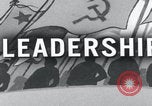
Cold War cartoon depicts communists wrecking society.
State Department Foreign Service officer and Soviet and East European affairs specialist Boris Hansen Klosson narrates Cold War propaganda film. Slate reads “LEADERSHIP”. A cartoon of men standing beside flags with communist symbols. “Spurred on by the prospects of acquiring unchecked power, these men shun compromise and conciliation” Boris H. Klosson says. A cartoon of a communist pushing down a pillar with labels such as “National Loyalty”, “Emotional Ties” and “Human Ties”. The pillar breaks down into pieces. Another cartoon shows a man holding a flag with the Communist symbol and word “LEADERSHIP”. (Film is example of Anti-communist or so called Red menace propaganda)
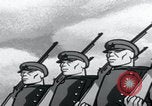
Cartoon depicts Communist politicians and soldiers marching and dominating during Cold War.
State Department Foreign Service officer and Soviet and East European affairs specialist Boris Hansen Klosson narrates. Slate reads “ARMED FORCE”. Cartoon of communist soldiers marching and standing at attention. A menacing politician sitting behind a desk. A shadow of a soldier and poster of the communist symbol is seen behind the politician. More shadows of soldiers are seen behind the communist politician. A frightened man being choked. A man holding a flag with the Communist symbol and word “LEADERSHIP”. Animation depicts working class communists mobilizing under a leader and working underground. “The communists have been quick to exploit these unsettled conditions- seeking to arouse popular discontent, what has existed before, and then to inflame the resentment…” Boris H. Klosson says. (Film is example of Anti-communist or so called Red menace propaganda)
Cartoon depicts communists nationalizing factories and land to take over during Cold War.
State Department Foreign Service officer and Soviet and East European affairs specialist Boris Hansen Klosson narrates the recruitment methods utilized by communists during the Cold War. Boris H. Klosson sits behind a desk inside his office. A diagram depicts the political stakeholders and institutions of a country. The “Communists” are marked in black. Leftist political parties such as Agrarian, Nationalist, Liberal, Socialist and Communist are marked with a box. Boris H. Klosson speaks to the audience beside the diagram. Two ballots named “Ballot Party of the Left” and “Ballot Party of the Center” are combined into one ballot called “Ballot National Unity Front”. A cartoon Communist man holds on to the ballot paper as it falls into a ballot box. Shadow of troops obscure diagram. Diagram shows how communist influence in national government and local government affect the freedom of various stakeholders such as businesses and the police force. Cartoon shows how communists divide lands for landowners in order to neutralize them as a political force. Factories are combined under “Nationalization”. A Communist Ministry of the Interior holds the “Federal Police Force” on a chain. Cartoon thugs stand as Factory Guards outside industries. “Having control of the Ministry of Information meant that the Communists were in a position to interfere with the efforts of other parties to reach the population.” Boris H. Klosson said. (Film is example of Anti-communist or so called Red menace propaganda)
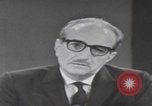
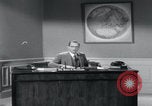
A Spanish-speaking journalist discusses Cuban Missile Crisis
A Spanish-speaking journalist reports on the developments of the 1962 Cuban Missile Crisis in the United States. The journalist makes his report beside an America-centric world map. The map changes into a North and South America map. The projector shows a photo of United States President John F. Kennedy, briefly changing into a silhouette of the Americas and the island of Cuba, before reverting back to Kennedy’s photo. The reporter discusses the missile sites and the dismantling of Soviet weapons in Cuba.
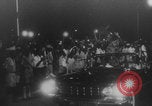
Sylvanus Olympio celebrates the independence of Togo
Togolese Prime Minister and President Sylvanus Olympio raises his fists during a celebratory motorcade in 1961. Newly independent countries in Africa and Asia celebrate their independence. Sign reads “Proclamation de L’Independence du Togo 27 Avril 1960”. Sylvanus Olympio speaks to the Togolese people after his election as president. The flag of Togo is raised. Togolese women raising their hands. The United Nations seal. An African delegate speaks to the United Nations (U.N.). The host and narrator shows a map of Europe to the audience. He points to Lithuania, Latvia, and Estonia on the map. He also points to other Eastern European countries such as East Germany, Czechoslovakia, and Hungary that fell under Soviet influence after World War II.
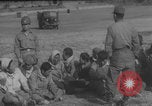
Soldiers guard refugees in Korea; President Kennedy inauguration speech
Soldiers guard a group of Korean refugees during the Korean War. The refugees sit on the ground. Hungarian rebels shoot behind a building between Károlyi and Cukor Street (Budapest, Károlyi utca 9, 1053 Hungary) in Inner City, Budapest during the Hungarian Revolution in 1956. In a devastated street, a tank rolls in, with Soviet soldiers sitting on top. Burned and abandoned tanks along Andrassy Avenue. Newspaper article titled “Khrushchev Hails New African States”. United States President John F. Kennedy delivers his inaugural speech from the East Portico of the U.S. Capitol in Washington, D.C. “We shall not always expect to find them supporting our view. But we shall always hope to find them strongly supporting their own freedom--and to remember that, in the past, those who foolishly sought power by riding the back of the tiger ended up inside.” President Kennedy said.
CRITICALPAST.COM: About Us | Contact Us | FAQs - How to Order | License Agreement | My Account | My Lightboxes | Shopping Cart | Advanced Search | Featured Collections | Website Terms & Conditions | Privacy Policy ©2026 CriticalPast LLC.
License Agreement |
Terms & Conditions |
Privacy Policy
©2026 CriticalPast LLC.