


 Francais
 Deutsch
 Italiano
Refine Your Search
Stalingrad Russia Soviet Union 1943 stock footage and images
- Showing 2677 to 2682 of 5654 results more
more Hide
Hide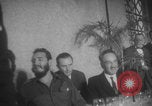
Konrad Schumann jumps over barbed wire Berlin Wall to escape communism
Cuban leader Fidel Castro meets Nikita Khrushchev and other Soviet politicians. Nikita Khrushchev and Fidel Castro leaves with their entourage. The Brandenburg Gate as seen from the West Berlin side at the height of the Cold War. Barbed wires on the border of East and West Berlin. The construction of the Berlin Wall. East German soldier guards the border between the two Berlins. East German guard Konrad Schumann jumps over the barbed wire while dropping his PPSh-41 submachine gun as he escapes to West Berlin during the construction of the Berlin Wall. Schumann runs towards and boards a West Berlin police van. Host or narrator of the film shows photographs of Fidel Castro with Nikita Khrushchev and the “Leap into Freedom” photo by West German photographer Peter Leibing. “The communists are the true colonialists, as a matter of fact.” The narrator said as the show reaches its conclusion.
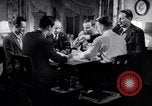
British factory worker and his American counterpart on an international exchange visit to the Lockheed aircraft plant in Los Angeles (WW2)
A British guest on labor exchange program visit to the U.S. is staying as a house guest of his counterpart American in Los Angeles, California. We see him with several friends of his host, who also work at the Lockheed aircraft plant. They are teaching him the card game of poker. The leave to attend a meeting of District Lodge 727, International Association of Machinists and Aerospace Workers, AFL-CIO (Lockheed-California Company). There the British guest is allowed to ask questions of the union. He and his American counterpart are seen at a podium as the Briton asks about the strength of the union inside the Lockheed plant. The local union Secretary responds that they have 45 thousand members in the Lockheed plant and, noting that the British man was a shop steward back in England, mentioned that the local also had 3000 shop stewards in the Lockheed factory. The British visitor asked how the union would be affected after the war, when labor requirements would be reduced. A member answers that the first action would be to return to a 40 hour work week (from the wartime 50 hour week). He states that some workers would return to pre-war work and jobs. Finally, he says they expect Lockheed to expand the scope of its manufacturing to include consumer goods. The union is asked about accommodating workers returning from the military and answers that it is covered in the union contract, which calls for their seniority to continue to accrue while in service. The union also provides for war injured handicapped workers to return to work, and sponsored legislation to provide post-service education opportunities for all returning veterans. Asked about women now employed in the plants, one woman union member stated that many would return to their homes. But the immediate need is to employ more women to the help the Allied forces win World War II as soon as possible. Regarding the prospect of post-war employment, one union member noted the national need to convert from wartime production to the manufacture of consumer goods. The union members favored the idea of continuing labor union exchange visits between the Allied countries in the future.
Elections of U.S. National Labor Relation Board, voting is done.
Interior of the U.S. National Labor Relation Board office, men in suits seated around a giant conference table, discussing. A United States flag in the corner. Man points out southeastern states in the United States on a map where union branches are needed. A car on road and a road sign for route 411 in Georgia. A union organizer man gets out of the car goes to a house, speaks to a worker, already seated, shows him some paper. Woman washing a young child at the house. A gathering of 12-15 people outside a textile mill, beside a railroad yard, as the new union is taking shape. Train goes by on tracks behind the men. Music "union train a coming" plays in background. Union organizers hand out leaflets at the textile mill gates, informing workers of the union idea. Views of campaigning of election. Banners can be seen saying 'Protect your job'. Voting is done, ballet paper is seen with title "National Labor Relations Board." Close up views of hands of workers putting ballots into voting box. Views of a union meeting of wool workers that are planning to negotiate with labor management on behalf of workers.
War workers and buildings of Washington DC during World War II
Clip compares Washington DC to an industrial boomtown where the big business is government, during World War 2. Men and women working in offices. A young woman seated at a desk and doing clerical work. Identification cards of civilian women working for the U.S. Army. Pedestrians and workers walking on a street of Washington DC. Buildings along street sides. People at the entrance of Union Station. A woman identified as Phyllis Hood joins others in a Diamond Taxi cab leaving Union Station. Woman exits the taxi and looks at various buildings as she seeks a place to live in Washington. Boards on buildings read: 'No Vacancy', 'No Rooms' and 'Filled Up'. Wearing a fur coat and hat, she stops and sits on her suitcase, removes a shoe, and rubs her tired feet. She talks to a police officer on a traffic corner, who directs her to the U.S. Office of Information. She is seen inside the main hallway of the Office of Information. They direct her to an availble room at the former French Embassy building at the intersection of 16th Street and Kalorama Road NW in Washington DC, by Meridian Hill Park. She enters the building which that narrator says serves as a hotel for girls. She talks to a receptionist in the main hall lobby and then ascends the stairs. Phyllis Hood along with two other girls seated inside a room. They talk amongst themselves and relax. Woman hangs nylon stockings from a hanger to dry. The women going to sleep at night and turning out bedside lights. A large room with an operations maps, and clocks on the curved wall showing time in various international cities.
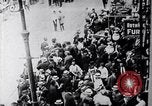
Debacle at Garment Workers Convention in 1914 leads to formation of Amalgamated Clothing Workers of America
United Garment workers (UGW) Union members discuss plan for 1914 convention in Nashville Tennessee. View from railroad locomotive traveling on a straight train track. A steam locomotive pulling a passenger train. Trainman on rail car waving a lantern. Views of the convention, October 12, 1914, in Nashville, headed by UGW President Thomas A. Rickert of Chicago. Labor union locals from New York, Boston, Rochester, Cincinnati, Philadelphia, and Baltimore, were deemed in arrears on dues (although they had been on strike) and not allowed to participate. They walked out, with the Chicago delegation too. View of Telegram sent from Nashville, by the dissidents, to Sidney Hillman in New York, October, 1914, asking him to head a rival union. Photo of Hillman taking telephone call. A special convention at Webster Hall, in New York City, where dissidents join with Journeyman Tailors union and form the Amalgamated Clothing Workers of America, with Sidney Hillman as President. Key members of the new union are seen standing in front of a car. Sidney Hillman in his office dictating to his secretary. Copies of the new union's House organs in various languages. Amalgamated Clothing Workers holding signs in various languages. Workers pose on a truck by a sign reading:"A Fair Deal, A Chance to Live, Arbitration is all we ask." Workers in cars. Girls on roller skates wearing sashes reading: "Don't Be A Scab." A man in a barrel with sign reading: "Can't afford to wear pants. Pa works in an open shop." Women pose in sandwich boards that spell out: "Closed Shop." Philadelphia garment worker ostensibly writing letter to Sidney Hillman. Shop owners examine sewn item and shop records while man works at sewing machine.
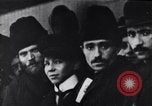
Accomplishments of the Amalgamated Clothing Workers of America, and later challenges of the Civil Rights movement in America
Turn of the Century immigrants to the United States pose aboard ship. Some wear fez hats. View of clothing industry workers at sewing machines in early 1960s. Picture of Sidney Hillman and his wife, circa 1910. Older garment worker cutting cloth. Clothing or garment factory workers punching a time clock in the early 1960s. Men operating sewing machines. A cutter marking cloth from a pattern. A man sewing button holes on clothing. Old pictures of earlier garment workers. More modern view of unionized clothing workers at sewing machines. A cutter using a machine to cut multiple layers of fabric. Supervisors discussing a sample of sewn product. numerous views of men and women sewing garments. Flashback to earlier times of workers marching to demand a union contract. Union member distributing literature at a factory gate. Small group of union picketers on sidewalk. Union leader speaking to group of women workers in Southern town. Union organizer with bloodied head, smoking cigarette. Striking Workers (mostly women) standing in group outside employment office of Tuf-Nut Garment Manufacturing Company in Little Rock,Arkansas. The striking women being arrested by policemen. Change of scene to closeup of Alabama State policeman smoking cigar. Civil rights marchers during demonstration in Birmingham Alabama on May 7, 1963 during the "Birmingham Campaign" or "Birmingham Movement". Fire fighters in fire engine pumper truck stops near police on street in town and sets up fire hoses to spray high powered water directly at African American civil rights marchers. Civil Rights marchers soaked by high powered water hoses. One protestor or demonstrator tries to run away from the fire hose and is grabbed by two white police men. A protestor takes cover behind a telephone poll as a firehose is directed toward him. A black man converses with two women on a snowy street. Civil Rights marchers of the African American Southern Christian Leadership Conference carrying signs during a demonstration. People fill the area around the reflecting pool by the Lincoln Memorial during the March on Washington for Jobs and Freedom on August 28, 1963. A man and his daughter share time together on a snowy day. Children sledding in the snow. People ice skating on lake in Central Park, New York City. Closing views of early immigrants to the U.S.A.
CRITICALPAST.COM: About Us | Contact Us | FAQs - How to Order | License Agreement | My Account | My Lightboxes | Shopping Cart | Advanced Search | Featured Collections | Website Terms & Conditions | Privacy Policy ©2026 CriticalPast LLC.
License Agreement |
Terms & Conditions |
Privacy Policy
©2026 CriticalPast LLC.