


 Francais
 Deutsch
 Italiano

Refine Your Search
Tangermunde Germany 1945 stock footage and images
- Showing 4423 to 4428 of 10471 results more
 Hide
Color Sound
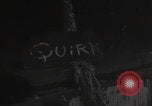
United States soldiers stand on top of a tank in winter during WW2.
United States 302nd infantry, 94th division in Germany during World War II. United States soldiers standing on top of a whitewashed M4 Sherman tank in winter. Soldiers aim gun on the turret while pointing to sky. A fire burns next to tank at dusk.
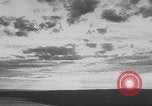
German troops launch V-2 rockets heading to England (WW2)
Germany launch V-2 rockets against England, United Kingdom during World War II. View of the skies. A V-2 rocket in flight after its launch. Rocket contrails form from V-2 rockets in flight. A V-2 rocket in flight as seen from the ground. German soldier uses a pair of binoculars while another uses a gun sight to watch the launch of V-2 rocket. V-2 rocket contrail forms an arc shaped path. Another rocket launches upwards. German soldiers look up and watch. The V-2 rocket disappears from plain sight.
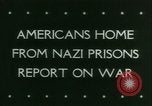
The Gripsholm arrives in New York harbor with soldiers and others recently freed from German prisoner camps (WW2)
The Swedish American ship Gripsholm arrives at New York harbor carrying American soldiers and others exchanged for German prisoners in World War II. 160 were internees at Vittel. Others included American diplomats from Vichy who were being held at Baden-Baden. Soldiers stand on deck and wave as ship is docked at Pier F in Jersey City. The soldiers disembark the ship. The Wounded soldiers. Diplomats and war correspondents talk about the conditions of Germany as it is losing the war. Douglas MacArthur (nephew of General Douglas MacArthur) is seen with a dog as he arrives. Ralph E. Heinzen of the United Press describes conditions in Germany and stresses that Germany is losing the war.
An enactment about U.S. Air Force personnel Carl W. Kramer as he prepares to go on a duty to a foreign land.
'To a Foreign Land' an enactment depicts duty on to a foreign land (Germany) of U.S. Air Force personnel Carl W. Kramer from the United States. Wife of Carl W. Kramer reaches and enters into her house. She receives a call of an officer. Officer tells her about overseas duty of her husband in Germany. On next morning, Carl reports in the office of U.S. Air Force personnel. Carl and officer talk about overseas journey and rental charges in Germany. Carl seeks permission to bring his wife and daughter overseas. Carl seated at a table and his wife cleans utensils. She talks to Carl. Their daughter 'Jenny' comes with her pet. Carl and his wife report at the office of USAF personnel. Personnel types a document and gives it to Carl's wife. Mrs Carl and her daughter pose in front of a camera to get a passport sized photo clicked in a photo lab. They go at a dispensary. Doctor examines Jenny. Dentist examines Carl. Carl works in his office. Carl signs a power of attorney of House and other things, by making Jenny and his wife beneficiaries. Carl and his wife discuss a problem at the office of USAF personnel. Carl meets overseas project officer. Carl and his family takes dinner. Their daughter gets upset. Mother explains to her. Carl and his wife realize separation in their married life.
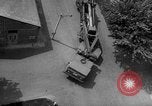
America test fires the M65 atomic cannon in the Nevada Test Site; 1953 East German uprising and Trieste Crisis in Europe
Major events of the year 1953. The first atomic artillery test fired in United States on May 25, 1953. The M65 atomic cannon moving in the Nevada Test Site (specifically Frenchman Flat). A mushroom cloud rises after the M65 Atomic Cannon, sometimes called Atomic Annie, is fired and atomic bomb explodes. The M65 atomic cannon test is done as part of the Upshot–Knothole series of nuclear tests. East German uprising of 1953 (“Volksaufstand vom 17. Juni 1953”). Riots in East Germany against the increase in work quotas and withholding of American food. East German police escort a man away during a riot. People protest in streets as police try to crush the revolt. A stack of StarLac boxes bound for East Germany with sign in front. Sign reads “First Food Relief Shipment to East Germany by M.S.A. United States Lines S.S. American Inventor”. East Germans line up to receive food relief from the United States. An East German woman receives a food aid pack from the United States. The Trieste Crisis of 1953. Sign in front of a house reads “Trsta ne damo”. Officials inspect a car in the United Nations Security Council-controlled Free Territory of Trieste. Students riot in the streets of Trieste over the issue of Adriatic area between Italy and Yugoslavia. (Cold War period.)
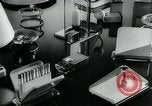
The challenges of reconstruction and rise of communism in Europe after World War II
Reconstruction problems in Europe in the aftermath of World War II. Examples of prewar Germany's industrial and commercial prowess, showing its consumer products and famous cameras. A German coal-burning power plant and miners extracting coal from Germany's vast natural supplies. Coal being transported by conveyer belt. Open rail cars loaded to capacity with German coal. A German iron and steel plant dependent on coal. Shift to postwar destruction including destroyed: German factory; locomotive; rail yards; trucks; farm machinery; fertilizer plant; farm fields lacking crops. Shift to prewar era with view of British coal cars getting ready to be emptied for export to Europe. Current postwar view of British coal cars and coal, that narrator says are barely enough for her own needs. View of prewar German coke being loaded onto conveyers. Coal miners receiving food ration cards. Animated map showing "Iron Curtain," of Soviet occupation, separating traditional German regions of agriculture from those of industry. British Foreign Secretary, Ernest Bevin; French Foreign Minister, Georges Bidault; Soviet Foreign Minister Vyacheslav Molotov; and U.S. Secretary of State, George Marshall; are seen at the Paris Conference in 1946 where they negotiated the postwar future of Germany. Reminder footage of Hitler with brownshirts in 1930s. Italian police coping with communist inspired unrest in Italy. Bombed out buildings in snow. Europeans literally scratching for bits of food from pavement and trash heaps. Two women fighting with each other during time of shortages and ration. Dejected woman. French Communist party leader, Maurice Thorez, speaking to a large crowd. Party flag with hammer and sickle behind him.
CRITICALPAST.COM: About Us | Contact Us | FAQs - How to Order | License Agreement | My Account | My Lightboxes | Shopping Cart | Advanced Search | Featured Collections | Website Terms & Conditions | Privacy Policy ©2026 CriticalPast LLC.
License Agreement |
Terms & Conditions |
Privacy Policy
©2026 CriticalPast LLC.