


 Francais
 Deutsch
 Italiano

Refine Your Search
Tontouta New Caledonia 1943 stock footage and images
- Showing 211 to 216 of 10542 results more
 Hide
Color Sound
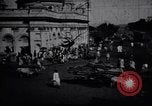
Old Howrah bridge, Calcutta, India.
View of traffic on approach to the Old Howrah floating pontoon bridge, across the Hoogly River, on the Calcutta side. Men work and carry luggage on bullock-carts. Building on the East bank of river Hoogly, used by the public for changing when they come to bathe. Men walk. Houses along the sides of a street. People walk on the street. Man buys articles from a street vendor. (Note: The Old Howrah pontoon floating bridge was used until the cantilever bridge, begun in 1937, was opened for traffic in 1943.)

Portion of Trial of Nazi war leaders during Nuremberg Trials in Nuremberg Germany. Audio only.
Audio only. Nazi war leaders on trial in Nuremberg Germany. Coverage on how the charges will be grouped. The speaker focuses on three major issues: international situations and aspirations for expansion of Germany between 1943-1945; conquering of Austria and Czechoslovakia, and improvement of military and political positions.
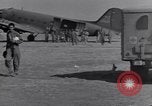
U.S. C-47 aircraft perform air evacuation missions during Operation Torch in Oran Algeria, during World War II
Opening scene shows American soldiers gathered around a C-47 transport plane on a desert field in Oran, Algeria during World War 2. They walk away en masse from the plane. Another C-47 is seen with tail number tail number 42-23507 (Records show this aircraft was delivered to Oran on May 20, 1943 and supported Operation Torch- The Italian Campaign of World War 2.) Scene shifts to interior of a C-47 rigged as an air evacuation aircraft, with wounded American soldiers in stacked bunks on both sides of the aircraft. A nurse and corpsmen are attending to the wounded. Two soldiers carry one of the wounded soldiers on a litter to the aircraft door. View from the outside of the soldier being carried by others to a waiting field ambulance. More views of the wounded being transferred from the plane to waiting ambulances. Scene shifts to ambulances parked on the desert field with a large Red Cross flag above them. A Curtiss P-40 fighter plane taxis past the camera. A large open field tent with a large Red Cross flag flying above it. Nurses and medical corpsmen tend to wounded soldiers lying in ambulances. A nurse serves water to some wounded.
Highlights of the War on various European Fronts captured by U.S. Coast Guard combat cameramen.
'Highlights of the War' depicts work by combat cameramen that has been honored with citations for outstanding photography. 'The Coast Guard at War' depicts the work of combat cameramen on the U.S. Coast Guard. U.S. Coast Guard Arctic Patrol. CG personnel aboard a cutter. Deck gun and the U.S. flag. A sailor communicates over the radio. Sailors on deck, the bow and deck. Combat cameramen record the CG activities including a religious ceremony. Sicily Invasion, 1943: Combat cameramen capture the scene as a German bomb hits an ammunition ship off the coast. Explosion on the ship, a mushroom cloud rises up. Sailors watch with binoculars. Normandy, 1944: Allied troops climb down rope ladders into Landing Craft Personnel (LCP). which deliver the men and cargo to the Normandy beaches. Soldiers wade through the water towards the shore under enemy fire.
U.S. Navy Dr. Walt Miner gives historical background of LSD (Lysergic acid diethylamide) drug in the United States.
The film gives an introduction and briefs the history of illegal drug LSD (Lysergic acid diethylamide). U.S. Navy Doctor Walt Miner speaks about revealing the facts about LSD which can be documented. He speaks about the historical background of LSD. He says that LSD is synthesized from lysergic acid derived from ergot, a grain fungus that typically grows on rye. He says that ergot is a fungus that grows on grains and other cereals. He speaks about Swiss chemists Albert Hofmann and Stahl who tried to make modifications in LSD molecule in 1938. He mentions the event of 1943 when Dr. Hofmann intentionally ingested 250 micrograms of LSD in his laboratory and how he felt uncomfortable. Dr. Walt Miner further explains how unique and powerful LSD drug is and says that the most unique thing about LSD is effective dose of the material. Miner states that effective dose for LSD can range from 0.5 micrcograms to 1.5 micrograms per kilogram of body weight.To explain the effective dosage of LSD, he displays a piece of wax paper where a mark is made with a pen. A penny is placed beside that mark to compare the two sizes. Dr. Miner informs that the ink mark weighs some micrograms. Dr. Miner takes one drop of human blood from a tube and says that this one drop contains 330 million cells and in comparison to that the weight of LSD to produce its effect is equal to the weight of two blood cells.

The recruitment of women as Marines in the United States, during World War II.
A film titled: 'Lady Marines' on the recruitment of women in the United States Marine Corps, during World War 2. Views of Marines engaged in combat. U.S. Naval guns firing. A Marine dive bomber in action. Splashes in water from explosions. Marines in an amphibious assault on the beach. Paramarines making a jump. Tanks moving on the field. U.S. Marines firing machine guns. Paramarines boarding an airplane. Views of U.S. Marines in non-combat assignments in Washington, DC. Exterior of the U.S. Capitol building. Trucks being refueled. Marine mechanics maintaining vehicles. Marines engaged in administrative and logistical wartime support activities. A Marine typing a document on a typewriter. Comments about the need to free trained Marines for combat. A scene of Japanese soldiers celebrating a victory. A poster with the photograph of a woman reads: 'Be a Marine'. On February 13, 1943 the Marine Corps Womens Reserve is formed. Women are recruited to relieve Marines for combat. Women Marines salute.
CRITICALPAST.COM: About Us | Contact Us | FAQs - How to Order | License Agreement | My Account | My Lightboxes | Shopping Cart | Advanced Search | Featured Collections | Website Terms & Conditions | Privacy Policy ©2026 CriticalPast LLC.
License Agreement |
Terms & Conditions |
Privacy Policy
©2026 CriticalPast LLC.