


 Francais
 Deutsch
 Italiano

Refine Your Search
Tontouta New Caledonia 1943 stock footage and images
- Showing 4843 to 4848 of 10542 results more
 Hide
Color Sound
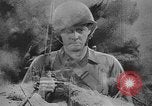
Training the soldiers and providing them with an understanding of their jobs in United States (WW2)
The ignorance of soldiers about their jobs and the war, United States. Stresses the psychological need for hating the enemy. Dramatizes the battlefield treachery of soldiers. Soldiers fire and bombard on the battlefront in World War II. Smoke arises from firing and bombarding. Tank moves on field and fires. A soldier bombing a barbed wire entanglement. Other soldiers fire machine guns. They advance forward on the front. News headlines about the soldiers and their ignorance of job reveals that the soldiers are not prepared to fight. They do not have the understanding of their job. An officer gives lecture to soldiers in the 'Classification Section' to provide them with a proper understanding of their job. The soldiers read books and magazines. They work on the tanks and other war equipment. Training the soldiers mentally. Weekly news about the war on boards.

United States CG-4A glider in Brisbane, Australia
United States CG-4A,a cargo military glider in Brisbane, Australia. Old type vertical stabilizer brackets and new type brackets are seen. Old and new type clevis brackets are seen under the tail. CG-4A gliders parked on ground.
Wartime nutrition public service film focuses on improving nutrition of American and British people. Also shows British war scenes.
Film on importance of good food and good eating habits during World War 2. Sweeping views of open farm land in the United States. Wheat harvesting by a harvester machine on a farm. Corn picked from stalks. Pigs in a pen. Cattle eat at a trough. Fish leaping on deck of a boat after being emptied from a net. Butcher weighs meat on a scale for a woman customer. Grocer puts meat, sugar, eggs, and other rationed items in a grocery bag. Scene changes to England, probably London, with smoking rubble on the ground from a blitz bombing run by German forces during World War 2. British firemen pour water on a blaze from fire hoses. A queue of British women and children citizens waits to receive food aid. Many of the British civilians look tired. A girl holds a large doll in her arms. A woman with a bandaged head holds a young girl child. Scene shows a British family at a table eating ration reduced portions of eggs, butter, and cheese. A British scientist holds a beaker and adds it to a large food preparation drum, adding vitamin enriched material to a food such as margarine, to aid with improving nutrition despite scarcity in the United Kingdom during World War 2. A box of butter is shown. Hand flips butter packet over to show label "Contains Vitamins A and D". British staples such as a wheat bread loaf and also beans, peas, and cereals are credited by the narrator as being "nerve conditioners, at a time when iron nerves are needed most." Footage of a British paratrooper in training jumping from a British aircraft. Next scene is in a steel mill as British men wearing protective glasses use shovels near a furnace. Scene of a British woman receiving cod liver oil and milk as a ration for a young child. Grocer at produce stand hangs sign saying "no tomatoes". But a victory garden sign behind shows someone pushing a shovel into the earth. People are shown working in victory gardens to grow fresh vegetables. All ages of older men and women and young children in England are shown working to tend victory gardens in plots large and small. Soldiers beneath a barrage balloon tend a garden with hoes. Scene in a community kitchen with a group of British citizens eating a meal. Next scene shows Americans in a restaurant and then in a diner ordering food at the diner counter. A woman orders and coffee is poured for her and two donuts are served. Narrator notes that the food nutrition choices made by many Americans are not good, and notes that malnutrition saps the strength of Americans. A woman secretary is seen typing and being frustrated and tired. A man welding lifts his helmet and rubs his head and face in exhaustion. A doctor and nurse examine and treat an eye of an American war worker. A U.S. Army recruitment or induction center is shown, with new recruits receiving medical examinations. Doctor uses a tongue depressor and examines a person's throat. A blood pressure machine takes a reading. An eye chart is shown. Doctor uses a stethoscope on a recruit's chest. Group of U.S. Army soldiers marching in formation. A group of new citizen recruits without uniforms marches.
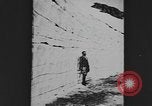
The phenomenon of the collection of the snow layers and the occurrence of avalanches in the United States.
A film depicts the causes of avalanches. Mountainous region in the United States. Snow covered mountains. Men standing and working in the area. Every new snowfall adds a new layer of snow on the crust. The phenomenon is explained. The collection of the layers of snow and the occurrence of avalanches is explained. A diagram shows the phenomenon. Men trudging through the snow. Animated diagram shows the occurrence of avalanches.

Men and women working in different war production factories for the production of raw materials and armament for World War 2 effort
The production of war materiel and supplies for soldiers and sailors in the United States during World War II. Newspaper headlines read: '1942 income 117 billions'. Men working in war production factories. Manufacture of aluminum and steel for the war effort. Sheet of aluminum rolling down conveyor in factory. View of assembly floor in a production plant building bomber aircraft. Brass being processed in factories, and hands of a worker sifting through new bullet casings in an ammunition factory. Use of copper exemplified in engine wiring and telephone communications applications. Steel being forged in factory. War ship being launched and a new Liberty ship SS Richard Bassett being launched from ship building slips on May 22, 1942. Tanks being built in a factory. Elevated view of many wood army barracks being built at an army base or camp. Then a view of homes being built as housing for war production workers. Lumber operations underway and coal miner in coal mines. A chart depicts the last year's production goals and then animated chart showing the production goals for the coming year shooting sky high. A sign on a door reads: 'Lt. Gen Brehon Somervell, Commanding General, ASF'. Lt. General Somervell seated at a desk in his office. He talks about engineers and technicians working for the U.S. Army and making materials go further to do more jobs than ever before.
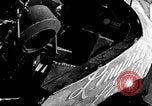
A USAAF P-38 Lightning aircraft takes off after being loaded with film magazines in Australia, during World War II
The 8th Photographic Reconnaissance Squadron in Australia during World War II. A United States Army Air Force P-38 Lightning aircraft in flight. P-38 photo recon aircraft being loaded with film magazines and then buttoned up. The P-38 Lightning aircraft takes off on a mission to photograph Japanese positions in Rabaul, New Britain, Papua New Guinea, during World War 2. The aircraft lands after returning from the mission.
CRITICALPAST.COM: About Us | Contact Us | FAQs - How to Order | License Agreement | My Account | My Lightboxes | Shopping Cart | Advanced Search | Featured Collections | Website Terms & Conditions | Privacy Policy ©2026 CriticalPast LLC.
License Agreement |
Terms & Conditions |
Privacy Policy
©2026 CriticalPast LLC.