


 Francais
 Deutsch
 Italiano
Refine Your Search
Tontouta New Caledonia 1943 stock footage and images
- Showing 4849 to 4854 of 10521 results more
more Hide
Hide
Film describing social character of United States in decade leading up to World War II
Film describes American society in the 1930s and 40s, including World War 2. CIO (Congress of Industrial Organizations) President John L Lewis and Father Coughlin speaking. Harlem street scene. Crowd entering a subway station in New York City. Newspaper headlines posted in China Town New York. Storefronts of Greek and Italian merchants in downtown New York City. Signs seen include 'Grande Deposito Dolio Doliva,' and 'Anthony Coulapides, manufacturer of high grade cigarettes.' Hebrew writing and star of David seen on side of building. Buildings with Spanish language signs in New York. A parade float with Virgin Mary depiction. Wide shot of a vineyard. View of a water wheel turning at a mill. Boys skinny dipping. 1930's and 1940's era cars on deep snow covered roads of an American town. Homes in deep snow. People recline on a beach in Florida in winter while on the same day in New Hampshire people ski, some pulled by horses. Skiers on slopes. People slip while walking across a street during a blizzard. A boy takes removes an apple from an icebox (early refrigerator). Dust storms in farm country of the rural Midwest during the dust bowl. Man races across a field toward a barn as a dust storm bears down on it. A farmer leads his horses out of a corral. A farm is destroyed by dust storms during the dust bowl. A family piles their remaining things on a farm truck and abandons their farm destroyed by the dust bowl. A poor family in a shack in the River Mississippi Valley area.
J.Edgar Hoover describes the problem of enemy agents and Nazi sympathizers in the United States in 1940.
Director of the U.S Federal Bureau of Investigation (FBI), J.Edgar Hoover, addresses Americans in military service in 1940. He speaks about enemy agents sent to the United States to undermine the war effort. Scene shifts to a 1940 nighttime view of New York City with lights on in its buildings. Sound of Benny Goodman's orchestra in background. Glimpse of water displays at the New York World's Fair. Brooklyn Dodgers Baseball team playing a game at Ebbets Field. A large field of wheat being harvested by a mechanical reaper, in an American western state. American soldiers putting on civilian clothes for weekend passes. Views of various American cities and towns with cars driving on parkways, shoppers and pedestrians walking in business districts. Closeup of a German agent, ostensibly being apprehended while beaming information to Germany via shortwave radio. German documents are on his desk. A submarine periscope tracks across surface of water. A torpedo races through the water leaving a trail of bubbles. An American ship, ostensibly being torpedoed in the Caribbean. Letters being mailed to so-called "mail drops" in Spain and South America. An intercepted letter with military information being highlighted. A brick house, outside Los Angeles, where an unidentified man is seen, whom narrator (J.Edgar Hoover) describes as " This self-appointed Dictator, who set himself up in the business of promoting Nazism." A picture of Adolf Hitler is seen on his wall. Near Chicago, a wooden sign reads, "Camp Hindenburg., Two miles." American Nazi youth are seen parading there. A newspaper shows a picture of Nazi youth at Camp Nordland, in New Jersey where young American Nazi girls are seen parading. In Yaphank, on long Island, New York, American Nazis are seen parading. The head of the German-American Bund, Fritz Kuhn, is seen at an outdoor podium giving a speech, while surrounded and guarded by uniformed Bund members. He is enthusiastically applauded by members of the audience. Several women with babies in carriages, cross at a corner in New York City. Some receive notices being passed out by a young man, announcing a "Mass Demonstration for true Americans" (to be held at Madison Square Garden). A swastika appears on each notice. View from a high point overlooking a crowd of 22 thousand American Nazis gathered in Madison Square Garden, on Feb. 20, 1939. An honor guard parades as drummers play from the stage. A mass of men holding American flags, and one holding a banner showing a swastika and words in German. Audience members all render the Nazi salute and shout "Heil." Files in the FBI offices labeled "German Agents." The file of Walter Kappe, one of the leaders of the Chicago Free Society of Teutonia and German American Bund is shown. Narrator, Hoover, says, " he was a Lieutenant in the German Army and the Leader of German sabotage in the United States." View of a vast array of desks and files in the FBI where men and women work on fingerprints. A man projects fingerprints on a screen, as Hoover speaks of the files revealing that "innocent appearing persons, applying for work in United States war plants, had been convicted of espionage in the last world war."Two men look over an FBI chart showing the location of every key spy and mail drop in North and South America

Yankees, Colt 45s, Giants, and Mets baseball teams practice at spring training camps, 1962
Players prepare for the 1962 baseball season at spring training camps. Members of the New York Yankees run onto field in Ft. Lauderdale Florida. Brief shots of star Yankee pitchers Whitey Ford and Luis Arroyo chatting. Rare shot of Hall of Famer Robin Roberts in Yankee uniform, trying to catch on with New York after being released by Philadelphia Phillies. Shot of rookies Phil Linz and Tom Tresh, both of whom would make the team. Fans in stands applaud as sluggers Mickey Mantle and Roger Maris take swings in the batting cage. Maris and Mantle pose for photographers. Scene shifts to the first training camp of the Houston Colt 45's in Apache Junction, Arizona. The Colt 45s, later renamed the Astros, were one of two new National League teams that year. Manager Paul Richards and coach Harry Craft watch players from dugout. Mountains visible in background as pitchers Jim Umbricht, Bobby Shantz and Dick Ferrell warm up. Third baseman Jim McDaniel fields a ground ball during infield practice. Scene shifts to the San Francisco Giants' training camp in Phoenix Arizona. Harvey Kuenn, Willie Mays, Matty Alou and Felipe Alou pose with bats for the camera. Giants pitchers each take a turn pitching, the last one being former Yankee Don Larsen. Kuenn and Mays lash hits in batting cage. Final scene is in St. Petersburg Florida, where the expansion New York Mets are holding their first spring training. Manager Casey Stengel talks with his coaches and shows off the Mets uniform. Shots of pitchers Roger Craig and Jay Hook throwing. Shots of shortstop Felix Mantilla, second baseman Charlie Neal and first baseman Gil Hodges doing infield practice. Announcer says the Mets' pep "should raise the expectations of New York fans" -- an ironic statement, given the Mets would lose 120 games that year, still a Major League Baseball record.

Unemployed get work under Works Progress Administration projects in Chicago, Illinois
'A better Chicago'. Unemployed men on the streets during the Great Depression. They sleep on the streets and stand in queues and relief lines in Chicago, Illinois. A young man asks another man for work and is rejected, but the other man gives him a coin to help him. Unemployed and hungry men digging through trash cans and sleeping on park benches and in doorways. Whistles blow at factories representing work starting again and available jobs. Men look up from relief lines and head to factories for new jobs. Men grabbing shovels and digging in the ground. Men working at steel factories. Smoke pouring from smoke stacks at factories. Men in pay line at factory to receive payment from cashier office. Happy men and women lifting up a young smiling child. Views of racks of milk bottles and full bread racks. Children slide down a slide into a swimming pool. Boys and girls playing on playground equipment and smiling. A family of a man and womand and two children walking together. Men working on sewage infrastructure projects in the Chicago area. View of projects underway to develop lakefront areas of Lake Michigan. Skyline and skyscrapers of Chicago seen in the background. View of the Field Museum and workers inside constructing fossil and zoology displays. Men working in construction to build and improve runways and tarmac areas at Chicago Municipal Airport (Midway International Airport). A plane taking off overhead above the workers building a runway. Low, roadside view of 1930s cars going by on road near Lincoln Park extension project area. View of Chicago city skyline buildings in the background. Men work at planting trees and expanding the Lincoln Park with an extension. Men with excavating machines and tractors work at the site of the former Chicago 1893 World's Fair (World's Columbian Exposition), transforming the area into the new 500 acre Jackson Park. Construction workers build a new Field House at Wilson Park. An old building is demolished to make way for a new housing development named after Jane Addams. Men building new low income housing apartment buildings for poor families on the site.
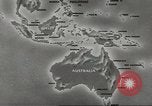
Americans strategy to attack and weaken Japanese position in South West Pacific during World War II.
An orientation film about the American campaign against the Japanese in the South West Pacific during World War II. A map of the South West Pacific area depicts islands of New Britain and New Ireland as the chief objectives of the Americans. By taking over these islands the Japanese would be isolated in the area. But a strong defense zone around these islands proves to be the main deterrent. U.S. officers including U.S. Army General Douglas MacArthur discuss the strategy to attack and isolate the Japanese in the South West Pacific region. Animated map of the region depicts American plan to capture the Admiralty Island by attacking the island of Manus and Los Negros to be followed by an attack in Madang in New Guinea. This would result in isolation of New Britain and New Ireland and weaken apanese position in the region.
From Labor Department documentary. Montage of World War II scenes from start to finish,including American home front.
Opening scene shows Adolf Hitler reviewing German troops on parade. German paratroopers jumping from Junkers Ju-52 aircraft. View from the ground of paratroopers descending from three Ju-52s. The Japanese attack on Pearl harbor, December 7, 1941. Heavy smoke rising from the leaning USS Arizona after she is hit by bombs. Newspaper headline reading "Pearl Harbor Bombed!" American soldiers leaving Camp Stoneman, are seen assembled on a pier at the Pittsburg California waterfront to board one of the ferries that would take them to Piers 15 and 45 on the Embarcadero in San Francisco. A sign at pier reading:"Through these portals pass the best damned soldiers in the West." Glimpses of soldiers firing howitzers in World War 2. Glimpses of the civilians supporting the war effort. Auto factory workers walking near a war production plant during shift change. A new army truck leaves a factory. War production workers assembling the turret on a Sherman tank. Guns and turrets being manufactured. Factory floor filled with new pursuit airplanes. A B-25 Mitchell bomber aircraft taking off. Aerial view from bomber of its bombs exploding over enemy target below. Freight trains carrying United States military supplies. Supplies being loaded aboard a ship for the U.S. and Allies. The American battleship USS New Mexico firing a gun, and firing guns from triple turrets. Workers assembling aircraft engines in a war plant. A woman at work in a war materiel production plant. Gun camera images from warplane strafing a ground target. World War 2 Victory parade along 5th Avenue, New York City, in 1946. Washington Square triumphal arch in background. Various views of the parade. Laid off war plant workers looking for new jobs. Troops welcomed home: Ship carrying returning United States soldiers back home after the end of World War 2. Disabled soldiers and sailors, such as some who were wounded in battle and lost limbs like arms or legs, making their war to a Military Air Transport Service C-54 aircraft. More views of the disabled veterans who were injured during World War II.
CRITICALPAST.COM: About Us | Contact Us | FAQs - How to Order | License Agreement | My Account | My Lightboxes | Shopping Cart | Advanced Search | Featured Collections | Website Terms & Conditions | Privacy Policy ©2026 CriticalPast LLC.
License Agreement |
Terms & Conditions |
Privacy Policy
©2026 CriticalPast LLC.