


 Francais
 Deutsch
 Italiano
Refine Your Search
US-Gliders- stock footage and images
- Showing 6613 to 6618 of 21999 results more
more Hide
Hide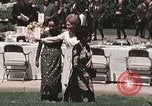
U.S. First Lady Pat Nixon with Vietnamese First Lady Mrs. Thieu before a garden luncheon in San Clemente, California.
President of South Vietnam Nguyen Van Thieu during his visit to San Clemente in California, United States. U.S. First Lady Mrs. Pat Nixon and Mrs. Thieu pose for a photograph before a garden luncheon. They walk past President Nixon and President Thieu conferring in the garden. The First Ladies walk towards their lunch table at a poolside. Pat Nixon and Mrs. Thieu talk to each other in the garden.
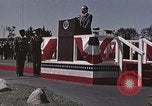
U.S. President Richard Nixon and South Vietnamese President Van Thieu deliver the final communique in San Clemente, California.
President of South Vietnam Nguyen Van Thieu during his visit to San Clemente in California, United States. U.S. President Richard Nixon on a platform for the final communique during the visit of Vietnamese delegation. President Nixon speaks from a podium. The First Lady Pat Nixon and Mrs Thieu stand by the side of the platform and listen to the speech. Press reporters take notes of the speech of President Nixon. Vietnamese President delivers his speech after President Nixon finishes with his speech. Invited guests and dignitaries at the venue.
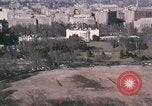
Aerial views of the White House, the U.S. Capitol building and the Washington Monument in Washington DC.
The White House, the residence of the President of the United States, and area near it in Washington DC. An aerial view of the south side of the White House. Other Federal Buildings near it. The Washington Monument near the White House. The U.S. Capitol building seen at a distance. A helicopter takes off from the South Lawn of the White House.
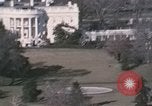
U.S. Marine Number One helicopter flies from White House past the Washington Monument to cross Potomac river, Washington DC.
The White House, the residence of the President of the United States, and area near it in Washington DC. The South Lawn of the White House. A U.S. Marine Number One helicopter takes off from the South Lawn and flies past the Washington Monument to cross the Potomac river.
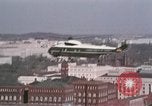
U.S. Marine One helicopter flies above Federal Buildings and lands on the South Lawn of the White House, Washington DC.
The White House, the residence of the President of the United States, and area near it in Washington DC. A U.S. Marine One helicopter flies in the sky and passes over other Federal Buildings and by the Washington Monument and the National Mall to land on the South Lawn of the White House. United States of America written on the fuselage of the helicopter.
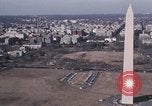
A U.S. Marine One helicopter flies low in the sky past the Washington Monument and crosses the Potomac river in Washington DC.
The Washington Monument and other Federal Buildings behind it seen from a flying helicopter. A U.S. Marine One helicopter flies low in sky past the Washington Monument. It crosses the Potomac river. Cars and automobiles on the bridge and the George Washington Parkway.
CRITICALPAST.COM: About Us | Contact Us | FAQs - How to Order | License Agreement | My Account | My Lightboxes | Shopping Cart | Advanced Search | Featured Collections | Website Terms & Conditions | Privacy Policy ©2026 CriticalPast LLC.
License Agreement |
Terms & Conditions |
Privacy Policy
©2026 CriticalPast LLC.