


 Francais
 Deutsch
 Italiano

Refine Your Search
US-Gliders- stock footage and images
- Showing 8749 to 8754 of 22001 results more
 Hide

Hurricane shelters and U.S. Navy Exchange inside the United States Naval Station Guantanamo Bay (GTMO)
View of a street with hurricane shelters. A blue car driving. Marines walking on the street with hurricane shelters and various parked vehicles. Hurricane shelters are used as barracks by the marines. Vehicles such as jeeps, trucks, carryalls are parked in street; marine walks toward camera, in FG, moving out of scene to right. Other marines working in front of hurricane shelters. View of the United States Naval Station Guantanamo Bay (GTMO), with the Sierra Maestra mountains in the background. Marine tents up on golf course of the naval station. Marines having packages wrapped outside the Navy Exchange store. A woman manning the table stands up. Two women manning the table attend to the package. View of the main entrance to the Navy Exchange. A Cuban man coming out of the Naval Exchange shop. Sign above doorway reads "BIG NAVY EXCHANGE, GUANTANAMO BAY, CUBA". Marines going in and out of main entrance, with a Jeep parked in foreground.

Animation shows types of bombs used during WW2
Types of bombs used during World War 2. Animation enumerates the chemical type bombs- namely the gas, smoke, and incendiary bombs. Fragmentation and demolition bombs are the classification of explosive bombs. Cross-section anatomy of a fragmentation bomb. Animation demonstrates a fragmentation bomb falling and exploding on impact. Close view of actual 20 lb. M41 fragmentation bomb and a 23 lb. M40 bomb.
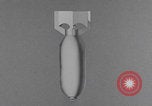
Animation depicts bombs used by the United States Army during WWII
Types of explosive bombs used during World War II. Animation of an “explosive bomb” depicting its anatomy and mechanism. High explosives are seen inside the bomb. Animation shows a bomb falling and exploding on impact, creating a crater. A cartoon showing the five sizes of demolition bombs compared to a soldier. The largest demolition bombs weigh around 1000 lbs. and 2000 lbs. The smaller demolition bombs weigh 500 lbs., 300 lbs., and 100 lbs. A 100 lbs. demolition bomb packed in an angle iron crate.
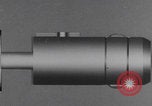
Animation depicts bomb fuse safety, internals of bomb used during World War II
Animation depicting the safety of bomb fuses used during World War 2. An artistic rendition of a bomb’s fuse. Animation depicts the inner parts of the fuse- the pin, striker, arming pin, arming spring, and arming wire. Animation shows the arming wire withdrawn, causing the arming spring to fall and ejects the arming pin. Sheer wire inside fuse is resistant to air pressure but light enough to break upon impact. Pin breaking through the sheer wire upon impact, detonating the fuse.

U.S. 347th Regiment troops meet civilians, search for mines in the city of Saint-Hubert, Belgium (WW2)
United States 347th Regiment troops re-enter the city of Saint-Hubert in Wallonia, Belgium during World War II. Groups of United States soldiers and trucks move on the snow-covered street. Snow-covered soldiers talk to cheerful women standing at a doorway. A young Belgian woman and her grandmother speaks to a soldier. Soldiers look at a map as one of them points to a direction. Soldiers smiling while looking at the map. Soldier talks on field telephone in the street. A snow-covered Jeep with wagon moves away. Soldiers use a metal detector to look for mines on the street.
The rugged durability and characteristics of Edison Batteries under testing and in use.
A diagram compares the payload capacity between vehicles powered by lead battery versus Edison battery. A WW1 era United States battleship sailing in an ocean. Steel beams of a skyscraper under construction. Vibration testing of Edison battery to check durability under use. A man operating an electric motorized cart carrying packages crosses a train track and loses one of the packages. Animation demonstrates the benefits of the Edison Battery, noting that it can be overcharged, overcharged, and even reverse charged. Photo of Edison battery array in a control room. A ‘Mrs. Wagner’s Pies- The Wagner Pastry Co.’ Edison battery electric delivery van is started and drives in the midst of a blizzard, thus demonstrating battery resistance to freezing conditions. This is probably near Newark, New Jersey, headquarters for the company.
CRITICALPAST.COM: About Us | Contact Us | FAQs - How to Order | License Agreement | My Account | My Lightboxes | Shopping Cart | Advanced Search | Featured Collections | Website Terms & Conditions | Privacy Policy ©2026 CriticalPast LLC.
License Agreement |
Terms & Conditions |
Privacy Policy
©2026 CriticalPast LLC.