Karl Poggensee and Reinhold Tiling demonstrate the workings of their first 1929 model of a so-called gyro aircraft, employing tilted wings that cause autorotation to slow the descent of a rocket and facilitate its recovery. Animated sequence shows how a rocket would be recovered in this manner. A man holding up a similar rocket. He is surrounded by spectators.
Drawings and pictures of Professor Eugen Sänger's S.R.13 and 14 Rocket motors from September, 1934. He holds a motor in his hand and points out its features. Photograph of Austrian patent certificate number 144809 issued to Doctor Eugen Sänger in Vienna, effective September 15, 1935, for Rocket engine and method for its operation. Glimpse of illustrations in the document. Drawing of planned 500 Kg thrust rocket motor designed by Sänger Rocket Motors. Eugen Sänger's drawings for a rocket-propelled missile to hunt airplanes. Design of a rocket motor (the S.R.X), on June 10, 1934, with 1000 kg thrust for a tropospheric experimental aircraft. Image of a letter to Dr.Sänger, from the the Federal Ministry of National Defense, dated February 3, 1934, stating that his ideas were not practially realizable.
Film about USIA "Operation Vagabond," employing Coast Guard Cutter (USCGC Courier WAGR-410). View of the "Courier," at sea. It is bristling with antennas, and displaying numerous flags, permitting it to operate in many territorial waters. View from her deck to land on the Island of Rhodes in the Eastern Mediterranean Sea. View of sign over a ship's hatch, reading,"Relay Broadcast Receiving Room." Inside, two crew members are seen operating equipment that instantaneously re-transmits Voice of America broadcasts. A sign "On Air," is illuminated in the compartment. Operators seen adjusting various pieces of broadcast equipment. Back on deck, camera focuses on a helium-filled balloon, holding the ship's transmission antenna, aloft. View from another ship, of the "Courier," and the helium balloon, in the distance. Illustrated chart shows fractions of VOA listeners behind the "Iron Curtain," and in mainland China. Cartoon illustrating penalties for VOA listeners. Polish escapee, interpreter, Jan Hajdukiewicz, is seen broadcasting on VOA microphone. He fled the Communist delegation during Korean truce talks at Panmunjom.
United States Information Agency (USIA) radio operators operate radio studio controls and set frequencies for transmission and receiving. USIA staff work on gathering additional facts, with newsroom reporters and editors in a press room typing and working on stories, a woman editing motion pictures, typing, printing at USIA. Exterior view of headquarters building of United States Information Service or USIS. People enter and exit the building of USIS. Members of a Citizens Committee and Director Streibert enter into a room. Map of world in room. Citizens seated on sofa. Director Streibert explains U.S.I.A. mission to a citizens' committee and talks about America's history and involvement in the world. One Citizen Committee member smokes a pipe. The Director shows a chart of how "communist propaganda is spread by a vast worldwide machine." Director Streibert explains (via anti-communist propaganda, or reverse propaganda...during Cold War) its mechanism and control exerted via the presidium of the Soviet communist party. View of Soviet Union leaders watching a military parade in Red Square, Moscow, Russia. Khrushchev is among the leaders. Next scenes show Communist rallies and speakers in Korea and then in China. At the Chinese rally, a scene of unrest unfolds as a group filling a large truck enters a rally, jumps down, and inflames the crowd. Communist leader Khrushchev with other Soviet officials debarks an airplane and meets leaders in India. He waves at a welcoming crowd during a visit. View of piles of Motion picture canisters ,magazines, pamphlets and books distributed as propaganda by Soviet Union. High production quality of paper shown. Industrial equipment and industrial farming equipment is displayed in a large exhibit hall for visiting foreign governments and dignitaries to view and consider investment. The Director states that long term Communist goals are world domination, and short term goals include the encouragement of neutralism, dividing and confusing American allies, and isolation of the United States. Director Streibert explains how the USIS works together with the Department of State to communicate American information. He ends the explanation by giving the USIA campaign pamphlets "Atoms for Peace" and "Atomic Power for Peace" ( The Eisenhower plan) to citizens of committee as example of a communication.
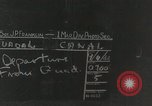
A United States Marine Corps SH-3A helicopter, supporting the recovery of astronaut Scott Carpenter, following the Mercury-Atlas 7 orbital mission. It is parked on the ground at Grand Turk Island with engine running, at night.
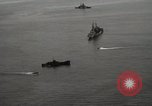
United States Navy SH- 3A helicopters, in flight above ocean, 200 km from Puerto Rico. USN SH-3A lands on aircraft carrier USS Intrepid's deck. Astronaut Scott Carpenter gets down from helicopter, which picked him up from the floating Aurora 7 space capsule following the Mercury-Atlas 7 orbital mission.
CRITICALPAST.COM: About Us | Contact Us | FAQs - How to Order | License Agreement | My Account | My Lightboxes | Shopping Cart | Advanced Search | Featured Collections | Website Terms & Conditions | Privacy Policy ©2026 CriticalPast LLC.
License Agreement |
Terms & Conditions |
Privacy Policy
©2026 CriticalPast LLC.