


 Francais
 Deutsch
 Italiano
Refine Your Search
US-Gliders- stock footage and images
- Showing 925 to 930 of 21920 results more
more Hide
Hide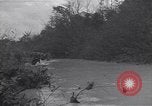
U.S. and South Vietnamese troops engaged in combat against Viet Cong in the Vietnam War
U.S. Army Special Forces troops wade along a stream, carrying M-16s and one carrying a .30 caliber M1919-A6 Browning machine gun. C-119 transport aircraft dropping paratroopers. Troopers on the ground gather up their chutes. Supplies being airdropped. U.S. forces firing small arms. U.S. Army operations in South Vietnam. Closeup of weary Vietnamese Army soldiers. U.S. Army Bell UH-1 Iroquois (AKA Huey) helicopters flying low over jungles and over a bridge along a river. Soldiers in a CH-47 Chinook helicopter. They exhange gunfire with enemies below. On the ground, U.S. Forces in firefight with Viet Cong. U.S. troops jumping to the ground from a helicopter and wading in a river. South Vietnamese and American Wounded being placed aboard an evacuation helicopter. Chopper taking off amidst ground fire. U.S. troops seeking cover as they run from downed helicopter, under fire.

U.S. Army battles against fortified Japanese forces during World War II, in Manila, Philippines
Wartime news film entitled: "Manila Cleanup." View of the Pasig River, dividing North and South Manila. American tanks and tank destroyers on North bank, firing at Japanese positions on the South side of the river. Exploding shells on South side. U.S. troops fire 155mm howitzers at low elevation, blasting the walls of Intramuros and adjacent buildings. The 540th Field Artillery fire 240mm guns point blank against the ancient walls. Troops firing machine guns at the Colegio de San Juan de Letran and Manila Post Office buildings. Troops of the 3rd Battalion, 129th Infantry, 337th Division, crossing the river in small assault boats, under covering fire. Landing on the South Bank, troops fan out around and about the walled city. Japanese forces resist from fortified pill boxes and machine gun nests near the public buildings. U.S. troops breach a section of the wall and elements of the 37th Division enter Intramuros on February 23, 1945. U.S. soldiers sheltered behind wall as others employ flame throwers. U.S. Soldiers prepares a TNT charge to blow up walls and seal underground passageways. A destroyed Japanese pill box at base of wall with many dead Japanese soldiers are seen. U.S. artillerymen firing 155mm howitzers directly at Japanese troops holed up in the Legislative, agricultural and finance buildings. Troops of B Company, 148th Infantry Regiment, advance from the Manila City Hall, towards the Legislative building. They direct flame throwers at Japanese fortifications under the wall. Soldier with flame thrower passes through group of riflemen and fires into hole in wall. U.S. soldiers fighting room to room in the walled city. On February 24th U.S. troops defeat the last Japanese resistors of Manila in World War II.
U.S. Army 9th Air Force planes strafe German positions and The 104th Division enters Eschweiler and smaller villages in Germany.
Activities of American First Army during offensive into Germany in World War 2. U.S. Army Air Force 9th Air Force planes strafe German positions near the town of Stolberg, then U.S. Army troops attack with machine guns (view from machine gun being fired at houses), heavy guns like the self-propelled 155 mm Gun Motor Carriage M12; and massed American 3rd Armored Division tanks acting as artillery in attacking Stolberg. Civilian refugees seen removing their belongings out of the battered city. An American soldier guards a German POW who assists a civilian in moving a loaded cart down a street. View of collapsed building and wreckage after the attack as Stolberg is cleared by forces of the U.S. Army 104th Division, facing booby traps and mines. U.S. forces blast structures that could not be safely cleared. After two weeks of attack, the American flag raised in the city. The 104th Division enters Eschweiler and smaller villages; mined buildings are detonated as tanks move through the towns. Mop up operations last two days as German snipers are cleared. Captured German prisoners are led through the town under U.S. Army guard. U.S. Infantry troops ride on tanks on streets of city. Soldiers carrying bedding walk on street on way to a dry night's sleep. Roadblocks are cleared by U.S. Engineer battalions, including an overhead bridge blown-up by retreating Germans. Units of the 104th Infantry and 3rd Armored division continue eastward and are seen fighting German forces in Weisweiler.
U.S. Navy Rear Admiral Don Pardee Moon talks with his men on a beach after the D-Day invasion of Normandy in World War II
U.S. troops and a U.S. Navy Admiral on a Normandy beachhead. U.S. troops, heavily laden with gear, including life preservers, seen on Normandy invasion beachhead several days after D-Day, during World War 2. A large number of German prisoners of war walk past the camera, under guard. View from further back of the prisoners walking along the beachhead. Barrage balloons aloft in background. A U.S. Lieutenant in foreground and several soldiers and a jeep nearby. A DUKW amphibious vehicle drives past the marching prisoners. U.S. soldiers remove their flotation gear and stack them into a pile on the beach. U.S. Navy Rear Admiral Don Pardee Moon seated in a jeep. LCIs (Landing Craft, Infantry) in the background. Admiral Moon talks with several U.S. officers. He then climbs aboard a Dodge WC 52 vehicle, in which others are already seated on benches in the back.
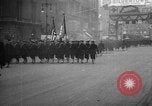
U.S. Navy and Coast Guard units parade in New York City for Victory Loan Drive.
U.S. Navy contingents comprise most marchers in a Victory Loan parade in New York City. Crowds on the sidewalks watch a U.S. Coastguard color guard with shouldered rifles march past carrying the American flag and Coast Guard Anchorage flag. Behind them a temporary arch with Red Cross symbols is stretched across the avenue. An advertisement for Sivertown cord tires is stretched across, above the arch. The Coast Guard contingent marks time briefly and then continues. From the opposite side of the avenue, a U.S. Navy band is seen marching to cadence of a snare drum only. They are followed by Women Yeomen (F) of the U.S. Naval Reserve. Next is seen a large contingent of U.S. Navy men, carrying shouldered rifles. A large sign at the sidewalk reads: "They are finishing their job, Are you? Invest in Victory." An open busload of sailors and some soldiers passes, followed by an open truck filled with farmers in overalls, carrying a sign. Two marines ride on opposite running boards of the truck. A float is seen. Scene shifts to views from behind the parade. Victory Bond posters are fastened to lamp posts. Flags and long banners are displayed. A huge sign across a building reads: "New York will see it through." View to oncoming parade, again, shows U.S. Navy Nurses marching, followed by their own bugle corps (not playing). A Navy band follows (not playing) and then some more women Yeomen (F). U.S. Marines in campaign hats, carrying shouldered rifles, come next. They are followed by a squad of New York City mounted policemen. More Women yeomen,some in black hats and some wearing ties and white hats.
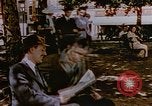
Aspects of U.S. industry including public information, agriculture, transportation, and water power.
Excerpt from film entitled "Power Behind the Nation." It opens showing glimpse of two men on a park bench, discussing a newspaper article, followed by views of men at work in a radio broadcasting studio. Next is shown a Western theme film set being constructed for a motion picture, at a Hollywood film studio back lot. Closeup of Director and crew filming a western movie with an actor on horseback as he rides up to a wooden building on the film set displaying a Dance Hall sign. Next, a director and film crew are seen working on an elaborate set with a chorus of women in white gowns. Scene shifts to film makers watching a finished movie production dealing with colonial era America (ostensibly an educational film). Another film is seen being made at a set resembling a European town. Next, views of American farms are shown with various crops under cultivation, including fruit orchards. Farm machinery is seen in use, including tractors, harvesters, and combines. Grain is shown being harvested and processed in the field, and cotton being picked. Closeup of cotton bolls on the plants. Men are shown collecting sap from sugar maple trees in the northeast U.S. for making maple syrup. In the U.S. Northwest, a flock of sheep is seen grazing in a field. A herd of cattle are shown in the Southwest, U.S. A field of grain is shown and then a section of crops irrigated by small ditches. Then a large man-made irrigation canal is seen. View of a ramshackle building and yard in a desert. Women harvesting vegetables from irrigated plants. Apples being sorted by machine. A pair of steam locomotives pulling a railroad train and a diesel locomotive pulling freight cars, all ostensibly carrying fresh produce to market. Several shots of railroad freight trains in different settings. A truck moving along a country road. A tugboat working beside a large ocean-going cargo ship on a river in the U.S. More shots of ships and inland canals. A ship passing under the Golden Gate Bridge in California. An aircraft under construction. Passengers deplaning from a Continental Airlines DC-3 passenger airplane parked on a ramp. A prototype U.S. Navy Lockheed XR6O-1 Constitution aircraft taking off. (Only two R6V aircraft were made, Bureau Numbers 85163 and 85164.) A Sikorsky helicopter in flight. Closeup of Captain in cockpit of a TWA Boeing Stratoliner airplane as it taxis out of parking place. Industrial buildings close to a river with water flowing below a dam. The Grand Coulee Dam on the Columbia River in the U.S. state of Washington.
CRITICALPAST.COM: About Us | Contact Us | FAQs - How to Order | License Agreement | My Account | My Lightboxes | Shopping Cart | Advanced Search | Featured Collections | Website Terms & Conditions | Privacy Policy ©2026 CriticalPast LLC.
License Agreement |
Terms & Conditions |
Privacy Policy
©2026 CriticalPast LLC.