


 Francais
 Deutsch
 Italiano
Refine Your Search
US-Gliders- stock footage and images
- Showing 937 to 942 of 21920 results more
more Hide
Hide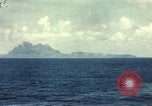
U.S. troops and ships prepare to attack Japanese positions on an island in the Pacific Theater during World War II.
U.S. troops and ships in action in the Pacific Theater during World War II. Island shoreline as seen from a cruiser. Mountain on the island. U.S. army and navy planes parked on an airfield at the island. U.S. troops loaded in jeeps and trucks advance towards front lines through deep mud. U.S. soldiers rest under tents. Man on watch. U.S. ships scattered. U.S. patrol plane in the sky. Pilot of the plane talks on headset. U.S. task force heads for an enemy island.
Construction of U.S. B-25 Mitchell bomber aircraft in the United States to carry out combat operations during World War II.
Film titled 'Combat Report' depicts the construction of U.S. B-25 Mitchell bomber aircraft to attack German submarine during World War II. Exteriors of U.S. War Department building in Washington D.C., United States. U.S. Assistant Secretary of War for air Robert Lovett and Under Secretary of War Robert Patterson seated at desk. U.S. officer looks at combat report at his desk. View of a oil tanker hit by torpedo as it sinks in the Gulf of Mexico. View of crewman at controls and a tower. Combat report being typed. U.S. sailors type report at typewriters. Man speaks into radio. Navy officer instructs an officer. U.S. B-25 Mitchell bomber aircraft in flight over sea. Pilot and copilot at controls in B-25. The position of attack being radioed to a U.S. B-25 Mitchell bomber aircraft in flight over sea. Interior views of cockpit of B-25 bomber, and of Instrument panel of B-25. Engine of planes. Men in war production aircraft factory at work building and assembling aircraft during World War 2. Blast furnace in factory. The airplane engines being assembled, tested and installed in B-25.
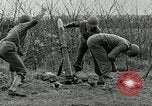
U.S. Chief of Chemical Warfare General William N. Porter directs the establishment of tropical chemical warfare tests.
An introduction of chemical warfare tests to be carried out by the U.S. Army on San Jose Island, Panama during World War II . U.S. troops test chemical warfare in a jungle. Rocket artillery is fired. Rockets explode. U.S. Chief of Chemical Warfare General William N. Porter during an initial conference with two other U.S. officers in the United States. General Porter directs the establishment of tropical chemical warfare tests on San Jose Island. British, Canadian, U.S. Marine and U.S. Navy officers attend various conferences. U.S. NDRC (National Defense Research Committee) scientists and technicians in front of charts and various instruments. The technicians carry out chemical tests. A scientist during a laboratory testing. The technicians at various instruments in a jungle during a testing phase.
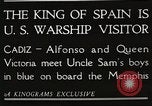
King Alfonso XIII of Spain and Queen Victoria aboard U.S. cruiser Memphis in the United States.
A visit of King Alfonso XIII of Spain and Queen Victoria on U.S. cruiser Memphis in the United States. U.S. Ambassador Hammond, Mrs. Haamond, U.S. Navy Captain R. D. White and U.S. Navy Vice Admiral Roger Welles pose on the deck of U.S. cruiser Memphis. King Alfonso talks to two U.S. sailors of Spanish descent. The sailors salute a boat going away from the ship. King George V of the United Kingdom aboard a U.S. ship.
U.S. 1st Marine Division secures the beachhead of Incheon in Korea during the Korean War.
Amphibious invasion of Incheon, Korea by U.S. 1st Marine Division during the Korean War. A radar on the bridge of a U.S. ship. U.S. destroyer USS DeHaven (DD-727), Ships head for the beach of Incheon. The importance of securing a beachhead is explained. U.S. battleships fire at coastal targets. Smoke billows up from explosions. Landing crafts loaded with U.S. Mariens head for the beach. Amphibious vehicles loaded with troops are driven on the beach. The marines advance inland. Men of the North Korean People's Army surrender before U.S. Marines. U.S. Navy USS Mahoning County (Landing Ship, Tank-914) embarks units and equipment of 1st Marine Division on beaches.
U.S. 3rd Infantry Division engages enemy around the Chowan Reservoir during the Korean War
Opening scene shows Major General Robert H. Soule, Commander of the Third Infantry Division, in Korea, speaking to a soldier, from a a jeep. His jeep moves past a U.S. tank. A U.S. Chaffee tank (named "Belle") drives past the camera. (Narrator notes that the enemy opened the gates of the Chowan Reservoir to flood the area, after U.S. forces secured the southern edge of the "Iron Triangle".) Two Patton tanks are seen at water's edge. Another is making way through the water. Three U.S. soldiers atop a hill. One looks through a pair of binoculars. U.S. infantry walking downhill beside a dry culvert. One examines an area of straw, that might hide enemy soldiers. He throws a grenade into it, that explodes raising smoke and noise. UN forces moving easily across roads and paths in the valley. (Narrator notes that in the meantime enemy forces infiltrated into the surrounding hills and then attacked with ferocity.) UN forces firing a 155 mm long tom howitzer to counter the enemy. Artillery barrages continuing through the night. U.S. troops firing 105mm howitzers, and a 60mm light field mortar. More views of various pieces of artillery being fired by crews of African American and white U.S. Army soldiers. Smoke rising from the surrounding hills as artillery shells explode.
CRITICALPAST.COM: About Us | Contact Us | FAQs - How to Order | License Agreement | My Account | My Lightboxes | Shopping Cart | Advanced Search | Featured Collections | Website Terms & Conditions | Privacy Policy ©2026 CriticalPast LLC.
License Agreement |
Terms & Conditions |
Privacy Policy
©2026 CriticalPast LLC.