


 Francais
 Deutsch
 Italiano
Refine Your Search
US-Gliders- stock footage and images
- Showing 11371 to 11376 of 21913 results more
more Hide
Hide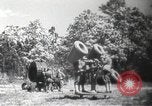
American civilian volunteers serve as aircraft spotters in World War II and practice during a drill in Arkansas, United States.
Opening scene shows soldiers standing near a searchlight and others by an array of sound direction finders for use in detecting movements of aircraft over the United States during World War 2. A large formation of single engine fighter aircraft is seen in flight. A formation of Navy PT boats speeds through the water. A trained volunteer airplane spotter looks through binoculars. A tall observation tower in a wooded area. Other volunteer airplane spotters, including two women, are shown in various cities. One spotter is in an agricultural area. Scene changes to students at a United Services Organization (USO) benefit dance in their high school. Camera pans upward to an airplane spotter on duty, above the school. He hears the sound of an airplane and looks through his binoculars. He annotates a Flash Message report with his observations, and picks up a telephone announcing "Army Flash" to the operator. A woman at a telephone switchboard takes his call and relays it to a woman at an Information Center. Film shows volunteer airplane spotters being trained by the U.S. Army to identify enemy aircraft using charts of their Silhouettes. Closeups of civilians ostensibly reporting their observations using "Army Flash" calls. Closeups of telephone operators giving priority to such calls. View of volunteers inside an information center, where aircraft movement are plotted on a large table map and their flight number, number of aircraft, number of engines they have and whether they are at high, medium, or low altitudes. Officers from Army Air Forces interceptor units observe from a balcony. In a drill, alerted pilots are seen scrambling and taking off in interceptor aircraft. A P-38 fighter plane takes off directly toward a camera. A formation of Curtis P-36 Hawk fighter aircraft are seen in flight. A large "V" formation of U.S. Army single engine airplanes is shown.
Berlin Wall separates East and West Berlin, Germany
Views of the Berlin Wall under construction in 1961. West Berlin street scene, contrasted to scenes of East Berlin across the border, still showing unrepaired damage from World War II and otherwise lacking development. Views of East German border guards retrieving the body of Gunter Litfin from the River Spree, after his unsuccessful attempt to flee East Germany. A floral tribute to Ida Siekmann, on barbed wire at the border. View of forests in mists. Refugees with their belongings walking from East Germany over a bridge to West Berlin. View of Tempelhof airfield in Berlin. A C-54 transport airplane taking off. Buildings along the border of East and West Berlin with windows cemented shut along the Berlin Wall. Barbed wire at the border. Armed East German border guards across the border. Views of the Berlin wall border wall. Views of the moon, and stars. Nikita Sergeyevich Khrushchev, First Secretary of the Communist Party of the Soviet Union,making a forceful point while speaking at a meeting of the General Assembly of the United Nations, in New York, in October,1960. Seated beside him is Andrei Andreyevich Gromyko, Soviet Foreign Minister. U.S. President John F. Kennedy addressing the UN. U.S. Sailors helping Vietnam refugees from an open stake truck. U.S. soldiers attacking and firing machine guns in Korean War. Two U.S. warships at sea. A physician attending a patient. U.S. representative providing advice and assistance to foreign farmers. The Washington Monument, in Washington, DC. Statue of Lincoln in the Lincoln Memorial, in Washington, DC. The Jefferson Memorial. Statue of Thomas Jefferson.
A bulldozer removes rubble from the road and United States soldiers at work clearing the ruins after the War in France (WW2)
Ruins clearance after German surrender in Paris France during World War II. Ruins of wrecked buildings. A Bulldozer removes rubble from road. United States (US) soldiers at work. U.S. soldiers clear the road. A bulldozer moves over the ruins as it clears it. U.S. soldiers on roadside near the wrecked building wall. Collected ruins dumped together at a place. U.S. soldiers clear the debris on road with hand tools. A crane under work. Crane moves large debris onto a truck. U.S. soldier clears up the wrecked items after the war.
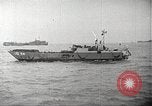
LSTs unload equipment and ammunition Omaha Beach in Normandy, France during World War II.
LCI(L)s approaching the Omaha Beach shore during the D-day invasion of Normandy in World War 2. Among those see is LCI(L)541. Officer calling with a megaphone from ship's deck. The LCIs advance toward the beach. Explosion seen ahead. U.S. troops wade from LCIs under continuous German machine gun fire. Larger Landing Ships Tank, including USS LST-282, waiting out of range of enemy fire. U.S. troops and motorized equipment on shore. Burning U.S. truck. Fallen U.S. soldiers in the sand.M4A1 Sherman tank with bulldozer blade and "DT-7" painted on its side, moving along Utah Beach. LCI(L)88 pulls up to a transport ship to load more troops for transport to the shore. Vehicles being transferred from an LST to a LCT. Larger vehicles, such as tanks, being transferred to "Rhino Ferries" (powered barges) to be taken ashore.Troop reinforcements being landed at the beachhead. Major General Charles H.Corlett, " Cowboy Pete," Commander of XIX Corps,US 1st Army, seen speaking on the radio, after landing on D-Day+4 (June 10th) at Omaha Beach, near Colleville-su-Mer. Army trucks drive ashore in surf. A buldozer moves in the surf.
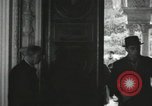
President Roosevelt, Churchill, Stalin, and other Allied officials at the Yalta Conference in Crimea, Russia during World War 2
Allied leaders at the Yalta Conference in Crimea, Russia during World War II. The meeting was also codenamed the Argonaut Conference. British Prime Minister Winston Churchill in British uniform removes his hat as he enters the Livadia Palace. Soviet Premier Joseph Stalin in a uniform enters the palace along with Vyacheslav Molotov, Andrei Vyshinsky, Pavlov and Russian diplomat Andrei Gromyko. Allied leaders seated around a table at the conference, including: U.S. President Franklin D. Roosevelt, U.S. Secretary of State Edward Stettinius (on Roosevelt's right), Harry Hopkins (seated away from the table behind Roosevelt's right shoulder), Roosevelt's chief diplomatic advisor Alger Hiss (on Roosevelt's right), Roosevelt confidant James F. Byrnes, British Foreign Secretary Anthony Eden, Permanent Under Secretary to Foreign Secretary Alexander Cadogan, Prime Minister Winston Churchill, Soviet Premier Joseph Stalin, People's Commissar for Foreign Affairs Vyacheslav Molotov, Soviet Ambassador Pavalov (primary English translator for Stalin), Deputy Commissar for Foreign Affairs Andrey Vishinsky, Andrei Gromyko, Ivan Maisky, and Ambassador Gusiev. Also seen seated at a table: U.S. Army General George C. Marshall, U.S. Navy Admiral Ernest King, President Franklin Roosevelt, U.S. Ambassador to the Soviet Union W. Averell Harriman.
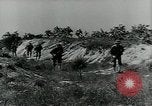
Inventor of M-1 rifle John Garand displays various rifles produced at the Springfield Armory in Springfield, Massachusetts.
A film about uses and importance of weapons since old times in the United States. United States soldiers fire rifles during a maneuver. Exteriors of the Springfield Armory in Springfield, Massachusetts. John Garand, the inventor of the M-1 rifle, at the Springfield Armory. He speaks about the development of the armory from colonial period to post World War II times. He displays various rifles used by American soldiers from 1795 to World War II. He displays a rifle used in World War II and another automatic rifle used in World War II. A forge used to produce receivers of M-1 rifles.
CRITICALPAST.COM: About Us | Contact Us | FAQs - How to Order | License Agreement | My Account | My Lightboxes | Shopping Cart | Advanced Search | Featured Collections | Website Terms & Conditions | Privacy Policy ©2026 CriticalPast LLC.
License Agreement |
Terms & Conditions |
Privacy Policy
©2026 CriticalPast LLC.