


 Francais
 Deutsch
 Italiano
Refine Your Search
US-Gliders- stock footage and images
- Showing 11491 to 11496 of 21913 results more
more Hide
Hide
LSD tests conducted on unwitting victims including prostitutes and drug addicts by the CIA in the United States.
A documentary depicts research and administration of LSD (Lysergic acid diethylamide ) by the CIA (Central Intelligence Agency) in the late 1950s and into the 1960s (part of project MKUltra). A remote mountain area in Southern Mexico. A view of a hand holding a mushroom. View of a part time chemist for the CIA, Dr. James Moore, who narrator says duped amateur mycologist and mushroom science enthusiast R. Gordon Wasson into providing information that led to the development of LSD. Mr. R. Gordon Wasson is asked about a magic mushroom leading to the drug psilocybin. He talks about how they found the mushroom in Mexico and ingested it as administered by a local shaman or magical priestess, Maria Sabina, in a Mazatec mushroom ritual. Wasson describes his own experience of what it was like to be under the influence of psilocybin. He describes visions and his sensory experience. Narrator relates how Dr. Moore was instructed by the CIA to get close to Mr. Wasson and obtain the magic mushrooms on a trip to Mexico, and that internal memos revealed plans to derive a drug from the mushrooms that would remain an agency secret. Dr. Moore discusses his work in helping the CIA to produce a new drug. Anonymous speaker relates information from CIA operative of plans by the CIA to test the drug on unwitting American citizens. People drinking and sitting at a bar. Charles Siragusa, a former narcotics officer, tells about discussions with Mr. George White. Scenes with swirling colors and lights meant to simulate the experience of someone taking LSD drug. CIA operative says that George White helped the CIA locate unwitting persons on which to test the drugs, including prostitutes and illegal drug addicts. Traffic on city streets. Narrator states that Mr. White set up safe houses for CIA in Greenwich Village, New York. Night time views of neon signs for cocktail lounges and night clubs. Exterior neon sign of Plantation Inn Motel in San Francisco, another safe house. View of an apartment building atop Telegraph Hill in San Francisco, with a view of San Francisco Bay from the safe house apartment. Former CIA official relates how they used the safe houses to administer drugs to prostitutes and determine if the drug could be useful in getting people such as prostitution customers to reveal secrets. Cars and prostitutes on a street. Views of a college campus green. Narrator states that millions of dollars were spent on LSD research at universities throughout the United States. Narrator states that word spread on college campuses about the drug, and ushered in the counter-culture movement of the 1960s. Dr. Timothy Leary is interviewed and states that he gives the CIA credit for launching the consciousness movement and counter-culture events of the 1960s. Scenes of Dr. Leary in 1967, depicting him while using the drug. Dr. Leary states that the CIA funded and encouraged use of the drug by hundreds of psychologists to advance research and understanding of it, and that psychologists found it to be an intelligence enhancing and consciousness raising experience.
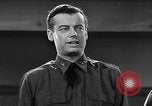
The officer explains the main points of a different battle formations like Squad Column, Skirmish Line and Wedge formation (WW2)
The advantages of the battle formations during World War II. A U.S. Army Rifle Squad officer speaks about the main points to be remembered during the battle formations . First the Squad Column which is the easiest formation, should be used at night and platoon leader will always suggest this formation first. Second Wedge formation which is helpful when the squad is alone. Skirmish Line Formation useful for advancing attack, cross small open area to be shelled and not to be used at night. The officer talks about the proper fighting formation to be adopted and about their responsibility. The Sergeants listen to him.
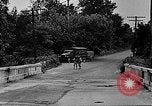
Men wash the contaminated bridge and buildings with chlorinated lime to decontaminate the area (WW2)
A World War II documentary depicts the methods of decontamination after the usage of chemicals during a combat. A bridge with liquid agent . Men place a sign which reads 'Danger war Gas'. The men being given instructions about the procedure to be used. Men fill buckets with water. A concrete bridge is washed with water. The water changes into a white vesicant solid after it reacts with the chemical. Chlorinated lime being put in the water and is spread on the bridge. Men spray oil on the contaminated grass and then burnt. A man uses flame to burn the grass. Men use shovels during the burning. Lime paste being used to wash buildings. The troops march in decontaminated area.
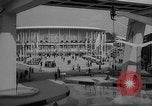
Montage of news items about international tensions in 1958
Opens showing views of the U.S. Pavilion at the Expo 58 in Brussels, Belgium. An array of international flags and artistic fountains grace the Pavilion. Glimpse of the Exhibition Hall of the Soviet Union with hammer and sickle symbol on front. Egyptian President Gamal Abdel Nasser shakes hand with Nikita Khrushchev, 1st Secretary of the Central Committee of the Communist Party of the Soviet Union. Nasser speaking to the 600-member assembly of the new United Arab Republic (encompassing Egypt and Syria). Arabs marching with banners. King Faisal II of Iraq and his uncle, Abdul Ilah, step to a podium. Faisal II riding in a horse-drawn carriage. View of seaport in Lebanon. A U.S. Naval task force is visible, arriving in response to a request for aid from Lebanon. U.S. marines in an amphibious landing near Beirut. They establish a beachhead as local Lebanese watch and applaud. The marines load artillery and ammunition on the beach. The scene changes to the island of Quemoy in the Taiwan Strait, where entrenched KMT Nationalist Chinese troops of Chiang Kai-Shek, are seen scrambling as they undergo constant shelling from Mainland China. The American Destroyer, USS Ammen (DD-527) is seen underway on patrol in the Taiwan Strait. U.S. Navy vessels provide relief supplies to the bombarded Islands in the Taiwan Strait. Landing craft are loaded with essential supplies for delivery. Sailors are seen throwing sacks of food over their ship railing into a landing craft below. A line of laden landing craft follows in the wake of a Navy ship. High rise apartments in West Berlin, Germany. West Berlin citizens are seen going about their daily activities. A large sign in German warns “Achtung! Sie verlassen jetzt West-Berlin” (“Warning! You are leaving West-Berlin”). Views of damaged buildings left untouched in East Berlin. Militia in black uniforms perform close order drills in East Berlin. Street sign identifies Unter Den Linden. The formerly elegant avenue is seen virtually deserted. A horse-drawn carriage moves along, and men push a cart full of supplies. Bicyclists ride along the side of the street. Headquarters of the 4-powers administration building is seen without a Soviet flag. French, American, and British soldiers stand guard. (Soviets are absent.)
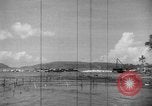
Japanese occupy Corregidor during World War II
Japanese forces occupying Corregidor fortress following a siege that effectively cut off water,food and ammunition from its U.S. and Filipino defenders. during in World War 2. Camera pans across the waterfront of Corregidor Island as Japanese forces occupy it.Japanese boats at their beachhead. American soldiers standing at attention around bunkers as Japanese officers ascend side of hill toward them. Americans being marched down the hill under guard. Japanese officers look at destroyed buildings and inspect the rest of the Corregidor fortifications, including its 12 inch guns at Batteries Hern and Smith. Small and medium U.S. arms and ammunition in a pile. Views of rail cars at tunnel entrance and views inside the tunnels of the Fort. Desks of U.S. officers inside the Fort. One is identified by name plate reading "Major F.F. Kriwanek." Several U.S. officers seen sitting in another office. View from defensive position in the fort.

Unescorted B-17 Flying Fortress planes under heavy attack by German FW-190s during Schweinfurt raid in World War II.
Scenes of the first daylight strategic bombing by the United States Air Forces against targets in German-controlled Europe. A dozen B-17s execute the first mission against railroad marshaling yards in German-held Rouen, France, on August 17, 1942. A year later, large numbers of U.S. bombers attack Schweinfurt, Germany during World War II. U.S. B-17 Flying Fortress planes take off from U.S. Air Base in England. A formation of B-17s in flight. They head towards Germany. U.S. General Dwight D. Eisenhower and his aides confer. Unescorted B-17s over Schweinfurt under heavy attack by German FW-190 fighter planes. The B-17s drop bombs over the target area. Ruins of Schweinfurt after bombings. A FW-190 goes down after facing attack. Dead and wounded men unloaded from B-17s which return from the Schweinfurt raid. Panoramic views of ruined Schweinfurt on August 20, 1943.
CRITICALPAST.COM: About Us | Contact Us | FAQs - How to Order | License Agreement | My Account | My Lightboxes | Shopping Cart | Advanced Search | Featured Collections | Website Terms & Conditions | Privacy Policy ©2026 CriticalPast LLC.
License Agreement |
Terms & Conditions |
Privacy Policy
©2026 CriticalPast LLC.