


 Francais
 Deutsch
 Italiano
Refine Your Search
US-Gliders- stock footage and images
- Showing 1303 to 1308 of 21920 results more
more Hide
Hide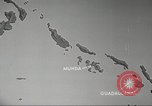
U.S. Army planes attack Japanese locations on the Solomon Islands from Guadalcanal during World War II.
The U.S. Army plans attack at Munda Point on New Georgia group of Islands, Solomon Islands, during World War II. An animated map highlights locations from where the attack is to be launched and Japanese locations to be attacked including Munda, Ballale Island, Vila, Kahili, Buka, and Rabaul. Aerial views of various U.S. air bases in the Solomon Islands. U.S. aircraft in flight. An animation depicts the air cover for U.S. convoy moving between New Georgia and Guadalcanal and the need for fighter patrol. An animated map depicts air attack on Japanese land positions to neutralize air bases and disrupt shipping. The map also depicts direct cooperation of tactical group without ground forces to attack concentrated Japanese troops.
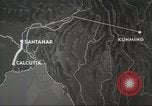
The problem of getting U.S. supplies from Parbatibur in Bangladesh to Chabua in Assam, India during World War II.
A film based on getting U.S. supplies to China from Calcutta, India during World War II. An animated map highlights Calcutta in India, Santahar and Parbatipur in Bangladesh. A train loaded with U.S. jeeps and trucks. The trucks and a jeep driven onto flat railroad cars. A train moves on a track. U.S. troops board boats on the banks of the Brahamputra River and are ferried to Pandu. A barge loaded with railroad cars moves towards the ferry point of Pandu. An animated map connects Parbatipur with Dhubri, Pandu and Chabua. Chabua is ultimately connected to Kunming in China. U.S. troops sort and unload supplies at Chabua satellite field.
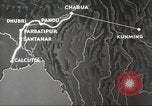
U.S. Army Air Force transport aircraft carry supplies over the Himalayan Mountains to Kunming during World War II.
A film based on getting U.S. supplies to Kunming, China from Chabua, India during World War II. An animated map links Chabua with Kunming. A USAAF (United States Army Air Forces) C-87 Liberator Express in flight over the Hump. An aerial view of the Himalayan Mountains. A USAAF C-54 Skymaster in flight. An animated representation of the content of materials carried by an aircraft over the Hump. USAAF transport planes land at Kunming in China. An animated map depicts the transportation condition over the Burma Road in January 1941 and by air over the Hump in January 1944. Dispersal of cargo and U.S. troops to various fighting fronts from Kunming. A transport aircraft takes off from Kunming. Chinese troops march. U.S. Army General Joseph Stilwell with U.S. Lieutenant General Claire Chennault in Kunming. A formation of transport planes.
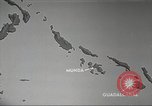
U.S. 13th Air Force plans an attack on Japanese locations on the Solomon Islands during World War II.
U.S. Army Air Forces plans an attack at Munda Point on New Georgia group of Islands, Solomon Islands during World War II. An animated map highlights locations from where the attack is to be launched and the Japanese locations to be attacked including Munda, Ballale Island, Vila, Kahili, Buka and Rabaul. Aerial views of various U.S. air bases on the Solomon Islands. U.S. aircraft in flight. An animation depicts the air cover for U.S. convoy moving between New Georgia and Guadalcanal and the need for fighter patrol. An animated map depicts air attack on Japanese land positions to neutralize air bases and disrupt shipping. The map also depicts direct cooperation of tactical group without ground forces to attack concentrated Japanese troops.
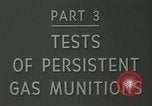
Test of persistent gas munitions during various U.S. chemical warfare tests on San Jose Island, Panama during World War II.
Tests of persistent gas munitions during U.S. chemical warfare tests on San Jose Island, Panama during World War II. A simulated chemical warfare shows U.S. troops firing mortars. A U.S. bomber aircraft in the sky. M7 100-lb bombs stacked at a munitions dump on the island. The bomber aircraft is loaded with bombs. The bombs are dropped by the aircraft from various heights. A technician examines an explosion area and makes use of an instrument to determine if there is any loss in contamination and vapor yield as a result of tree bursts. A bomber in flight and members of crew on board. The technician on the bomb drop site examines results on trees. Chemical samplings of bombed area are made in laboratories of the United States. A soldier wearing protective clothing. Mortars lay down a mustard gas barrage.
U.S. 1st Division soldiers near a half track and other vehicles in Africa during World War II.
U.S. 1st Division in Africa during the North African Campaign of World War II. U.S. soldiers near a half track in a sandy terrain. Other vehicles in the background. A U.S. half track, a jeep and other vehicles in the open terrain. A U.S. ambulance races past in the foreground. The soldiers stand in slit trenches.
CRITICALPAST.COM: About Us | Contact Us | FAQs - How to Order | License Agreement | My Account | My Lightboxes | Shopping Cart | Advanced Search | Featured Collections | Website Terms & Conditions | Privacy Policy ©2026 CriticalPast LLC.
License Agreement |
Terms & Conditions |
Privacy Policy
©2026 CriticalPast LLC.