


 Francais
 Deutsch
 Italiano
Refine Your Search
US-Gliders- stock footage and images
- Showing 1321 to 1326 of 21920 results more
more Hide
Hide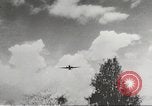
U.S. 5307th Composite Unit nicknamed Merrill's Marauders battle Japanese soldiers during their advance towards Myitkyina, Burma.
A military film report on the advance of members of U.S. Army 5307th Composite Unit nicknamed Merrill's Marauders towards Myitkyina, Burma for its capture during World War II. A U.S. Army Air Force C-47 Skytrain transport airplanes drop parachute supplies. U.S. Army General Frank Merrill confers with U.S. OSS (Office of Strategic Services) Detachment 101 trained personnel. Merrill's Marauders advance through a jungle and along an open flat field. Dead bodies of Japanese soldiers lying on the field. Merrill's Marauders fire machine guns and mortars towards enemy positions in the jungle. Dead bodies of Japanese soldiers after being attacked by Merrill's Marauders. A wounded man on a stretcher is given water. Wounded soldiers are evacuated.
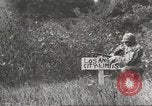
U.S. Army General Joseph Stilwell congratulates Commander of 5307th Composite Unit after the capture of Myitkyina airfield.
A military film report on the capture of Myitkyina airfield in Myitkyina, Burma by U.S. Army 5307th Composite Unit nicknamed Merrill's Marauders during World War II. A trooper sets up a sign which reads 'Los Angeles City Limits'. U.S. Army Air Force airplanes taxi and land on a muddy airstrip. U.S. Army General Joseph Stilwell deplanes and congratulates Commander of 5307th Composite Unit General Frank Merrill. A letter on a bulletin board thanking U.S. OSS (Officer of Strategic Services) Detachment 101 for providing services during the capture of Myitkyina airfield.
Wounded men of U.S. 5307th Composite Unit ( nicknamed Merrill's Marauders) are brought to Assam, India during World War II.
Evacuation of 'B' Battalion of U.S. 5307th Composite Unit (nicknamed Merrill's Marauders) from Myitkyina, Burma to U.S. 20th General Hospital in Assam, India during World War II. Members of Merrill's Marauders with long beards pose for a photographer while seated outside the hospital building. Soldiers talk to each other. Patients on stretchers are carried out of U.S. Army Air Forces C-47 Skytrain. Ambulances arrive at U.S. 20th General Hospital. Men are either carried or walk from ambulances to the hospital.
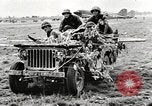
A wounded Japanese prisoner is questioned by U.S. intelligence officer at Myitkyina airfield during World War II.
Securing the capture of Myitkyina airfield on May 19th ,1944 by Allied Forces during Burma Campaign of World War II. U.S. soldiers bring a wounded Japanese prisoner in jeep at Myitkyina airfield. Wounded soldiers on bamboo stretcher is lowered from jeep. Wounded Japanese prisoner is questioned by an intelligence officer using a map. Dead body of a Japanese sniper lying on ground near strip. U.S. soldiers sleep under shelter halves protected by blankets at airfield. Wounded Allied soldiers treated at mobile clinic. Dr. Gordon Seagrave operates a patient. U.S. Army Air Forces fighters overhead. Burmese nurses giving medical treatment and blood transfusion to patients.

History of U.S. Army 3rd Infantry Division and its role in the Korean War.
Sergeant Stuart Queen of the U.S. Army introduces a film about the 3rd Infantry Division. He turns to Audie Murphy, the most combat decorated soldier of World War 2, seated beside him, who is now a film star, but still active as a Captain in the 36th Infantry Division of the Texas National Guard. Captain Murphy speaks about the U.S. 3rd Infantry Division. View of the Division parading for the Joint Chiefs of Staff, at Fort Benning Georgia, in Summer, 1949. Animated map shows Korea and surrounding countries of China and Japan, on June 25, 1950. View zooms in on the 38th parallel marking separation of North and South Korea. Views of North Korean troops moving against South Korea. Buildings being blown up. Armed troops of the People's Army of North Korea prodding civilians out of their homes. South Korean troops riding in an American-provided army truck, join others organizing to resist the invaders. South Korean troops in battle gear preparing to engage the North Koreans. Next, as part of United Nations response to the North Korean aggression, elements of the U.S. 3rd Infantry Division are seen arriving in November, 1950, and deploying along the East Coast of the Korean peninsula, to engage the North Korean army along its left flank. Battery of American M114 155 mm howitzers firing. American troops advancing along muddy road in snowy environment in December, 1950. Entry of Chinese forces into the conflict causes Americans to assume a defensive posture. Korean troops preparing to move elswhere.Smoke rising from battles in the background. Views of American defensive positions on the perimeter of the coastal city of Hungnam, to cover the withdrawal of units and equipment the U.S. 10th Corps, seen entering landing craft from the USS Montague (AKA-98) for evacuation from the beachhead
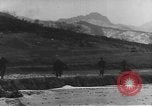
U.S. 8th Army forces battle their way to Seoul during the Korean War. Lieutenant General Ridgeway takes command.
Operations of United States troops in Korea during the Korean War. U.S. soldiers advance towards a battlefield. Smoke from firing and bombardment on the battlefield. Wrecked equipment and rubble on the ground. Prisoners of war are questioned by a soldier. Tanks advance on the battlefield and soldiers fire rifles. Mountains in the foreground. American forces enter the capital city of Seoul and set up a 155mm howitzer next to Government-General of Chōsen Building (also called the Japanese General Government Building or the Seoul Building, built by the Japanese in 1926). View of the sandbagged howitzer firing at North Korean targets. An aerial view of the battlefield. U.S. Army Lieutenant General General B. Matthew Ridgway, newly appointed Commanding General of the U.S. Eighth Army, arrives on a U.S. C-54 transport plane, to assume command in Seoul. As he steps from the plane, he is greeted by Major General William M. Hogen and another officer.
CRITICALPAST.COM: About Us | Contact Us | FAQs - How to Order | License Agreement | My Account | My Lightboxes | Shopping Cart | Advanced Search | Featured Collections | Website Terms & Conditions | Privacy Policy ©2026 CriticalPast LLC.
License Agreement |
Terms & Conditions |
Privacy Policy
©2026 CriticalPast LLC.