


 Francais
 Deutsch
 Italiano
Refine Your Search
US-Gliders- stock footage and images
- Showing 13267 to 13272 of 21917 results more
more Hide
Hide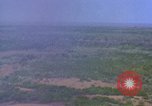
Bombs being dropped on Viet Cong huts in a wooded region by A-1E aircraft in Vietnam during Vietnam War.
A U.S. Air Force A-1E aircraft drops bombs on Viet Cong huts in wooded areas in Vietnam during Vietnam War. A wooded region in Vietnam. Smoke spread in the air. White smoke rises from Viet Cong huts in the region. General-purpose bombs and napalm bombs dropped on the huts by U.S. Air Force A-1E aircraft piloted by Captain Rice and black smoke rises into the air in the region. Trees surrounding the region. Thick black smoke rises into the air from the bursts. Viet Cong huts in the wooded region on fire. Black smoke rises from the bombed areas. Smoke rises from the huts in the region. White smoke spread in the area.
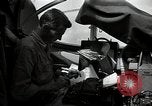
PBY Catalina with soldiers aboard in flight from Morotai Island,New Guinea to Mindanao,Philippines during World War II.
U.S. Navy PBY Catalina of the 2nd Emergency Rescue Squadron transfers the U.S. soldiers and war correspondents from Motorai Island in New Guinea to Mindanao in Philippines during World War II. The PBY Catalina in flight. An officer typing a document at the typewriter. The aircraft in flight above an island. The coastline in view. Rocky terrain along the coast line.
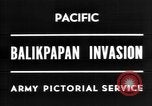
The Battle of Balikpapan, Borneo, during World War II.
Scenes of the Allied bombardment and invasion of Japanese-held Balikpapan in Borneo, during World War II. Bombers of the U.S. 13th Air Force making numerous strikes against Japanese coastal defenses, oil installations and airfields at Balikpapan, Borneo. Scenes of accompanying naval bombardment by warships of the U.S. 7th fleet supplemented by elements of the Australian and Netherlands Navies. General Douglas MacArthur observing operations from the deck of a ship. The Australian 7th Division, composed of the 18th, 21st and 25th Infantry Brigades, with support troops, making an amphibious landing a few miles north of Balikpapan. Australian troops wading ashore from landing craft. Australian armor and other vehicles on shore. Infantry advance supported by Matilda tanks of the 1st Armored Regiment. Australian troops firing machine guns, 5 pounder howitzers, and wielding flame throwers. A Japanese soldier runs from a bunker, with body and clothes aflame. General Douglas MacArthur and Australian officers inspecting the beachhead. Views of Shell Oil Company facilities destroyed by Allied pre-invasion bombing and shelling.
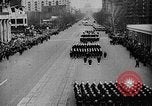
The inaugural parade along Pennsylvania Avenue during the 1933 inaugural ceremony of President Roosevelt in Washington DC.
The inaugural ceremony for the newly elected U.S. President Franklin Roosevelt in Washington DC. The Army, the Navy, the Marines and the National Guard units march along Pennsylvania Avenue in Washington DC. Buildings on either side of the road. Large crowds gathered on the sides of the road. A military band and horsemen in the parade. People along the streets watch. A few of them hold American flags. The band playing instruments marches along the street. The 32nd President of United States Franklin Roosevelt. The U.S. flag.
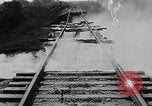
Scene following train attack by Mexican Bandits led by revolutionary Luis De la Rosa, near Olmito, Texas.
Smoke rising from burning timbers on a collapsed wooden railroad trestle bridge near Olmito Texas on the U.S.- Mexican border. (This is during a period of Mexican bandit attacks leading up to those by Pancho Villa and the subsequent Mexican Expedition AKA the "Punitive Expedition, U.S. Army.") The rails on the trestle bridge remain intact but are severely bent and twisted by the heat of the fire. They continue, with fragments of railroad ties, still attached, to extend across the span of the bridge, over a deep river bed. The next scene shows the aftermath with several men standing near a train with about six derailed cars. They wave when the camera focuses on them. In the background, next to two passenger cars, still upright, a man and two women are looking at the wreck. The men in the foreground are retrieving items from the train's mail and cargo cars, and have some piled up nearby. On man is writing notes. Closeup of what appears to be a policeman, in a cap, as he walks past men retrieving items from a partly overturned rail car. Camera focuses on wheels ripped from the bottom of the car. The officer in the cap, and a man in shirt and tie, who appears to be a business executive, converse briefly and the businessman leaves the scene. Next, are shown numerous articles, retrieved from the train wreck. They are laid out on a field near a train station and other buildings. Two box cars are parked on a track nearby. Two men are sorting through the articles on the ground. A small boy watches as a man briefly sprays water on some of the items laid out in the field. A train station is seen in the background along with numerous low buildings. Camera jumps to closeup of a steel door on the train station building. It shows three holes in the door, two of which seem to contain remnants of bullets or larger size ordnance, presumably fired by Mexican bandits trying to break into the high value storage room at the station. The bandits also burned a bridge at Tandy's Station to thwart responders.
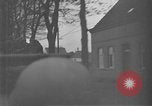
American First and Ninth Army troops and German prisoners of war move along streets in Lippstadt, Germany.
American First and Ninth Army in Lippstadt, Germany after World War II. Streets with houses along their sides. A truck loaded with German prisoners of war moves along a road. Tanks with American First and Ninth Army troops and German prisoners with their belongings move along streets. German prisoners have armbands. U.S. soldiers on a tank wave. Buildings on either side of a street. A wounded German prisoner of war taken by two other Germans. U.S. officers and soldiers march along a street. A German prisoner with a bandaged hand holds his belongings and moves along a road. Two American soldiers watch the prisoner. Other prisoners of war with their belongings on the road. The prisoners of war move inside a building. A battered ex-prisoner of war walks along a street. A prisoner talks to a soldier. A prisoner walks inside the building with a soldier holding a gun behind him. Discarded German guns, a helmet and other equipment. A swastika sign on the helmet.
CRITICALPAST.COM: About Us | Contact Us | FAQs - How to Order | License Agreement | My Account | My Lightboxes | Shopping Cart | Advanced Search | Featured Collections | Website Terms & Conditions | Privacy Policy ©2026 CriticalPast LLC.
License Agreement |
Terms & Conditions |
Privacy Policy
©2026 CriticalPast LLC.