


 Francais
 Deutsch
 Italiano
Refine Your Search
US-Gliders- stock footage and images
- Showing 13315 to 13320 of 21917 results more
more Hide
Hide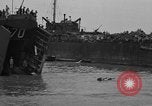
Enlisted natives load supplies from amphibious vehicles to trucks during Philippine invasion of Lingayen Gulf.
United States soldiers advance during Philippine invasion of Lingayen Gulf in World War II. A soldier sitting at a camp watches with binoculars. A U.S. Army Landing Ship Tank (LST) stationed near a beach. Soldiers in amphibious vehicles. The men wade towards the beach in shoulder high water. The LST approaches a beach. Other navy boats and ship follow behind. Military vehicles and equipment offloaded from amphibious boats into trucks by enlisted native men. U.S. soldiers with their rifles watch the loading. Amphibious vehicles are driven on the sandy beaches.
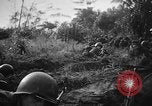
Military supplies offloaded from Landing Ships and naked natives are taken prisoner on an island in the Pacific during WW II.
United States Navy offload material and equipment on a beach during the invasion of an island in the Pacific during World War II. U.S. Marines hide in the grass on the beach. Some natives walk around the area. A group of natives taken prisoners and a U.S. soldiers guard them. Supplies off loaded from amphibious vehicles. Dead body of a man inspected by the soldiers. DUKW vehicles and soldiers after landing on the beach. Number of natives without any clothes walk towards the landing vehicles.
President Nixon works to improve social conditions of minorities under his entrepreneurship program in the United States.
U.S. President Richard Nixon's administration works to improve the conditions of minorities in American society. President Nixon shakes hands with African American dignitary. View of factory machines working at a cardboard box, packaging, and furniture business owned by an African American business man named Al Hollingsworth. Mr. Hollingsworth demonstrates some box packaging pieces and speaks in favor of Nixon's support for minority business owners. Three parked 18 wheeler trucks owned by Latino business man JJ Corasco. Corasco speaks in favor of Nixon's work with the Small Business Administration (SBA) supporting Mexican American business owners like himself. One truck begins to drive. View of a man using a drill press in a Toy Company that grew out of a small arts and crafts business. A man who is the Native American Indian business owner of the toy shop speaks in favor of Nixon's minority small business support. Scenes of the Native American man and his workers in the toy factory. From a pro-Nixon "documentary" called "The Nixon Years: Change Without Chaos" covering President Richard Nixon's first four years in office. Released during his 1972 reelection campaign.

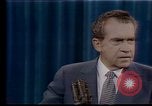
President Richard Nixon delivers "Nixon Shock" speech dealing with the economic crisis in the United States.
President Richard Nixon gives a speech on the economy from the White House in the United States. Nixon addresses the nation on the need to create more jobs, stop the rise in the cost of living, control price inflation, relieve economic stagnation, and control speculation. He announces the Job Development Act of 1971. He talks of eliminating excise taxes on automobiles and speeding up availability of some exemptions in personal income taxes. He charges Congress to introduce incentives for research and development. He orders federal spending cuts including a postponement of pay raises, a 5 percent cut in government personnel, and a 10 percent cut in foreign economic aid. He notes need to open ways for the young people entering job markets. Nixon orders a freeze on all prices and all wages in the United States for 90 days, and he calls on corporations to extend the freeze to dividends. He announces a Cost of Living committee within the government. He calls for voluntary cooperation of all Americans to control price increases after the 90 day period ends. He talks of the need to protect the strength of the American dollar and prevent international money speculation. He announces that the dollar will be defended. He announces the suspension of the convertibility of the dollar to gold, except in certain circumstances. (Later this speech was called the Nixon Shock and also the speech closing the gold window.) He says he wants to "lay to rest the bugaboo of what is called devaluation." He states the goal is stability in the dollar. Regarding trade balances, he announces a temporary 10 percent tax increase on goods imported into the United States, valid until unfair exchange rates are eliminated. He reflects on success of post World War 2 relief measures offered by the U.S. to foreign countries, increased competition with those nations, and need for less U.S. relief to them. He asks the public of America to work together to crush unemployment and economic problems.
President Nixon answers a journalist questions during a news conference in Orlando, Florida.
U.S. President Richard Nixon answers journalist George Gill questions regarding the Watergate issue in Orlando, Florida. George asks the President about his realization of the fact that 2 of the 9 Watergate tapes did not exist and his delay in disclosing this matter to the Federal Court and public. The President responds that on September 28th or 29th he came to know about the non-existence of those two conversation tapes. His secretary has listened to 7 tapes and has made notes for him. On October 26th they were determined about the non- existence of those two tapes. He directed White House Counsel Joseph Fred Buzhardt to carry out investigations. On 27th Buzhardt reported that he could not find those two tapes. He had arranged a meeting with Judge John Sirica. The President talks about his 5 minutes conversation on June 20th with the Attorney General John Mitchell. He had called to cheer him up. The conversation on April 15th with John Mitchell was not recorded because the call was made from family quarters where recording is not allowed. He talks about the shorter recording capacity of tape machines. Due to which his complete conversation with U.S. Secretary of State Henry Kissinger did not get recorded. The only evidence available for this were his hand written notes. He mentions the difficulty in hearing those recorded tapes due to non-sophisticated recording system. He states that he knows what is there in those recorded tapes. He believes that the tapes will prove that he did not have any knowledge of breaking of the Watergate issue, that he had not authorized anybody on clemency nor had he any knowledge regarding the payment of blackmail money. He talks about his conversation with the White House Counsel John Dean.
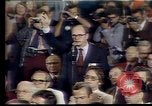
President Nixon answers a journalist questions regarding the Watergate tapes during a news conference in Orlando, Florida.
U.S. President Richard Nixon answers journalist Richard questions regarding the Watergate issue in Orlando, Florida. Richard asks the President about his reaction both personal and political regarding the credibility with the American people as well as his reaction on the discovery that the tapes for White House Counsel John Dean and U.S. Attorney General John Mitchell did not exist. The President responds that he was disappointed. He states that the missing of such tapes gives the impression of things being covered up by the President or his staff members. He states that he would have been been more disappointed in case the tapes which were considered more important would have been missing. He briefly talks about the tapes of September 15th, March 13th and 21st. He states that even though those two missing tapes are not been considered as an essential part of the investigation by the Urban Committee, but he is still disappointed.
CRITICALPAST.COM: About Us | Contact Us | FAQs - How to Order | License Agreement | My Account | My Lightboxes | Shopping Cart | Advanced Search | Featured Collections | Website Terms & Conditions | Privacy Policy ©2026 CriticalPast LLC.
License Agreement |
Terms & Conditions |
Privacy Policy
©2026 CriticalPast LLC.