


 Francais
 Deutsch
 Italiano
Refine Your Search
US-Gliders- stock footage and images
- Showing 1657 to 1662 of 21921 results more
more Hide
Hide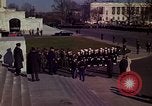
Combined Honor Guard taking their places on the steps of the U.S. Capitol.
View of the U.S. Capitol building where funeral procession of President John F. Kennedy is about to arrive. Combined Honor Guard taking their places on steps of the U.S. Capitol. Close views of combined Honor Guard. Marching units arriving at the U.S. Capitol. Crowds in the background.
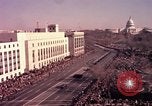
Huge crowd following the funeral procession of John F. Kennedy towards the U.S. Capitol.
The funeral procession of United States President John F. Kennedy heading towards the U.S. Capitol in Washington DC. Huge crowd lined up on sidewalks following the funeral procession towards the U.S. Capitol. The U.S. Capitol is shown in the background.

Airfield is being constructed at Marston Strip in North Carolina. First use of "Marston Mats."
Views of diesel powered bulldozer leveling off sandy field and pierced steel planking (PSP) laid down by U.S. Army workers to quickly build landing strip at Marston Strip, North Carolina, supporting Camp Hoffman airfield (later renamed Camp Mackall in 1943). A C-47D aircraft landing on the new landing strip. This was the first use of the perforated steel planking, nicknamed "Marston Mats" (or sometimes misspelled "Marsden Mats"), which were widely employed by the U.S. Army in World War 2.
Film promoting consideration of Nuclear-powered rockets for U.S. Space Program
Seals of National Aeronautics and Space Administration and Atomic Energy Commission indicate joint sponsorship of the idea in this film: namely, to promote consideration of Nuclear-powered rockets, in lieu of chemical-povered ones, in the U.S. Space Programs. Moon as seen from earth. Animation of a landing vehicle landing on surface of the moon. Animation of space vehicles and equipment in outer space and on a planet. Chemical Rockets are mentioned and are compared to future plans for Nuclear rockets to expand programs in space. View of Saturn V rocket on launch pad. Night time launch of Saturn V rocket from launch pad powered by chemical fuel. S-aturn V rocket ascending. View from rocket as part of propulsion system is ejected during ascent second stage. Animation and discussion of use of a nuclear powered third stage for propulsion. Animation of a lunar base and a spacecraft involved in a lunar supply mission. It is explained by animation how more thrust and efficiency is gained by use of nuclear rockets versus chemical rockets. (The program was the Nuclear Engine for Rocket Vehicle Application or NERVA, a nuclear thermal rocket engine development program.)

Departure of American forces from Lebanon following brief U.S. intervention in 1958
Opening scene shows an honor guard of Lebanese Armed Forces (LAF) soldiers lined up in formation in front of the Beirut airport terminal building. As an officer steps away from them, the troops render salutes while right-shouldering arms. The officer walks toward several civilians and an American officer who salutes. Next, a U.S. Major General greets Lebanese army officers. The LAF soldiers march away shouldering their rifles. Several U.S. soldiers are seen boarding a U.S. Air Force C-130 transport aircraft by way of a side door and drop-down stairs. One of them carries a large box. A United Nations DC-3 aircraft is seen taxiing out rapidly for takeoff. It displays the letters "U.N.R.W.A." on its rear fuselage and the logo of The United Nations Relief and Works Agency for Palestine Refugees in the Near East on its tail.
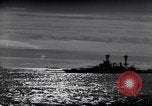
U.S. Navy Pacific Fleet maneuvers in Fleet Problem XIX, 1938
U.S. Pacific Fleet maneuvers including Colorado, New Mexico and Tennessee class battleships during Fleet Problem XIX. Several battleships underway in a line. Two battleships with various classes of heavy cruisers in the background. Lines of warships proceeding at sunset and in daylight. Four battleships and a heavy cruiser.The aircraft carriers, USS Lexington (CV-2) and USS Saratoga (CV-3), behind a line of U.S. warships. Several U.S. battleships headed by a Colorado class battleship. View of triple 14 inch guns on a New Mexico or Tennessee class battleship.
CRITICALPAST.COM: About Us | Contact Us | FAQs - How to Order | License Agreement | My Account | My Lightboxes | Shopping Cart | Advanced Search | Featured Collections | Website Terms & Conditions | Privacy Policy ©2026 CriticalPast LLC.
License Agreement |
Terms & Conditions |
Privacy Policy
©2026 CriticalPast LLC.