


 Francais
 Deutsch
 Italiano
Refine Your Search
US-Gliders- stock footage and images
- Showing 17971 to 17976 of 21918 results more
more Hide
Hide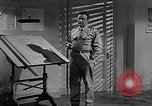
Effects of conventional bombs compared to incendiary bombs in tests against wooden structures, at Eglin Field in World War II
Tests to compare effects of conventional bombs to those of incendiaries,on wooden structures. Test conducted at Eglin Field, Florida, during World War 2. Actor Lee J. Cobb, portrays an Air Force Captain, seated at Project Officer's desk. He shows photographs of a wooden test house constructed similar to houses in Japan. View of wooden structure being ignited from within. The resultant fire is put out promptly. B-17 airplane in flight over the test area, drops conventional bombs, which destroy some of the test village houses. A second bombing using incendiary bombs that break apart and ignite many fires, produces greater destruction across the test village.
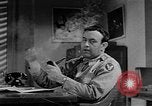
Testing various types of bombs against Japanese-style wood construction, at Eglin Field, during World War II
U.S. Army Air Forces tests of conventional and incendiary bombing of Japanese-style wooden structures, at Eglin Field, Florida, during World War 2. An Army Air Forces Captain (portrayed by actor, Lee J. Cobb) discusses bombing tests conducted at Eglin Field. He holds a pipe in his hand. B-17 bomber takes off over the camera. The plane in flight over the test area. Clusters of small incendiary bombs fall on the test village, causing it to be engulfed in flames. Immediately, thereafter, conventional bombs are dropped on the smoking test village, causing large explosions. The Air Force Captain (Cobb) discusses the results.
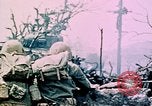
United States Marines move into the outskirts of Naha during the Battle of Okinawa, Japan.
Activities of the U.S. 1st and the 6th Marine Divisions on the island of Okinawa, Japan during World War II. Artillery bombards Naha. Marines move into its outskirts as they fire rifles and machine guns. Tank guns reduce enemy strongholds. Marines cross a pontoon bridge, laid over mud flats and enter a suburb of Naha.
General Simon Bolivar Buckner is killed in Japanese firing during the Battle of Okinawa, Japan.
Activities of the U.S. 1st and the 6th Marine Divisions on the island of Okinawa, Japan during World War II. Marines advance towards south of Naha. Firing and bombarding in the battlefield. Soldiers fire guns from tanks and advance. Smoke arises due to bombardment. Marines fire rifles. Marines carry the dead body of General Simon Bolivar Buckner on a stretcher after he was killed in Japanese firing.
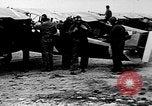
Recruiting and training American fliers for World War I. Support from President Wilson and Secretary of War, Newton Baker
In 1916,The Lafayette Escadrille, a group of American airmen who fought for France before American entry into World War I, with Indian chief's head in war paint and headdress painted on fuselage of their Nieuport aircraft. Newspaper headline reads 'United States and Germany at war'. in 1917, American civilian recruits responding to World War One: training with wooden guns, marching in uniform, and moulding practice bombs of plaster. Airmen train with real Lewis machine guns. Pilots who completed training are issued leather flying coats, helmets and goggles. Pilots make preflight checks by testing tautness of wing struts and cables. Crew takes off in a DH-4 airplane and drops practice bombs. Explosions on the ground. Pilots receive orders for advance training overseas. American troops march and drill. Supporter of airpower, Secretary of War, Newton Baker, speaking on podium, with General John J. Pershing sitting behind him. President Woodrow Wilson, another aviation supporter, signs a document at his desk. Red Cross women distribute refreshments to American troops as they deploy overseas. View of the Ocean Liner, SS Leviathan, converted to a troop ship, and camouflaged. American soldiers seen in French village square. View of Army barracks and muddy streets. Outdoor gunnery practice, using model airplanes. Experienced pilots demonstrating control stick techniques. Pilots taking off, in flight, and landing in Sopwith Camel airplanes. A nosed-over Sopwith Camel airplane with pilot unhurt, in cockpit.
Allied forces hold air superiority in battle of Saint Mihiel during World War I.
This film shows numerous types and models of World War One aircraft in operation. It opens showing Allied airplanes preparing for a maximum air campaign in the battle of Saint Mihiel. View from inside a hanger as its flap opens and men push a Sopwith Camel airplane out onto airfield. Map of St Mihiel. American planes warm up on flight line in predawn, with flares burning at wingtips. Huge numbers of allied airplanes are marshaled on airfields throughout the theater of operations and begin taking off. Among them is a French Morane-Saulnier low wing monoplane. German fliers are seen loading small hand held bombs into the cockpit of their Albatross aircraft. Soldiers in combat on ground in "no man's land" during the battle of St. Mihiel. They take refuge in large shell and bomb craters and try to advance running between them.. Germans fliers dropping bombs, by hand, from airplane. Numerous Allied and German airplanes in aerial dogfights. American planes over clouds. American Observation balloon attacked in sky. Balloon in flames, and trailing black smoke as it falls to the ground. French flag flies at an airfield, where a nosed-over airplane sits, by a hangar, as airplanes fly overhead. Aircraft taxiing about in close quarters at airfield. Large formations of American airplanes flying overhead in a grand formation, following the Armistice, November 11, 1918 Then the film shifts dramatically from World War One to the post-WWII year of 1947. It illustrates the dramatic advances in warplanes since WWI by showing U.S. B-36 bombers and straight-wing F-84 Thunderjet fighters is formation.
CRITICALPAST.COM: About Us | Contact Us | FAQs - How to Order | License Agreement | My Account | My Lightboxes | Shopping Cart | Advanced Search | Featured Collections | Website Terms & Conditions | Privacy Policy ©2026 CriticalPast LLC.
License Agreement |
Terms & Conditions |
Privacy Policy
©2026 CriticalPast LLC.