


 Francais
 Deutsch
 Italiano
Refine Your Search
US-Gliders- stock footage and images
- Showing 19243 to 19248 of 21918 results more
more Hide
Hide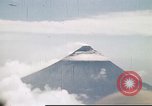
Smoke issuing from the Mayon Volcano on Luzon island in the Philippines.
Mayon Volcano on Luzon island in the Philippines. An aerial view shows puffs of smoke rising from the volcano. View of the volcano from the ground. A U.S. Army airman looks at the volcano.
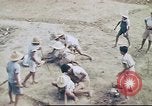
Activities at the Philippine Air Force Batangas Air Base, prior to World War II in the Pacific.
Philippine Army Air Corps (PAAC) and United States Philippine Department Air Force aircraft at the PAAC's Batangas Airfield (Batangas City), prior to World War 2 in the Pacific. A group of rural Filipino boys wearing straw hats rough playing on the ground. Building with a sign reading 'Last Chance Bar, Batangas Officers Club'. Two United States Army officers, one dressed in white shorts, step from the club and pose, drinking beer from bottles. U.S. Seversky P-35 pursuit plane parked on the field along with several USAAC P-26 Peashooter airplanes. Two P-26s take off. Arriving passengers stand around a Sikorsky S-43 Baby Clipper amphibious plane, as their baggage is unloaded. The Baby Clipper starts engines and takes off. The passengers walk toward the airfield gate. Logo on the aircraft nose indicates that the S-43 is operated by the Iloilo-African Americans Air Express Co. (INAEC).
Animated illustration of the Burma Road as vital link between Lashio, Burma and Kunming, China during World War II.
A film titled 'Under Heaven all is one Family' illustrates the importance of the Burma Road during World War II. A globe spins. Animated map of China depicts the distance of Singapore from the U.S. and highlights Rangoon. The map further highlights Burma, China, Indo-China and Thailand. The Burma Road is presented as a vital link between Lashio, Burma, and Kunming, China during World War II.
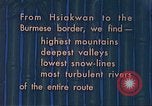
United States supply trucks move along the Burma Road in China.
A film illustrates the importance of the Burma Road in China during World War II. Animated map shows the Burma Road extending from Hsiakawan, China to the Burmese border. A truck moves along the Burma Road on the side of a mountain. A deep valley as seen from the Burma Road. U.S. supply trucks move along the road on the mountains.
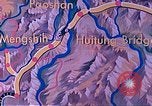
Malaria control in Mengshih, China near the Burma Road during World War II.
Activities in Mengshih, China near the Burma Road during World War II. Animated map shows the Burma Road and highlights Mengshih, Paoshan and the Huitang Bridge. Chinese men work for malaria control in Mengshih. The head of Anti-Malaria Institute of the Chinese Government Dr. Y.C. Yao looks through a microscope in his office. A sign reads 'Malaria Laboratory Rockefeller Foundation Chefang, Yunnan, China' at laboratory facility founded by the Rockefeller Foundation in 1939 with efforts from U.S. Secretary Henry Morgenthau. A Chinese doctor examines and treats a Chinese boy affected with malaria. Blood samples of children are taken from earlobe and put on slides, and then examined under a microscope in the laboratory. Chinese boys (the "health boys") fill pesticide spray cans and then spray pesticides in a narrow stream. Another worker spreads pesticide in powder form to control mosquitoes. A Chinese official instructs the boys working for malaria control. Chinese men inspect the area near bushes and inspect ladles filled with water samples. Chinese official Mr. Chen meets Mrs. Sweet, the wife of a Rockefeller Institute physician.
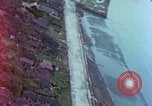
An aerial view of Atsugi Airfield near Atsugi, Japan (close to Yamato and Ayase Japan), at the end of World War II.
An aerial view of Atsugi Airfield as seen from a U.S. aircraft in flight, shortly after the end of World War 2. Aircraft parked on Atsugi Airfield. Scene shifts to a harbor area and dock installations in vicinity of Yokosuka Naval Base. Ships alongside a finger dock. Bomb damage in the surrounding area.
CRITICALPAST.COM: About Us | Contact Us | FAQs - How to Order | License Agreement | My Account | My Lightboxes | Shopping Cart | Advanced Search | Featured Collections | Website Terms & Conditions | Privacy Policy ©2026 CriticalPast LLC.
License Agreement |
Terms & Conditions |
Privacy Policy
©2026 CriticalPast LLC.