


 Francais
 Deutsch
 Italiano
Refine Your Search
US-Gliders- stock footage and images
- Showing 2035 to 2040 of 21924 results more
more Hide
Hide
U.S. Navy Lockheed P-2H and C-117 Hummer aircraft at Tan Son Nhut Air Base in Saigon, Vietnam during the Vietnam War.
U.S. Navy aircraft in Vietnam during Operation Market Time of the Vietnam War. A U.S. Navy Lockheed P-2H aircraft taxis at Tan Son Nhut Air Base in Saigon. Aircraft in flight. One of the patrol aircraft returns. A U.S. Navy C-117 Hummer aircraft moves towards a parking area. A patrol aircraft taxis in to the parking area. A P-2H aircraft taxis to the parking area. Ground crew directs the aircraft as it makes a starboard turn. The aircraft in parking area as crew men stand next to the aircraft. Engines stop. The aircraft being towed to a parking area.
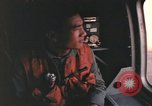
U.S. Navy aircraft fly over ships underway at sea off the coast of Vietnam during Operation Market Time of the Vietnam War.
U.S. Navy aircraft in Vietnam during Operation Market Time of the Vietnam War. A Vietnamese Navy observer writes down on a pad in his lap. U.S. Navy Lockheed SP-2H aircraft in flight and a winding river below. The SP-2H in flight over a heavy cloud cover. The Vietnamese observer on a radio with an area map in his lap. A crewman works with a practice depth charge. Three U.S. ships underway in the Gulf of Tonkin during underway replenishment. An LST (Landing Ship Tank) and a fleet oiler ship underway. A pilot at the controls in the cockpit. Three ships underway at sea as seen through a window during a fly by. Two crewmen. Lieutenant Commander B.D. Johnson talks over a microphone. A forward observer with a map lying across the lap. Lieutenant Junior Grade Webber looks through binoculars while seated in the bow of the aircraft. Lieutenant Junior Grade Webber works on a navigational chart. Crewmen get ready for 'Gold dust' mail and magazine drop to USS Woodpecker, a patrol boat. USS Woodpecker underway. A smoke marker burns on water off the port side of the ship. A freighter underway at sea. The port side of a merchant ship underway at sea.
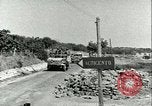
Italian civilians gathered in a street wave and cheer as U.S. soldiers enter their town in Sicily, Italy during World War II.
U.S. troops in Sicily, Italy during World War II. U.S. troops loaded onto a truck drive past a sign that reads 'Acrigento'. Italian civilians gathered in a street wave and cheer to celebrate the entry of U.S. troops in the town. The soldiers march into the town. A view of a coast and a town with a hill in the background.
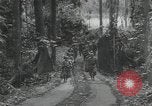
U.S. Marines capture Henderson Field and undertake construction activities on it in Guadalcanal, Solomon Islands.
A film about Allied campaign against the Japanese in Guadalcanal, Solomon Islands during World War II. U.S. Marines march ahead on the island. Henderson Field after being captured by the Marines. The American flag being raised at the field. The Marines salute. Shell crates on the field. A gun emplacement on the field. Rollers and other mechanized equipment are used to level surface and make a runway at the airfield. An aircraft taxis at the field. U.S. Army Air Forces B-17 Flying Fortress aircraft parked at the field.
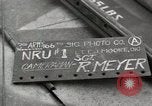
U.S. infantry and armor of 6th Armored Division advance through village of Oberdorla, near Muhlhausen,Germany, in final days of World War II in Europe
American forces of 6th Armored Division advancing through village of Oberdorla, Germany, a month before the end of World War 2, in Europe. U.S. infantrymen moving cautiously near buildings in the village. Two Germans, one wearing a helmet, and the other in civilian clothing, walk past the camera, gesturing. Gunner in an M4 Sherman tank fires machine gun at upper floor of adjacent building, as local citizens scramble out of the way, and U.S. infantrymen move along sidewalk and pause at bend in road. Back to the Sherman tank, and smoke rising from the area of building that it fired upon. American soldiers hurry past the camera and move cautiously along the sidewalk. Two soldiers move slowly along street in a jeep. More views of U.S. infantry accompanied by M18 Hellcat tank destroyer and M4 Sherman tanks moving through the village. A sign identifies village as Oberdorla. The jeep is seen again, moving along with tanks and infantry. It parks outside a building that infantrymen are entering. As soldiers cluster outside the building, one fires several shots into it.
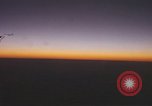
Pilot Donald H Lilienthal with a copilot on the controls and an aircraft lands at a U.S. naval station in Maryland.
A U.S. Navy Lockheed P-3C Orion aircraft lands on U.S. Naval Air Station Patuxent River in Maryland, United States during a long range navigational test. The earth in red horizon as the sun comes up. Commander Donald H. Lilienthal at the controls relaxes with a cigarette. The copilot in position.A heavy cloud layer. An opening in the clouds and ground seen. A crew man hands the pilot a cup of coffee. A runway underneath the aircraft as it touches the ground. A building at U.S. Naval Air Station Patuxent River. A firehouse and a control tower. The aircraft taxis to a parking area. People walk over to the parking area to welcome the crew.
CRITICALPAST.COM: About Us | Contact Us | FAQs - How to Order | License Agreement | My Account | My Lightboxes | Shopping Cart | Advanced Search | Featured Collections | Website Terms & Conditions | Privacy Policy ©2026 CriticalPast LLC.
License Agreement |
Terms & Conditions |
Privacy Policy
©2026 CriticalPast LLC.