


 Francais
 Deutsch
 Italiano
Refine Your Search
US-Gliders- stock footage and images
- Showing 2041 to 2046 of 21924 results more
more Hide
Hide
Soldiers on a U.S. war ship destroy Japanese aircraft flying off the coast of the Northern Mariana Islands.
A U.S. Task Force destroys Japanese aircraft in the Northern Mariana Islands during World War II. The Japanese aircraft in flight. A U.S. war ship in the Pacific Ocean. U.S. soldiers at a gun barrel. Explosions in the air. A Japanese aircraft catches fire and plunges in the sea.
U.S. Government tells citizenry how they can help the war effort by living conservatively and avoiding waste, early in World War II
A public service informational campaign during World War 2 in the United States. A uniformed nurse tends to a U.S. Army Sergeant, Vincent Booth, who lost a leg during the African campaign of World War 2. He is in a wheel chair. The Sergeant speaks about the things that can be done on the home front to ration and help the war effort. As he narrates, a typical American family of three, father, mother, and youth in Boy Scout uniform, are seen sitting down at their dining room table. Missing is their daughter, serving as a WAC overseas (shown briefly in uniform) and their son, in the Navy (also shown briefly, in uniform). Scene shifts to the father at his work place. Narrator says he uses 10 percent of his weekly income to buy war bonds. The mother is seen at home with her Boy Scout son. She is writing letters to her son and daughter in the service. Change of scene shows her in a hospital, volunteering as a Red Cross Nurses aid. Next, the family members are seen in their home, characterized by the narrator as "an arsenal for victory," where they are being careful not to waste resources like electricity, home heating fuel, and cooking oils. They contribute their old metal objects to the war drive collections, and their son in the Boy Scouts participates in the local paper salvage drives. He is seen in Boy Scout uniform tying up a bundle of newspapers (with pictures of Hitler and Tojo on top which he dramatically stands on when tying the papers). They repair and use their old clothes, or contribute them to charities. The propaganda film ends summarizing ways that ordinary civilians can help the war effort, by rationing and avoiding waste at home, with on screen instructions: "Fight Waste! 1. Don't waste anything; 2. Buy only what is necessary; 3. Salvage what you don't need; 4. Share what you have."

U.S. Army men attack Japanese ground installations, ships and aircraft in Truk.
U.S. Army men attack Japanese fortifications in Truk during World war II. U.S. aircraft on an aircraft carrier in the Pacific Ocean. An aerial view of Japanese ground installations. Japanese aircraft are attacked. An aircraft descends as it catches fire. An aerial view of Japanese ground installations being bombed. Japanese ships explode. A U.S. aircraft with a damaged wheel lands. The injured pilot is carried on a stretcher.
The flat bed trailer trucks carry U.S. M56 Scorpion as soldiers sit on it in Vietnam during the Vietnam War.
The U.S. army launches its operation in Vietnam during the Vietnam War. The flat bed trailer trucks carry U.S. M56 Scorpion, an anti tank gun being driven on a field. The trucks stops on the field. The M56 Scorpion being drive off the trucks. U.S. 173rd Airborne Brigade Combat Team soldiers seated on the M56 Scorpion.
The U.S. soldiers march past the UH-1B Iroquois helicopters and board the helicopter at the Bien Hoa Air Base in Vietnam.
The U.S. army launches its operation in Vietnam during the Vietnam War. The U.S. soldiers march past the UH-1B Iroquois helicopters at the Bien Hoa Air Base. The soldiers stand as they hold guns. The UH-1Bs Iroquois on field. The U.S. 173rd Airborne Brigade Combat Team soldiers board the UH-1B Iroquois.
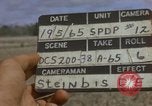
U.S. 173rd Airborne Brigade (Sep) paratroopers, conducting a heliborne operation into a landing zone (LZ), assault from UH-1D Iroquois "Huey" helicopters and move toward a wood line in South Vietnam.
The U.S. Army conducts a heliborne assault in South Vietnam during the Vietnam War. The paratroopers are inserted into a landing zone (LZ) during a field operation. The U.S. 173rd Airborne Brigade (Sep) paratroopers exit the helicopters and move across a field toward a wood line. The U.S. Army UH-1D Iroquois "Huey" helicopters take off .
CRITICALPAST.COM: About Us | Contact Us | FAQs - How to Order | License Agreement | My Account | My Lightboxes | Shopping Cart | Advanced Search | Featured Collections | Website Terms & Conditions | Privacy Policy ©2026 CriticalPast LLC.
License Agreement |
Terms & Conditions |
Privacy Policy
©2026 CriticalPast LLC.