


 Francais
 Deutsch
 Italiano
Refine Your Search
US-Gliders- stock footage and images
- Showing 2113 to 2118 of 21924 results more
more Hide
Hide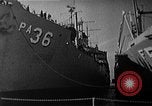
U.S. Navy personnel greet returning families to Guantanamo, Cuba after Soviet Union's decision to dismantle missiles in Cuba.
Soviet Premier Nikita Khrushchev agrees to dismantle Soviet missiles in Cuba during the Cuban Missile Crisis of October 1962. U.S. battleships at U.S. Navy Guantanamo Bay Naval Base in Cuba. A U.S. Navy band plays. A sign reads 'Hi Honey Dinner's Defrostin' Navy personnel greet their family members who were evacuated during the crisis as they disembark from ships. Americans entering a small church to attend services. Reconnaissance photos show dismantled missiles. Soviet ships carry missiles out of Cuba. Americans walk along streets in the United States.
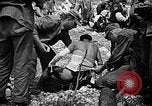
Wounded Okinawan civilians are assisted by U.S. Marines in Okinawa, Japan during World War II.
U.S. 6th Marines, 22nd Regiment and 2nd Battalion in Okinawa, Japan during World War II. Injured Okinawan civilians who were hiding in a large cave are treated by U.S. medical corpsmen. The Marines stand on the edge of a large cave. American soldier carries an injured civilian woman to a open bed truck loaded with other Okinawa civilians. Water and food is given to Japanese prisoners. U.S. Army soldier gives water to a native civilian girl and boy.
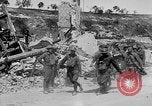
U.S. soldiers carry wounded soldiers on stretchers on the Western Front during the Aisne-Marne Offensive of World War I.
The Aisne-Marne Offensive on the Western Front during World War I. U.S. soldiers carry wounded soldiers on stretcher and move past damaged buildings. U.S. 308th Engineers Battalion men repair a road. U.S. soldiers march past the damaged buildings. Horse-drawn carts and vehicles move along a road. A soldiers stands under a sign reading 'Dormans'.
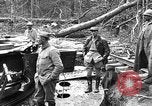
U.S. soldiers inspect German emplacements in Château-Thierry, France during World War I.
The Battle of Château-Thierry in Château-Thierry, France during World War I. U.S. soldiers stand around German emplacements on a field. U.S. officers inspect the emplacements. U.S. soldiers walk on a railway track. A soldier shows German equipment.
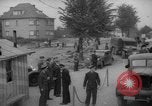
U.S. Constabulary force troopers and German policemen examining vehicles and people crossing a bridge in Wiesbaden, Germany.
U.S. Constabulary force troopers on duty at the Kaster Bridge in Wiesbaden, Germany. The Kasteler Bridge (General Patch Bridge) across the Rhine River connects the U.S. and the French Zones. The troopers and German policemen inspect the vehicles crossing the bridge. A vehicle is inspected. Examination of the papers of the pedestrians. U.S. , French and German policemen examine the papers of bicycle riders nearing the bridge. Vehicles are examined as they cross the bridge.
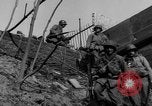
U.S. infantrymen climb over a wall while advancing in Worms, Germany during World War II.
Activities of U.S. Army 4th Armored Division in the damaged city of Worms in Germany during World War II. U.S. infantrymen climb over a wall as they advance in the damaged town. Bomb damage seen as U.S. soldiers move along the streets. Damaged buildings and houses. The soldiers move through debris.
CRITICALPAST.COM: About Us | Contact Us | FAQs - How to Order | License Agreement | My Account | My Lightboxes | Shopping Cart | Advanced Search | Featured Collections | Website Terms & Conditions | Privacy Policy ©2026 CriticalPast LLC.
License Agreement |
Terms & Conditions |
Privacy Policy
©2026 CriticalPast LLC.