


 Francais
 Deutsch
 Italiano
Refine Your Search
US-Gliders- stock footage and images
- Showing 2137 to 2142 of 21924 results more
more Hide
Hide
Rafael Osuna of Mexico and Maria Bueno of Brazil win the U.S. National Singles Championship titles in tennis in New York.
Players of Latin America win U.S. National Singles Championship of tennis in Forest Hills, New York. Rafael Herrera Osuna of Mexico plays tennis match with his opponent, Frank Froehling. Rafael Herrera Osuna wins the U.S. National Men's Singles Championship. Spectators watch the match. Maria Ester Audion Bueno, of Brazil, receives standing ovation of audience. Maria Bueno plays and wins the U.S. National Women's Singles Championship from Margaret Court. Rafael Osuna and Maria Bueno hold trophies and smile.

Rod Laver and Margaret Court of Australia win U.S. National Singles Championship titles in tennis in Forest Hills, New York.
Players of Australia win U.S. National Singles Championship of tennis in Forest Hills, New York. Margaret Court of Australia, plays tennis match with Darlene Hard and wins the U.S. National Women's Singles Championship title. Spectators watch the match and cheers the players. Rod Laver of Australia plays tennis match with his opponent Roy Stanley Emerson. Rod Laver wins the U.S. National Men's Singles Championship title. Spectators give standing ovation to Rod Laver. Rod Laver holds the trophy and smiles.
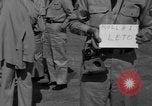
Film shot by U.S. Air Force personnel during visit to Cuban Air Force base at Campo Columbia near Havana, Cuba in January, 1953
Scenes of Cuban Air Force Base and headquarters, at Campo Columbia near Havana, Cuba, and aircraft acquired from the United States Air Force. Film opens with U.S. Air Force sergeant photographer holding a slate marked roll #1, LETO. He is dressed in starched khaki uniform. Other U.S. Airmen stand behind him. Scene shifts to a North American T-6 trainer airplane, Number 119, with skin removed from forward fuselage. A maintenance stand and tools are positioned in front of the aircraft. Hangar number 3 sits behind the T-6. The camera pans right showing two bubble-top P-47Ds parked on the ramp. The first displays number 458 (One of twenty-nine P-47s purchased from the USAF in the period, May, 1952 through June 1953). Work is being performed on the engine of the other. Camera panning right shows another T-6. Also seen is a Lockheed C-56 Lodestar (Lockheed Model 18) that was purchased in 1950 and numbered CU-EDU 2. It is parked in front of a low building with parapets and a flag flying atop it. A large multistory Headquarters building, topped with a control tower is seen in background. Closeup of another P-47 parked on edge of ramp, with its tail in the grass. Camera is moved back showing P-47s and T-6s on ramp in front of the headquarters building. Next, several U.S. Airmen are seen walking across the ramp towards the operations office on ground floor of the Headquarters building. More views of P-47s and T-6s plus a Consolidated PBY 0A-10 Catalina amphibious aircraft parked on the airfield. Several C-47 (DC-3) transport aircraft are seen at the end of the film.
MPs rubber boats transport German Pow and U.S. soldiers running through streets of town in Gemunden, Germany (WW2)
14th Armored Division (United States) in Gemunden, Germany during World War II. Soldiers with rifles are in position. U.S. MPs rubber boats transport German Pow (Prisoners of war) from opposite side of river. U.S. soldier kicks German soldier to hurry him along. German prisoners standing with hands up. U.S. soldiers running through streets of town. Houses are in flames in the background.
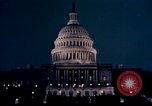
Modern agriculture machinery are used in farms and USDA conducts various program in the United States.
A film 'The Agriculture Story' showing various projects carried out by U.S. Department of Agriculture in the United States. Views of Capitol. Statue of Former U.S. President Abraham Lincoln. Views of farm. Agriculture machinery plow field. Horse drawn plow, plows field. Machinery work in farms. Dust storm in the background of farm land. Car being driven on road. Damaged agriculture machinery on barren land. Fire blazes in forest. U.S. Department of Agriculture showing loss in agriculture in papers. Seal of United States Department of Agriculture (USDA). It conducts programs including research, education, conservation, stabilization, regulatory functions, credit and marketing here and abroad.
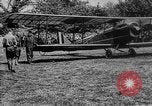
Woodrow Wilson and Mrs. Wilson inspect an airmail airplane as service is opened between Washington and New York, U.S.
U.S. President Woodrow Wilson inaugurates airmail service as it commences in the U.S. A Curtis JN-4 airmail airplane parked on the Polo field, in Washington, DC.. Van of United States Air Mail Service arrives. Mail is loaded into the airplane. Pilots Lieutenant George L. Boyle and Major Reuben H. Fleet standing beside the airplane conferring over a map. U.S. President Woodrow Wilson, Mrs. Wilson, and Post-master General Albert Sidney Burleson inspect the airmail airplane that will carry mail to New York. . A man shows first official piece of airmail. He and his wife greets pilot. Wilson talks with pilot Major Reuben H. Fleet . Pilot George L. Boyle gets into airplane. Airplane takes off. Airmail airplane piloted by lieutenant Webb leaves New York from Belmont Park and takes off. The airplane stops at Philadelphia to pick up more mail. Mail is loaded into the airplane. The airplane takes off. It arrives in Washington. Mail is unloaded from the airplane. Pilot gets out of the airplane.
CRITICALPAST.COM: About Us | Contact Us | FAQs - How to Order | License Agreement | My Account | My Lightboxes | Shopping Cart | Advanced Search | Featured Collections | Website Terms & Conditions | Privacy Policy ©2026 CriticalPast LLC.
License Agreement |
Terms & Conditions |
Privacy Policy
©2026 CriticalPast LLC.