


 Francais
 Deutsch
 Italiano
Refine Your Search
US-Gliders- stock footage and images
- Showing 2167 to 2172 of 21924 results more
more Hide
Hide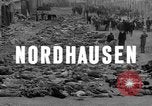
U.S. medics and soldiers at Nordhausen Camp in Germany after its liberation towards the end of World War II.
U.S. troops liberate Nordhausen Camp in Germany towards the end of World War II. A large number of corpses lying on the ground in the camp. Surviving prisoners are evacuated from the camp by U.S. troops. U.S. medics carry survivors on stretchers. German civilians carrying shovels arrive at the camp for its cleanup. Corpses lying in a mass grave.
U.S. infantry fights Japanese troops and capture a Japanese air base on Noemfoor island in Indonesia during World War II.
U.S. infantry battles Japanese forces on Noemfoor island in Indonesia during World War II. U.S. infantry lands on narrow coral reefs. The infantry advances inland under fire. A Japanese air base comes under American possession. Reinforcements and supplies arrive by air. Paratroopers and parachute supplies are landed by U.S. Army Air Force transport aircraft.
U.S. forces assist native people on Saipan and Guam in the Mariana Islands after capturing them during World War II.
U.S. forces on Saipan and Guam in the Mariana Islands during World War II. Native women and children are liberated by U.S. Marines on Saipan island. American military hospitals provide medical care in Guam. U.S. Navy doctors and native nurses treat the sick. Food is distributed to native children.
U.S. underwater demolition team places explosive charges on Japanese shore defenses of Balikpapan, Netherlands East Indies, World War 2.
The Battle of Balikpapan in Netherlands East Indies during World War II. U.S. underwater demolition teams on a U.S. navy patrol boat prepare explosive charges for an attack on the underwater defenses of Balikpapan. Men spill out of their larger craft into a rubber boat alongside and then into the sea. The explosive packs are thrown overboard, timed with each man's take off. Many kinds of equipment, mine detonators, measuring lines and firearms are used for the mission. Men place explosives on shore defenses. Men are picked up after the job is done.
A U.S. soldier examines a crematorium and a gas chamber at Natzweiler- Struthof camp in France during World War II.
Natzweiler-Struthof (or Natwiller-Struthof), a German concentration camp and extermination camp, in France used by the Nazis for political prisoners from Belgium and France during World War II. A U.S. soldier examines urns used for ashes of victims. A crematorium, blood stained coffins and a gas chamber at the camp. An examination or experiment procedure table with indented fluid drains, that drains into a sink below.
U.S. soldiers watch German civilians disinterring bodies at Arnstadt Concentration Camp in Germany (WW2)
Arnstadt Concentration Camp in Germany captured by American forces in April, 1945 near the end of World War II. Prisoners were mainly Poles and Russians. View from the camp gate to tents which were used to house prisoners. Dogs were used to guard the prisoners. Shown is A dog kennel for a watch dog. Local German citizens had exhumed he bodies of concentration camp victims from their original mass grave, and reburied them in a trench further away from the town because of the stench. Now they were disinterring them again under supervision of United States Army soldiers. A corpse with crushed head. Corpses lying outside the graves from which they have just been exhumed. Bodies laid out on the ground are viewed by several U.S. soldiers
CRITICALPAST.COM: About Us | Contact Us | FAQs - How to Order | License Agreement | My Account | My Lightboxes | Shopping Cart | Advanced Search | Featured Collections | Website Terms & Conditions | Privacy Policy ©2026 CriticalPast LLC.
License Agreement |
Terms & Conditions |
Privacy Policy
©2026 CriticalPast LLC.