


 Francais
 Deutsch
 Italiano
Refine Your Search
US-Gliders- stock footage and images
- Showing 2473 to 2478 of 21924 results more
more Hide
Hide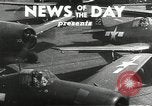
Japanese Kamikaze aircraft attacking U.S. Navy Task Force 58, off Okinawa
Japanese Kamikaze aircraft attacking U.S. Navy Task Force off Okinawa. They attack the Aircraft Carriers Yorktown, Saratoga, and Bunker Hill. View from deck of USS Yorktown (CV-10) as a kamikaze, hit and on fire, passes directly overhead and crashes into the ocean just past the deck of the ship. The Saratoga is hit by 4 Kamikaze planes. 315 U.S. sailors and airmen killed or wounded. Crew struggles to control fires and damage and care for casualties.The attacks continue and the USS Bunker Hill is struck by 2 Kamikaze planes and is on fire with heavy smoke rising as crew tries desperately to save her. The Cruiser Wilkes-Barre comes alongside spraying fire hoses in attempt to aid the stricken Bunker Hill. The Wilkes-Barre passes respirators to firefighters aboard the Bunker Hill. Rescue boats pick up crewmen who were blown off the deck into the sea. 373 killed and 264 injured on the Bunker Hill. (World War II period).
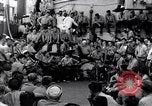
Crew members on a U.S. battleship at sea in Pacific Theater. They entertain themselves with music and dance
Crew members on a U.S. battleship at sea in Pacific Theater during World War 2. Band of U.S. Navy crew members play musical instruments. Audience of crew members crowd around and enjoy the entertainment Two African American sailors put on dance exhibition.
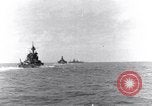
U.S. Battleships at sea in Pacific Theater. Group of warships includes destroyers, cruisers and aircraft carriers
U.S. Battleships at sea in Pacific Theater. The battleships Maryland, Tennessee, Alabama, Indiana, South Dakota move in column at the sea. They maneuver in a group of U.S. warships, including destroyers, cruisers and aircraft carriers. Aircraft are seen launching from the USS Essex (CV-9) aircraft carrier in the distance.

Techniques used by a destroyer in rescuing downed pilot
A U.S. Navy training film regarding destroyer rescue of a downed pilot. An aircraft carrier in the sea. A helicopter hovers over the aircraft carrier. A destroyer amidst the sea. Crew members and rescue equipment on the ship. including scuba divers. Small boats lowered in the sea. An officer watches through the binoculars. Another sailor talks on the radio. Various airplanes take off from the flight deck. Various landings on the flight deck. Actual footage of a U.S. Navy jet with number 5357 landing on flight deck and a fire burning beneath it. The plane continues past barriers, off the port deck, pilot ejects, and plane plunges into the sea. Pilot in the sea. The rescue ship comes nearby the pilot. It rescues the pilot with the help of a rescue sling.
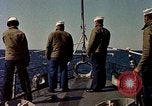
U.S. Navy Destroyer locates downed pilot and prepares for rescue
From a U.S. Navy training film. Rescue operations by a destroyer in rescuing downed a pilot in United States. Sailors stand on the deck. A sailor watches through the binoculars. The other sailor talks on a phone. Pilot in the sea. He sprays red and green flare in the water. For the rescue at night, the pilot can be noticed through the light on his helmet. A sailor watches through the binoculars. The pilot switches on the night flare. The pilot also uses the emergency whistle.
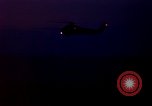
Night rescue of a downed pilot by helicopter, from a U.S. Navy Destoyer
Training film of the U.S. Navy. Techniques used by a destroyer in rescuing downed a pilot with helicopter's help. The rescue operations at night. Helicopter hovers over the sea. Sailor flashes the search light.
CRITICALPAST.COM: About Us | Contact Us | FAQs - How to Order | License Agreement | My Account | My Lightboxes | Shopping Cart | Advanced Search | Featured Collections | Website Terms & Conditions | Privacy Policy ©2026 CriticalPast LLC.
License Agreement |
Terms & Conditions |
Privacy Policy
©2026 CriticalPast LLC.