


 Francais
 Deutsch
 Italiano
Refine Your Search
US-Gliders- stock footage and images
- Showing 4471 to 4476 of 21929 results more
more Hide
Hide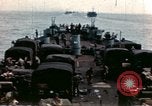
The U.S. 3rd Armored Division on Landing Ship Tanks (LST) lands at Normandy in World War II
Allied troops land in Normandy during reinforcement operations in June 1944, in the weeks after D-Day, in World War 2. The U.S. 3rd Armored Division on Landing Ship Tanks (LST) heads towards Normandy. Tanks, trucks, vehicles and equipment on the LSTs. British crew and officers including the Captain on deck. The Captain looks through binoculars. A sailor looks through a telescope. The beach at Normandy filled with battle ships, carriers and Landing ships wait for the tide to recede off shore to avoid unloading equipment in deep water (landing ramps having been destroyed by earlier storms). Barrage balloons overhead. Soldiers build ramps on the beach. Half tracks, trucks and other vehicles driven off the LSTs and across the ramps on the beach.
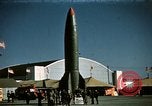
U.S. Army Air Forces Fair at Wright Field in October, 1945
Views of the U.S. Army Air Forces fair hosted at Wright Field, near Dayton, Ohio, in October, 1945.The highlights of the event were exhibits of captured German and Japanese aircraft, rockets, and equipment. A German V-2 Rocket Motor on display. Soldiers observe the rocket. A German Junkers Ju 388 Störtebeker multi-role aircraft on display. A German Messerschmitt ME-262 Schwalbe fighter on display. A German pilot's victories recorded on the side of a plane. Two soldiers take a look at a Japanese Kamikaze bomb. One of them gets into the bomb seat. American officers and soldiers view the exhibits. 'Alles Kaputt' written on the side of a German Junkers Ju-290 bomber (one of the candidate aircraft, with further development, in Germany's Amerika Bomber project for a long-range bomber capable of striking the United States). Soldiers walk under the plane. 'Transient Aircraft' written on the control tower building in the background. (World War II period).
U.S. Coast Guard Cutter, LCTs, LCVPs and LCIs advance during the Invasion of Normandy in World War II.
Allied fleet advances during the Invasion of France in World War II. A U.S. Coast Guard cutter with a skull and cross bones insignia on the side of conning tower. Rear view of the cutter as she is rolls heavily in the water. Several men on deck in life jackets and steel helmets. Beach area, a Landing Crafts Tank (LCT) and Landing Crafts Vehicle Personnel (LCVP) on the way to the beach. Large explosion on the beach, mushroom cloud comes up. Structure of a Landing Craft Infantry (LCI) in the foreground. Smoke covers the beach. Small landing craft in the water. Heavy black clouds in the background.

Hydraulic, fuel and electrical system of a U.S. Navy T2V-1 SeaStar.
Aircraft system as well as normal and emergency operating procedures of the U.S. Navy T2V-1 SeaStar. A T2V-1 taxis on the airstrip. Hangars in the background. Wing span, fuselage length, height and gross weight of the plane. Diagrammatic representation of the plane's hydraulic system. The plane in flight as the landing gear opens up. Diagram of the plane's fuselage system. Total fuel load. The pilot turns on the tip tank fuel dump switch on the plane's control panel. Fuel dumped from the plane. Diagram of the plane's tanks. Diagrammatic representation of the plane's electrical system including the AC / DC systems. Diagram of the boundary layer control system.
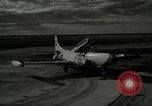
Pre-flight procedures including exterior and cockpit inspection of the U.S. Navy T2V-1 SeaStar.
Pre-flight procedures of the U.S. Navy T2V-1 SeaStar. Exterior inspection: Two airmen approach the plane to conduct a normal walk around inspection which includes highly important and unique inspection points. The airmen manually retract and extend the leading edge wing flap to check for freedom of movement. They inspect the ram air orifices in the nose of each tip tank, speed brake, fuel dump outlet, boundary layer control orifice, position of snubber piston, main hydraulic reservoir, and upper left fuselage. Interior inspection: The pilot in the cockpit. He inspects the engine, aircraft performance, navigation and fuel controls. He checks the electrical, navigational, air conditioning and lighting controls on the right panel and console. Pre-start Cockpit Check: The pilot adjusts the tip tank switches, oxygen supply valve, main fuel shut off switch, battery generator switch, flight instrument power switch, cabin pressure and temperature switches.
Normal operating procedures including start, take off, stall and landing of the U.S. Navy T2V-1 SeaStar.
Normal operating procedures including start, take off, stall and landing of the U.S. Navy T2V-1 SeaStar. Start: The plane on the runway. A crewman arrives with the air impingement car. He inserts the pipe into the air impingement inlet. The crewman gives a signal when the air impingement hole is secure. The pilot adjusts the battery operator switch and turns on the ignition. He moves the throttle to ignite and then to idle position. The exhaust gas temperature gauge. The pilot signals the crewman to disconnect the air impingement starter and adjusts the instrument power switch. Post-start Cockpit Check: The pilot checks the RMI for alignment, adjusts S2 compass controller, annunciator panel touch button, fire detector test switch, fuel quantity indicator button. He checks the communication, navigational, annunciator and left panel. He goes through the take off check list, moves the plane into position, advances throttle, inspects the tachometer, exhaust temperature, releases brake and taxis to the end of the runway. The plane taxis, pilot applies brake and rudder control and takes off. He raises the nose wheel, retracts the landing gear and flaps after take off. The plane in flight over clouds. Stall occurs. The attack angle gauge. Landing procedure: View of the runway. The pilot begins the let down, reduces power, extends the brake, lowers landing gear and flaps, and continues to reduce speed. Diagram of the runway depicting approach. The plane approaches the runway, touches down and lands.
CRITICALPAST.COM: About Us | Contact Us | FAQs - How to Order | License Agreement | My Account | My Lightboxes | Shopping Cart | Advanced Search | Featured Collections | Website Terms & Conditions | Privacy Policy ©2026 CriticalPast LLC.
License Agreement |
Terms & Conditions |
Privacy Policy
©2026 CriticalPast LLC.