


 Francais
 Deutsch
 Italiano
Refine Your Search
US-Gliders- stock footage and images
- Showing 5719 to 5724 of 21998 results more
more Hide
Hide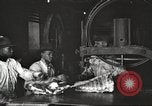
U.S. workers cut, trim and pack beef into tins at a butchery in the United States.
United States workers working in a butchery in the United States. Workers cut beef with the help of saw. They use knives to trim the cut pieces. Cans being closed and put on conveyor belts.
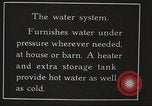
Use and convenience of electricity that provides hot and cold water in the bathrooms at various houses across United States.
People make use of electricity and labor saving devices in the United States. Electricity furnishes water under pressure at barn. Heater and extra tank provide hot and cold water. Delco-Light Water System Machine kept in a room. Man sprays water with the help of a tube outside his house. Running water in the bathrooms. Girl standing at washbasin, washes and wipes her face. She looks into the mirror and combs her hair. Woman prepares to bathe in a tub.

U.S. Bell X-1 aircraft taxis out of hangar and takes off from runway at Muroc Army Air Field in California, United States.
United States experimental aircraft at Muroc Army Air Field (Edwards Air Force Base) in California, United States. U.S. Navy Bell YP-59 A aircraft taxis out of the hangar. Bell YP-59 A aircraft taxis and takes off from the runway. Number of large hangars along the runway at the airbase. Bell X-1 taxis out of the hanger. Bell X-1 aircraft in flight.
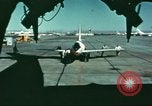
U.S. B-29 Superfortress with Bell X-1A aircraft under its wing takes off from from runway at Muroc Army Air Field in California.
United States experimental aircraft at Muroc Army Air Field (Edwards Air Force Base) in California, United States. Bell X-2 being pushed by several men across the flight line. Bell X-3 taxis out of hangar. Bell X-4 taxis and takes off from the runway. Pilot in the cockpit of X-1A aircraft. Ground crew make a final check. U.S. Air Force B-29 Superfortress takes off from the runway with X-1A under its wing. X-1A releases from B-29 Superfortress in mid flight and begins a solo flight. X-1A lands on the runway.
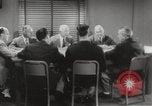
U.S. Army Air Forces officers consulting with General Electric executives about manufacture of turbojet airplane engine.
U.S. Air Force officers consulting with General Electric executives about production of an American turbojet airplane engine, a month before receiving a prototype Whittle engine from Great Britain. Workers are selected for the project. Views of the GE plant at Lynn, Massachusetts. Project manager, Donald F. Warner, is seen at the Lynn MA factory discussing modifications from the Whittle design to correct problems with impellers and other parts.Views of affected parts. Person being fingerprinted as part of security actions.
Douglas R5D Skymaster lands on the runway and United States Coast Guards work inside Photographic Laboratory in the U.S.
United States Coast Guards work inside Photographic Laboratory in the United States. U.S. Navy Douglas R5D Skymaster lands on the runway. United States Coast Guards, Photographic Laboratory' written at the entrance. Sailor enters the darkroom. Paper treated in chemical baths during film developing. Coast Guard hands over a package to another guard.
CRITICALPAST.COM: About Us | Contact Us | FAQs - How to Order | License Agreement | My Account | My Lightboxes | Shopping Cart | Advanced Search | Featured Collections | Website Terms & Conditions | Privacy Policy ©2026 CriticalPast LLC.
License Agreement |
Terms & Conditions |
Privacy Policy
©2026 CriticalPast LLC.