


 Francais
 Deutsch
 Italiano

Refine Your Search
United States 1982 stock footage and images
- Showing 769 to 774 of 34981 results more
 Hide
Color Sound

Activities of U.S. Navy recruits at Naval Station Great Lakes, Illinois, United States
A film on training of navy recruits in the United States. Training films are shown to the recruits. The recruits seated in a theater. A naval officer threads a film projector. In the training film, recruits are seen viewing large caliber shells and loading a 40mm anti aircraft gun. Views of naval recruits playing baseball. One of the recruits carries a dog mascot named "Bone". The naval recruits practice running in formation. The naval recruits boxing with boxing gloves on. A sign reads 'bank'. The recruits enter a bank and ship's store. A poster outside reads, "It's Smart to Salt Away some of Your Pay." Views of a sailor buying a gold watch at the shop counter. Close up of a big band jazz orchestra bass drum reads, "U.S.N.T.C. Great Lakes Illinois." Naval recruits dancing with young women while the big band orchestra plays. View of naval recruit playing a clarinet. The navy recruits cleaning the floor and windows of their barracks in preparation for captain's inspection. A rooster flag flying outside the barracks is the prize for the best inspection. The recruits march. A Navy football game being played. Navy recruits seated in the stadium. The football game in progress. The recruits walk to the recreation building. The navy recruits sitting at the soda fountain and then in the table area in front of a juke box while eating ice cream.
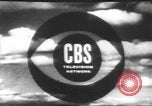
U.S. Vice President Nixon talks about the foreign policy of America prior to presidential elections in the United States.
The fourth presidential election debate between Democratic nominee Senator John F. Kennedy and Republican nominee U.S. Vice President Richard Nixon on 21st October 1960 in in New York, United States. News correspondent Quincy Howe speaks prior to the fourth Kennedy-Nixon presidential debate. Mr. Howe reads out the rules and conditions under which the candidates will proceed. He says that Senator Kennedy will make the second opening statement and the first closing statement. Vice President Nixon speaks about the present issue in the United States which is keeping peace without surrender. The peace which is threatened by international communist movements. Nixon says that the United States has to learn from mistakes made in past. He relates to this by mentioning the period of the Iron Curtain in Europe and during the Korean War. Nixon says that situation in President Dwight Eisenhower's administration is reversed. He says that the United States made errors in the past in misjudging the Communists, applying same rules of conduct that are applied to the leaders of the free world. Nixon mentions East-West Paris summit conference of 1960 and Eisenhower's policy regarding Formosa Strait (Taiwan). Nixon speaks that that United States should increase its military strength to high level regardless of what potential opponents have and if any surprise attack is launched, the United States can destroy their war-making capacity. Nixon further says that American policies of military strength, economic strength, and diplomatic firmness will keep the peace without surrender.
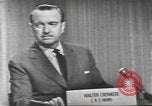
Candidates Nixon and Kennedy debate over prestige of the U.S. overseas prior to the presidential elections in the U.S.
The fourth presidential election debate held between Democratic nominee Senator John F. Kennedy and Republican nominee U.S. Vice President Richard Nixon in New York, United States on 21st October 1960. ABC News correspondent Quincy Howe allows CBS News correspondent Walter Cronkite to ask a question to Vice President Nixon. Mr. Cronkite asks Vice President Nixon if the Eisenhower Administration was suppressing a report by the United States Information Agency that shows a decline in United States prestige overseas as pointed by Senator Kennedy. Vice President Nixon replies and talks about Sputnik space program launched by the Soviet Union (compared to NASA efforts during the Space Race). He further compares the United States and the Soviet Union in terms of education and science. He speaks about UN General Assembly votes called on the Soviet Union to end its Hungarian intervention in 1956 and relates to American prestige. Senator Kennedy says that he did not make most of the statements that Vice President Nixon said he has made and he refers to the first one about Sputnik Program launched by the Soviet Union. Senator Kennedy refers to slums in the United States and talks about support housing legislation which the Eisenhower's Administration has opposed and also speaks about scientists and engineers United States has produced in comparison to the Soviet Union. He further says they were the first in other areas of science but in space, which is the new science, they are not the first
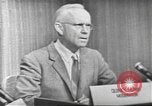
U.S. Senator John Kennedy talks about the foreign policy of America prior to presidential elections in the United States.
The fourth presidential election debate held between Democratic nominee Senator John F. Kennedy and Republican nominee U.S. Vice President Richard Nixon in New York, United States on 21st October 1960. ABC news correspondent Quincy Howe speaks prior to the fourth Kennedy-Nixon presidential debate. Senator Kennedy says he agrees with the policy of Eisenhower's administration regarding the Formosa Strait (Taiwan). He speaks about Communist influence of Cuban Prime Minister Fidel Castro on Latin Americans which is becoming a threat for the United States. Kennedy also mentions Communist Russians broadcasting ten times as many programs in Spanish to Latin America as the United States does. He talks about technical assistance given to Africa by the United States. He speaks about future of increasing communist influence in world. Kennedy mentions Liberia and the Union of South Africa who voted with America on the question of admission of Red China in the United Nations. Senator Kennedy speaks about Communist influence increasing in the world and relates to it by saying that there are six counties in Africa that are members of the United Nations and there is not a single American diplomatic representative in any of these six. He further speaks about military progress of Communist nations.
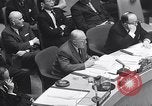
Cuban President Osvaldo Dorticos speaks in United Nations Assembly, New York, United States, about U.S. aggressive actions.
Cuban President Osvaldo Dorticos addresses United Nations meeting. He asks U.S. Ambassador Stevenson the political, moral and legal grounds of U.S. charter. He states the aggressive acts of U.S. on small states of Cuba and that U.S. has no positive ideas.

A graduation ceremony at the United States Military Academy at West Point in New York, United States.
The United States Military Academy at West Point in New York, United States. Interior of an auditorium with cadets and a huge crowd attending a ceremony. American flags in the background. U.S. Army General George C Marshall, United States Air Force General Hoyt Sanford Vandenberg and Miss Anna Rosenberg stand on a platform. General Marshal presents scrolls to the graduating cadets. General Vandenberg sitting with Miss Rosenberg. The cadets receiving diplomas from General Marshall. The cadets rejoicing after the ceremony.
CRITICALPAST.COM: About Us | Contact Us | FAQs - How to Order | License Agreement | My Account | My Lightboxes | Shopping Cart | Advanced Search | Featured Collections | Website Terms & Conditions | Privacy Policy ©2026 CriticalPast LLC.
License Agreement |
Terms & Conditions |
Privacy Policy
©2026 CriticalPast LLC.