


 Francais
 Deutsch
 Italiano

Refine Your Search
United States 1982 stock footage and images
- Showing 31291 to 31296 of 34981 results more
 Hide
Color Sound
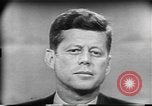
John F Kennedy talks about the importance of welfare programs during a presidential election debate in Chicago, Illinois.
The first Kennedy-Nixon Presidential Debate in Chicago, Illinois. Stuart Novins from CBS News asks Democratic candidate Senator John F Kennedy about welfare programs for education system, medical care and reduction in the federal debt. Kennedy argues that he has not mentioned about the federal debt reduction in his speeches. He states the advantages of his program for providing medical care for the aged and an effective education system. He tells that the development of natural resources will generate revenues to finance new projects. He states about the importance of a balanced budget. Republican candidate U.S. Vice President Richard M. Nixon presents his views and states that the reduction of federal debt was mentioned on the Democratic platform and not in Kennedy's speech. He presents his views on Senator Kennedy's proposal for medical care for the aged and the development of the natural resources. He states that Kennedy's proposals will result in rise in taxes and unbalancing of the budget which will lead to inflation. He favors the aid for school construction.
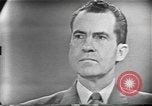
Richard Nixon argues against federal government control over education during a presidential election debate in Chicago.
The first Kennedy-Nixon Presidential Debate in Chicago, Illinois. Charles Warren from Mutual News asks Republican candidate U.S. Vice President Richard M. Nixon about the raising of education standards and the reason for his refusal to vote in favor of increase in salary of teachers in the Senate. Nixon answers and objects the potential cost in controls and states his views against federal government control over education. He talks about the role of the state and local communities towards the education system. Democratic candidate Senator John F Kennedy presents his views on the matter and states that the issue before the Senate was the money given to the state which would then decide whether to spend it for school construction or on teachers' salaries. He objects to the federal government paying teachers' salaries directly. He disagrees with the statement made by Nixon regarding unbalancing of budgets by execution of programs.
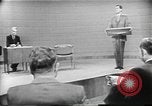
During a presidential election debate in Chicago, Illinois Nixon states that he hopes to control the House and get a majority.
The first Kennedy-Nixon Presidential Debate in Chicago, Illinois. Bob Fleming from ABC News asks Republican candidate U.S. Vice President Richard M. Nixon whether he could work better with Democratic majorities in the House and Senate than Senator Kennedy. Nixon answers and says that he hopes to control the House and to get a majority in the House in the elections. He states that the President cannot control the Senate and the President needs the support of the country and people to get his programs accomplished. He says that whenever a majority of the people are in favor of a program, the House and the Senate respond to it and it does not matter if the House and the Senate in the next session is Democratic or Republican. He disagrees with the reason of a presidential veto by Kennedy. Democratic candidate Senator John F Kennedy presents his views. Kennedy talks about the bill for minimum hourly wage system against which the Republicans voted. He then talks about the federal aid to education bill which failed because the Republicans did not vote for it. He talks about the third bill of medical care for the aged which is tied to Social Security, which is financed out of Social Security funds and it does not put a deficit on the Treasury. Kennedy concludes that these are three programs which are quite moderate and not extreme.

Cabinet members applaud as President Nixon enters a cabinet room in the Oval Office of the White House in Washington DC.
President Richard Nixon addresses the nation from the Oval Office of the White House in Washington DC, United States. Television and still newsmen take pictures of President Nixon in the Oval Office. President Nixon enters the Cabinet room and members applaud. People sitting around a table in the Oval Office.

Crowds celebrate wedding of Frime Chaye Rivke, daughter of Grand Rabbi of Munkács.
The wedding of Frime Chaye Rivke, daughter of Rabbi Chaim Elazar, of Munkács, to Baruch Rabinovich, on March 15, 1933. Jewish men ride decorated bicycles along a street. They wear sashes containing Jewish blessings. They are surrounded by crowds and followed by other men on bicycles. A horse-drawn carriage moves through the crowd, carrying Jewish Rabbis, and elders and escorted by walking policemen and followed by men carrying banners in Yiddish. The procession and crowd goes toward a wedding pavillion set up in courtyard of the Synagogue. Policemen work to control the crowd. Rabbi Chaim Elazar speaks to the crowd, in Yiddish, exhorting Jews in America to keep the Sabbath. The crowd mills around as several persons make their way through the gates of the courtyard, being protected by police.The wedding party proceeds through Synagogue grounds to the wedding canopy, where Cantor Mordekhai Salomon sings and a Klezmer band plays. Reportedly, over 20,000 guests attended the wedding from all over Europe and the U.S.

Atrocities committed by Nazi regime at Buchenwald concentration camp in Germany.
U.S. troops liberate Buchenwald concentration camp in Germany towards the end of World War II. Corpses lying in the camp. A club used by German soldiers to kill the inmates. Furnaces in crematorium to burn the human bodies to ashes. Liberated prisoners run toward a Nazi soldier to hit him.
CRITICALPAST.COM: About Us | Contact Us | FAQs - How to Order | License Agreement | My Account | My Lightboxes | Shopping Cart | Advanced Search | Featured Collections | Website Terms & Conditions | Privacy Policy ©2026 CriticalPast LLC.
License Agreement |
Terms & Conditions |
Privacy Policy
©2026 CriticalPast LLC.