


 Francais
 Deutsch
 Italiano

Refine Your Search
United States 1982 stock footage and images
- Showing 3445 to 3450 of 34982 results more
 Hide
Color Sound
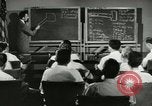
Students at the New York University learn the technical and creative aspects of television in the United States.
A documentary on the growth and opportunities in television industry in the United States. Students at the New York University listening to a classroom lecture on how television signals are transmitted and received. Professor instructs the college students on the technical aspects of television, including an iconoscope. A class at NYU conducted in tandem with a local televsion studio briefs students interested in the creative side of television. Studio equipment is demonstrated including lights, microphone boom stands, and television cameras The equipment and the method of production and recordings are demonstrated. 'WPIX television' written on cameras. Students are coached in using the equipment, while other students prepare to stage a play for television that was written by one of the students. The director meeting with the student actors. Views of the play being filmed for television. Men working on television studio transmission equipment.

Women marines work in different fields and serve the U.S. Marine Corps during World War 2
A film on the recruitment of women in the United States Army, Navy and Marines. Female personnel in the Marines are placed for the jobs after their training. Women Marines working in a completely women-run post office at Camp Lejeune. Some of the women serving as telephone operators. Others working as typists. Women and men military personnel at a bar enjoying drinks. A woman operating a mimeograph copy machine. Women seated at desks and typing documents. A woman sketching a map. Vehicles parked on the ground. Women's Reserve mechanics working on the maintenance of Marines aircraft. Pilot seated in the cockpit of an aircraft. A woman boards the airplane in the back seat, and is handed an aerial reconnaissance photography camera. The plane in flight. The woman takes photographs of the area. Lady Marines march in formation on a parade ground. Trees in the background. The marching women of the Marine Corps Womens Reserve pass by a column of marching men Marines.
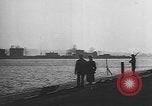
A Coast Guard woman watches as a seaplane taxis in water in the United States.
A film on the Coast Guardsmen and United States Coast Guard Women's Reserve (SPARS). A Coast Guard soldier and a Coast Guard woman walking at the sea shore. Statue of Liberty in the background. SPARS march in formation. Buildings in the background. A seaplane parked on the ground. Pilot in the cockpit of the plane. The plane taxiing. A woman watching the plane. (World War II period).

The WAC nurses treating the wounded soldiers and officers in a hospital in the United States.
The recruitment of Women Army Corps (WACs) for medical units in the United States during World War 2. Surgeon General Norman Thomas Kirk and commanding officer of the WAC Oveta Culp Hobby seated at a desk. A wounded soldiers on stretcher on a field. Soldiers carrying another wounded soldier. Medics treating the wounded in field hospital tent. An ambulance carrying the wounded soldiers arrive at a hospital building. Doctors and nurses perform surgery on wounded in operating room. Wounded lying on hospital beds. Nurses treating them. Women in a large room examine specimens under microscope. Women filing medical records. Woman lowering a X-ray machine device into position over a patient. Woman delivering completed xray films to a doctor for review on lighted background. A woman chemist works in a laboratory. A woman assists a recovering soldier with physical therapy. A woman helps a wounded soldier light his pipe. A recovered officer shakes hands with the nurses and leaves the hospital.

JB-2 robot bomb produced and test launched in the United States during WW2.
Manufacture and testing of a new robot bomb in the United States: A Republic Aviation and Ford Motor Company collaboration known as the JB-2 Loon, modeled after the German V-1 flying bomb. Interior of a war production factory. Worker welding part of bomb frame. Workers wheeling completed bomb fuselages on wheeled platforms in the plant. Closeup of an African American man wheeling a bomb. Henry Ford II and Ray Rausch, of Ford Motor Company, who oversaw the production of the pulsejet engines for the JB-2 bomb. Men working for the construction of the robot bomb. Closeup view of engine being fired on a test stand. Men and women war production workers at the Willys-Overland production plant in Toledo, Ohio are seen working on the interior components of the flying bomb, then closing the completed fuselages, and attaching the wings to the flying bomb. Engineering officers from the Army Air Forces Air Technical Command inspect a completed JB-2 flying bomb. View of a test launch o the bomb from a sandy beach area. The bomb engine fires and the bomb launches out over ocean waters, dropping its auxiliary launching apparatus beneath it, close to shore.

Men dressed in Navy uniforms perform a stage show in the United States.
A film version of the legendry 1940s stage show in the United States. The Navy personnel inside a building. Two men arguing. Men and women seated in a theater. Men dressed in Navy uniforms arrive and perform. They sing a song. Replica of a ship and a gun mounted on it on the stage. Men standing on the replica and singing. People applaud.
CRITICALPAST.COM: About Us | Contact Us | FAQs - How to Order | License Agreement | My Account | My Lightboxes | Shopping Cart | Advanced Search | Featured Collections | Website Terms & Conditions | Privacy Policy ©2026 CriticalPast LLC.
License Agreement |
Terms & Conditions |
Privacy Policy
©2026 CriticalPast LLC.