


 Francais
 Deutsch
 Italiano
Refine Your Search
United States 1982 stock footage and images
- Showing 3901 to 3906 of 26493 results more
more Hide
Hide
Private Wilmer being treated in Italy and in United States after receiving a head injury during World War II.
A U.S. Navy training film titled 'Medicine in action: Head injury of a battle casualty' about the treatment and recovery of a soldier wounded during World War II. Private Wilmer of the U.S. 6th Army. A map of Casino Italy where Wilmer was injured during the battle of World War II. Aerial views of an evacuation hospital where Wilmer was given initial medical assistance after being injured. Wilmer with bandage on his scalp at a general hospital in Italy. Doctors clean the wound on the scalp. They try to control the bleeding. Blood clot being removed and wound being checked for infection. Bone fragments being removed from the wound. Wound being stitched. After six days wound being examined. Private Wilmer arrives in Naples in an ambulance. He boards a hospital ship in England and leaves for North Africa. At a camp he talks to other injured patients. Private Wilmer gets off a jeep and boards U.S. Army hospital ship Acadia to leave for United States. At Walter Ridge hospital he moves his hands and legs to demonstrate physical normality after being injured. Doctors administer anesthesia on his scalp and work on the wound. After treating the wound the scalp being closed and bandaged. Private Wilmer after recovering from the injury. He walks out of the hospital after being discharged.
An officer briefs trainees at Motor torpedo boat squadron training center in the United States in World War II.
A U.S. Navy training film titled 'The PT's' about the role and importance of patrol boats during a war ( World War 2). A sign reads 'Motor torpedo boat squadron training center' in the United States. Trainees in a class room as U.S. Navy Lieutenant Commander John D. Bulkeley briefs them about the role of torpedo motor boats. The trainees listen to him carefully and take down notes. Patrol boats underway at sea. A gunner aboard a boat as an explosion occurs at sea.
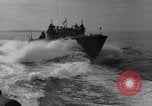
Men of motor torpedo squadron work on different parts of a patrol boat in the United States.
A U.S. Navy training film about the role and importance of patrol boats during a war (World War II). A patrol boat underway at a sea in the United States. Four 50 caliber machine guns and a 1 mm canon aboard the boat. A torpedo being loaded aboard the patrol boat. Motor torpedo squadron insignia on the sleeves of personnel. A signalman waves flags. A navigator at work. Men in a workshop as they work on engine and other parts of the patrol torpedo boats. Men at the work shop as they work on various equipment. A navigator plots on a map to locate an enemy ship. The patrol boat underway as a man works on controls. Explosions occur at sea. Lieutenant Commander John O. Bulkeley welcomes new trainees.
A PBM Mariner aircraft in flight and different parts that make up its design are pointed out in the United States.
A U.S. Navy training film about the role and importance of U.S. Navy PBM Mariner aircraft during World War II. A PBM Mariner takes off from the surface of a sea in the United States. The aircraft in flight. The design of a PBM Mariner III like the wings, tail and rudders forming a triangle being pointed out on a picture. The aircraft in flight. A side view of the Mariner shows the wings piled up on the top. The rudders being pointed out. The PBM Mariner in flight and different parts of the aircraft like the wings, rudders, engines and floats being pointed out.
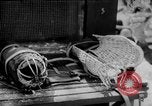
A messenger dog carries messenger pigeons and lays a telephone wire across a battlefield in the United States (WW2)
A World War II film about the use of war dogs and their training by the Remount section of the Quartermaster Corps in the United States. A demonstration shows a soldier as he puts carrier pigeons in baskets and ties the baskets on the back of a black colored messenger dog. The dog delivers the messenger pigeons to a soldier and the soldier releases the pigeons. A soldier ties a harness around a dog's back to carry a telephone wire across a battlefield. The dog runs across the field under fire and lays the telephone wire across the field. A soldier makes a call through the newly connected line.
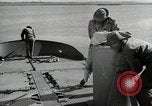
Men assemble various parts of a sea mule tug in the United States.
A film about assembling of a sea mule tug in the United States. A control tower aboard the tug being placed on a tapping plate. Bolts being tightened at the base of the tower. The tapping plate being welded and bolts being removed. The control tower lifted off the tapping plate and replaced after welding the outer edge. A steering cable being made to pass through a steering cable shield. Men on the deck pull the cable. A steering chain being inserted and a man works on a cable guard. The steering chain and the cable being fastened together. A control column and another column being inserted. A lever being forced up the control column. Choke control lever being placed in position. A bolt being tightened. Choke control rod being connected to the choke control lever. Reverse control rod being connected to reverse control lever. Steering wheel being assembled. Hand rail being welded.
CRITICALPAST.COM: About Us | Contact Us | FAQs - How to Order | License Agreement | My Account | My Lightboxes | Shopping Cart | Advanced Search | Featured Collections | Website Terms & Conditions | Privacy Policy ©2026 CriticalPast LLC.
License Agreement |
Terms & Conditions |
Privacy Policy
©2026 CriticalPast LLC.