


 Francais
 Deutsch
 Italiano
Refine Your Search
V2 stock footage and images
- Showing 6229 to 6234 of 9941 results more
more Hide
Hide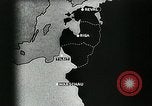
German units repulse attack of Soviet Offensive in Latvia, Estonia, during World War II on Eastern Front.
German forces repulse attack during Soviet Riga Offensive Operation in Latvia, Estonia, in World War 2. A map shows German-Soviet front around city of Riga, on Eastern Front.. German units repulse a Soviet attack, using artillery, Nebelwerfer rockets, tank destroyers and infantry with Panzerfaust antitank weapons. Medium shot of soldier firing Panzerfaust anti-tank weapon.
U.S.and Soviet efforts at disarmament during Reagan-Gorbachev era
Film opens with U.S.President Ronald Reagan commenting about mistrust between America and the Soviet Union. View of President Ronald Reagan and Soviet General Secretary Mikhail Gorbachev signing the arms control agreement banning the use of intermediate-range nuclear missiles, at the White House in Washington, DC on December 8, 1987. A Soviet RT-2PM Topol mobile ICBM moving on its carrier vehicle. A U.S. intermediate range missile being launched. Another view of U.S.President Reagan and Soviet General Secretary signing the Intermediate-Range Nuclear Forces Treaty (INF Treaty) on December 8, 1987, to become effective on June 1, 1988. Views of ICBMs being test launched from silos. A Soviet Tupolev Tu-95 strategic bomber in flight, seen from the side and from underneath. A U.S. Navy heavy cruiser, armed with cruise missiles. Closeup of a cruise missile rising from the ship and firing across it toward a target. Illustration of a seaborne missile fired from a warship. General Secretary Gorbachev in a group, including his wife, Raisa, visiting a Soviet Navy submarine. Major General William F. Burns, Head of the Arms Control and Disarmament Agency (in civilian clothes), is seen raising doubt about the feasibility of the Soviet suggestion to use scientific methods for checking from a distance about arms control compliance. Artist conception of satellites being shot down in space. Secretary of State, George Schultz and his wife, Helena Maria, descending steps from an airplane upon landing at Moscow, in the Soviet Union to confer with Soviet leaders in Moscow on Nov. 4, 1985, in preparations for the meeting between President Reagan and Mikhail S. Gorbachev, the Soviet leader, later in the month in Geneva, on November 19th and 20th. Negotiating teams assembling in a meeting room in Moscow. Secretary Schultz and Soviet Foreign Minister, Eduard A. Shevardnadze conversing. William F. Burns, saying, " I think we are well on the road to achieving a useful, good, and balanced treaty." Views of civilians killed by chemical weapons in the Iran-Iraq war. Soldiers in protective gear associated with chemical weapons. One soldier decontaminating a tank using a water hose. Tanks moving in Europe. U.S. troops firing an antiaircraft gun. Scenes of World War II showing conventional arms being used on tanks and from landing craft. Afghan fighters carrying a wounded comrade. Glimpse of soldiers in a trench firing a mortar and one firing a machine gun, during the Iran-Iraq war. An armored personnel carrier moving across a muddy field. More views of Reagan and Gorbachev signing the INF treaty in 1987. A U.S. spokesman noting that the USSR has not changed the offensive nature of its force structure and deployment patterns.
U.S. President Wilson gets reelected as Americans prepare for war during World War I
Events during World War 1. Sketches : In November 1916 newspaper shows Wilson reelected as a president. Cartoon depict the people of America supporting the Wilson's policy of peace. Several sketches of Thomas Woodrow Wilson after winning the election. Second inaugural of President Wilson at the United States capitol in Washington D.C. The German High Command in Berlin. Posters show the hardships of German citizens due to Allied blockade. Germany announces unrestrained submarine warfare against all vessels. Posters of the Germans destroying the American ships. The New York times reports German demarche to Japan and Mexico for support to Germany. Sketch depicts Germany Secretary of foreign affairs, Arthur Zimmermann seeks these alliances. Theodore Roosevelt addresses people. Several sketches of Woodrow Wilson. On April 2nd 1917 President Woodrow Wilson obtains declaration of war against Germany, from congress. American enters the conflict. U.S. Soldiers carry weapons in the battle field. sketches of several American officials. People work in factories to produce war materiel. A person with posters promoting Liberty bonds. A blindfolded person draws numbers from a bowl for civilian conscription. Citizens entering military service. People in a railroad train and others stand outside. People holding baggage walk in a group. A doctor checks the mouth of a recruit. Army recruit getting a haircut. Soldier stands holding guns. Soldiers practice firing artillery. Soldiers march. American recruits practice on wooden guns. Several sketches of the allied armies.
Major events of the 1930s include Wall Street crash, kidnapping of Lindbergh child, Hindenburg disaster, Spanish Civil War, etc.
'Retrospect' about the events that led to the present pattern of life in the United States. Host Douglas Edwards, an American television anchor speaks about the past events in America. Crowd of unemployed men gathering in bread lines after the 1929 crash and subsequent Great Depression. A man near a box of apples. The U.S. President Franklin Delano Roosevelt addresses a gathering. The kidnapping of Charles Augustus Lindbergh, Jr., the son of the aviator Charles Lindbergh in 1932. Bruno Richard Hauptmann, a German carpenter who abducted the child during the trial. The congressmen at the formation of the Lindbergh Law. Newspapers describe the apprehension or death of notorious mafia gangster criminals, such as Dutch Schultz and Baby Face Nelson. Huey Pierce Long, Jr. a American politician addresses people. Emperor Haile Selassie of Ethiopia appeals to the League of Nations, after his country is attacked by Italy under Mussolini. Adolf Hitler stands. Troops of the German army parade. Scenes from the Spanish Civil War in 1936-1937 as Spanish national forces battle against fascist rebel forces. Spanish Troops fire 75mm field artillery pieces. Bombs being dropped on the buildings. Spanish soldiers marching during the civil war. The Hindenburg disaster takes place on May 6th 1937: The German airship LZ 129 Hindenburg catches fire over the Lakehurst Naval Air Station in Manchester, New Jersey. Amelia Earhart the first woman aviator to fly solo holds flowers and is surrounded by people. She went missing in 1937. Cowboy philosopher Will Rogers, alone and with U.S. Vice President John Nance Garner and with aviator Wiley Post (who had patch over one eye). King Edward VIII of Great Britain, abdicating the throne for "the woman I love." People at the German-American Bund Nazi sympathizing gathering including the subduing of objectors on stage, in Madison Square Garden, New York. British Prime Minister Neville Chamberlain, returning from meeting with Adolf Hitler in Munich in 1938. View of Adolf Hitler. German tanks on parade in World War II. an array of artillery guns on display. Railway guns being fired in WW2.
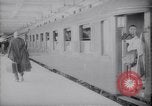
American Refugees arriving at Le Verdon Railway Station in Bordeaux, shortly before the fall of Paris to Nazi Germany
Railroad train station of Le Verdon in Bordeaux, France is shown, early in World War 2. American refugees, including men, women, and children, getting off train and crowding onto platform at train station in Le Verdon, having arrived from Paris France just before the Battle of France and occupation by Nazi Germany. Baggage of travelers seen at station, some refugees going through customs and some are lined up for passport and customs inspection. French officials checking the money and passport of American refugees before they board the SS Washington ocean liner ship.
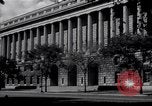
Washington DC scenes. IRS Service Building. Washington Monument. Washington Channel.
Several views of Washington DC. Views of the Internal Revenue Service Building, at 10th Street and Pennsylvania Avenue. The Washington monument can be seen from various viewpoints. The Washington Channel, as viewed from Hain's Point, looking toward Maine Avenue. Boats in the harbor. View of the Washington Monument (2 15th St NW, Washington, DC 20024, United States) as seen from inside the Lincoln Memorial, across the reflecting pool.
CRITICALPAST.COM: About Us | Contact Us | FAQs - How to Order | License Agreement | My Account | My Lightboxes | Shopping Cart | Advanced Search | Featured Collections | Website Terms & Conditions | Privacy Policy ©2026 CriticalPast LLC.
License Agreement |
Terms & Conditions |
Privacy Policy
©2026 CriticalPast LLC.